Dead Sea products: mud, salt and minerals, and how to use them
The Dead Sea is not only the lowest place on Earth and a sea you float in. Its water, salt and black mud are among the most mineral-rich natural materials in the world, and Jordan turns them into everything from face masks and bath salts to fertiliser. This guide explains what the Dead Sea produces, how to use the mud, what it is valued for and how to buy wisely.
Why the Dead Sea is so rich in minerals
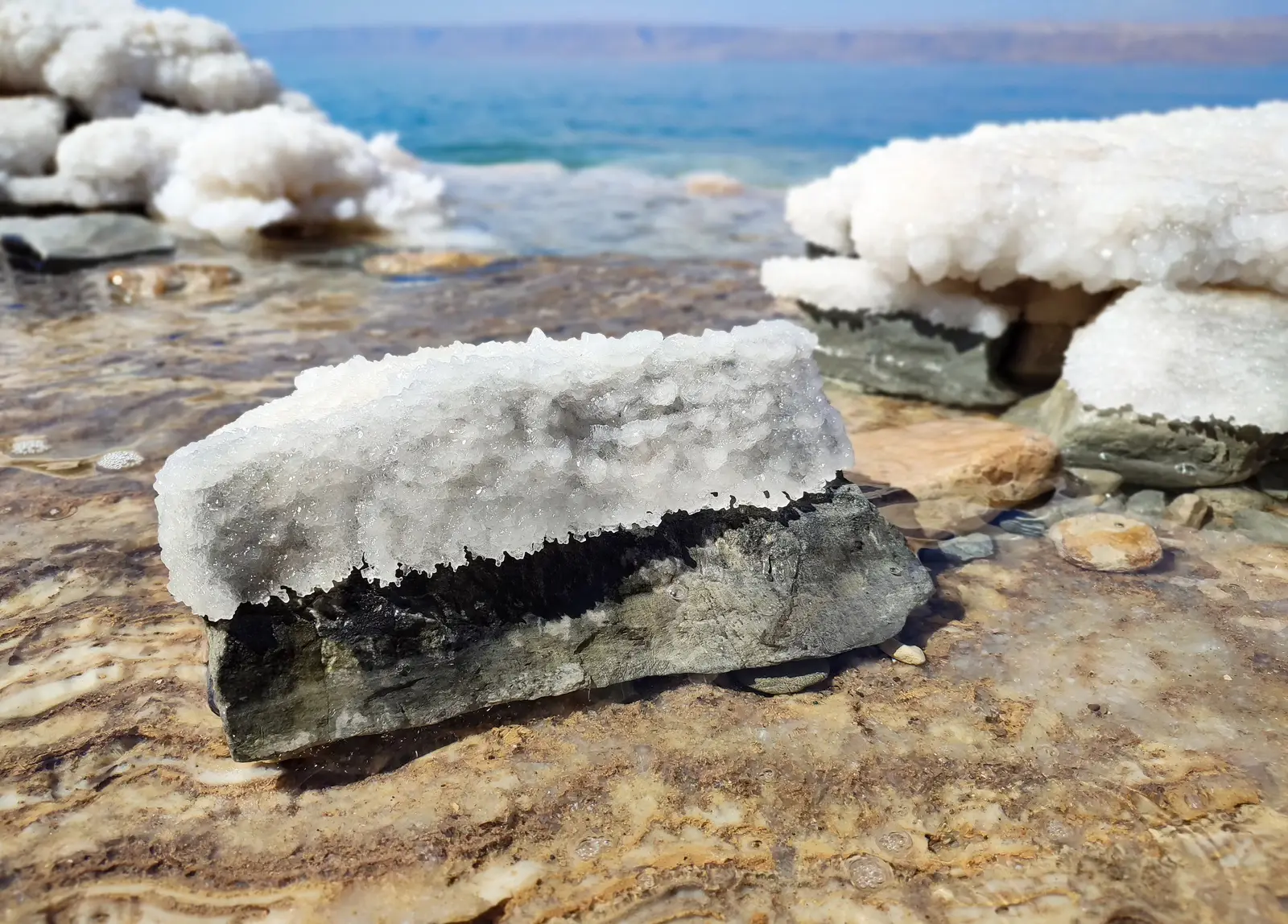
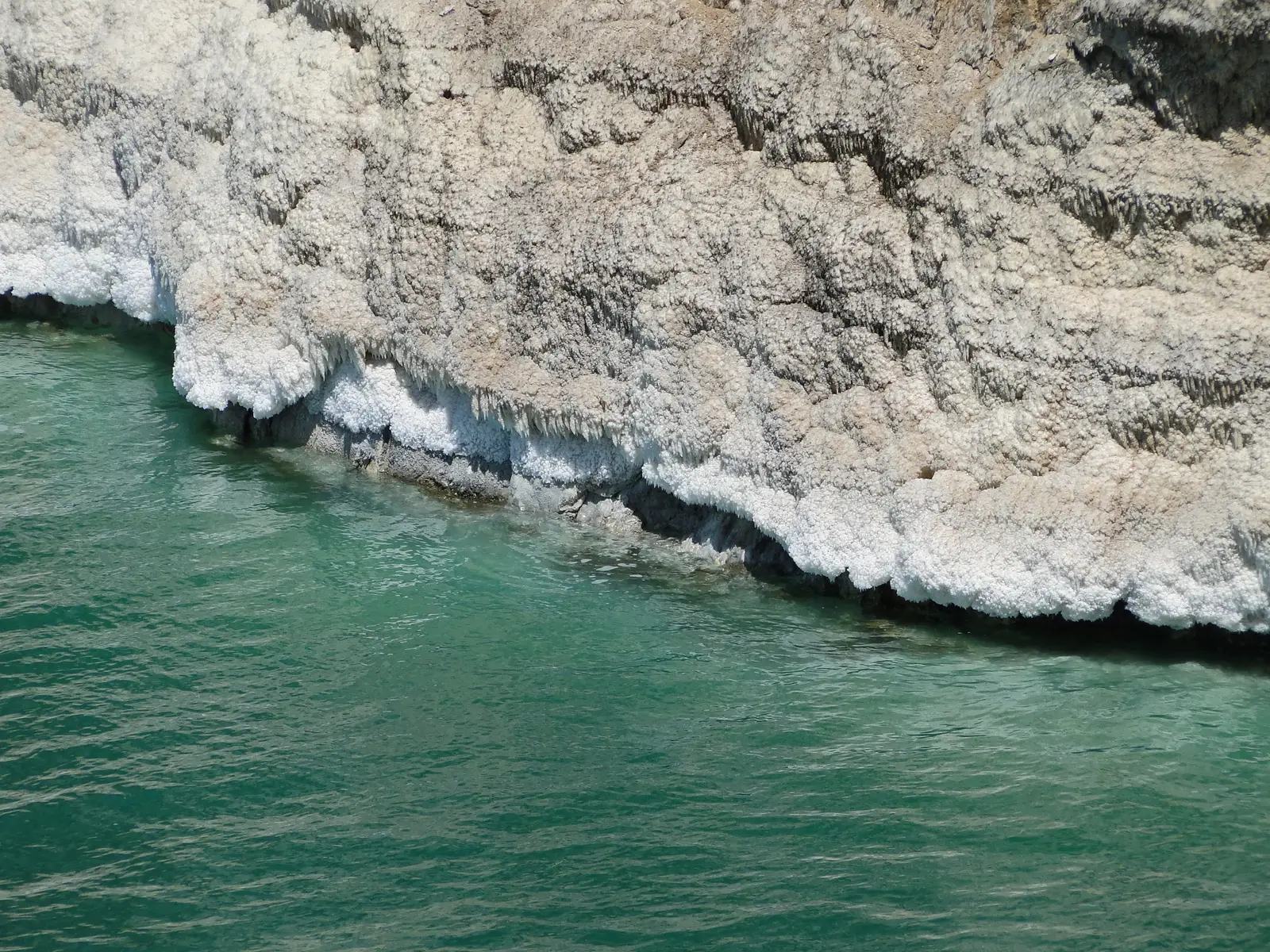
The Dead Sea has no outlet. Water flows in, mainly from the river Jordan and from springs and winter floods, and leaves only by evaporation under the strong sun. Over thousands of years this has concentrated the salts, so its water is about ten times saltier than the ocean, at roughly a third salt by weight.
The minerals are also unusual. Compared with ocean water, the Dead Sea is far richer in magnesium, calcium, potassium and bromide, and relatively poorer in ordinary sodium chloride. This mix is what gives the water its oily feel and what makes its salt and mud prized for skin care.
The black mud
Along the shore lies a soft, dark mud formed from layers of fine clay and sediment soaked in mineral-rich water for thousands of years. It is smooth, holds heat well and dries to a tight film on the skin.
At the Dead Sea beaches you will see visitors covered from head to toe in it. Most resorts and public beaches keep a supply of mud by the water, so you can try it right there, and the same mud is cleaned, packed and sold in jars and tubes across Jordan.
How to use Dead Sea mud
Apply an even layer to dry skin, avoiding the eyes, the mouth and any cuts or scratches. Leave it for about fifteen to twenty minutes, until it starts to dry and feel tight, ideally in the shade or soft sunlight rather than strong midday sun.
Then float in the sea to soften the mud and wash it off, and finish with a shower in fresh water. At home, packaged mud is used the same way as a face or body mask, usually once or twice a week.
What the mud and minerals are valued for
For centuries people have come to the Dead Sea to relax and care for their skin. Many visitors find that the mud cleanses and softens the skin and leaves it feeling smooth, and that bathing in the warm, salty water is deeply relaxing for tired muscles and joints.
The special conditions of the region have also been studied by doctors. Stays combining bathing in the sea and carefully measured sunbathing, sometimes called climatotherapy, have been used for people with skin conditions such as psoriasis. Because the Dead Sea lies so far below sea level, the extra layer of air filters part of the sun's burning rays, although you can still burn easily. The mud and salts are cosmetics, not medicines: if you have a medical condition, follow your doctor's advice.
What Jordan produces from the Dead Sea
The best-known products are for skin and bath care: packaged black mud, coarse and fine bath salts, mud and salt soaps, body scrubs, creams, face masks and shampoos made with Dead Sea minerals. They are made by local factories and small workshops and sold in Dead Sea hotels, shops in Amman and Aqaba, and at the airport.
On a much larger scale, the southern Dead Sea is an important industrial area. Huge evaporation ponds near Ghor as-Safi concentrate the water in the sun to extract potash, a potassium salt used as fertiliser, which Jordan exports around the world. Bromine and magnesium compounds are produced there too, for industry and agriculture.
Buying Dead Sea products
Read the label: good products state clearly that they contain Dead Sea mud, salt or minerals, list their ingredients and are sealed. Prices vary a lot between hotels, city shops and the airport, so compare before buying large amounts.
Mud, creams and liquids count as liquids and gels at airport security, so keep small containers in your hand luggage and pack larger jars in your checked bag. Bath salts are heavy; a few small bags go a long way.
Frequently asked questions
What is Dead Sea mud good for?
It is mainly used as a skin-care mask. Many people find that it cleanses, softens and smooths the skin, and the experience of mud and floating is very relaxing. It is a cosmetic, not a medicine.
How do you use Dead Sea mud?
Spread it on dry skin, avoiding the eyes, mouth and any cuts, leave it for about fifteen to twenty minutes until it dries, then rinse it off in the sea and shower in fresh water.
What products are made from the Dead Sea?
Packaged black mud, bath salts, soaps, scrubs, creams, masks and shampoos with Dead Sea minerals. Industrially, Jordan also produces potash for fertiliser and bromine and magnesium compounds.
Is Dead Sea mud safe for everyone?
Most people use it without problems, but avoid broken or irritated skin and the eyes, and test it on a small area first if your skin is sensitive. People with heart conditions, high blood pressure or other medical conditions should ask a doctor first.
Can I take Dead Sea mud on a plane?
Yes, but mud and creams count as liquids and gels at security. Keep small containers in your hand luggage within the liquid limits and pack larger jars in your checked bag.
More travel essentials
Is Jordan safe to visit? A practical guide for travellers
Jordan Pass and visa: what it includes and is it worth it?

Petra by Night: candles, music and the Treasury after dark
Day trips from Amman: the best places within two hours
Shrines of the Prophet's Companions in Jordan