History & Heritage
Few places hold as many layers of human history in so small an area as Jordan. Farmers, traders, kings, monks, caliphs and pilgrims have all left their mark on its valleys and highlands. This overview follows the main civilisations in order, from the first villages to the modern kingdom.
The first villages
People have lived in the land of Jordan since the Stone Age. Tools made by early hunters and gatherers have been found in the eastern desert and along ancient lake shores, including around the Azraq oasis. Later, during the Neolithic period, people began to farm, keep animals and build permanent houses. Villages such as 'Ain Ghazal in Amman and Beidha near Petra are among the important early settlements of the region.
At 'Ain Ghazal, archaeologists discovered remarkable human figures made of lime plaster, dating to around 9,000 years ago. These statues, with their wide painted eyes, are among the oldest large human sculptures known anywhere. Some of them can be seen today in the Jordan Museum in Amman, where they are among the most admired objects in the collection.
'Ain Ghazal and the first farmers
One of the largest Neolithic villages in the region grew at 'Ain Ghazal, on the edge of today's Amman. Its people farmed, herded goats and built houses with plastered floors. They also made lime-plaster statues of human figures, which rank among the oldest large-scale sculptures of the human form found anywhere in the world.
Copper Age settlements
In the Chalcolithic, or Copper Age, villages in the Jordan Valley such as Teleilat Ghassul developed farming and early metalworking. The site is known for colourful wall paintings with geometric patterns and figures. In the south, the Feynan area became an important source of copper, mined and smelted over many centuries.
Bronze Age towns
During the Bronze Age, walled towns appeared in the Jordan Valley and on the highlands, including at Pella and on the Amman Citadel. Large burial grounds, such as the one at Bab edh-Dhra near the Dead Sea, show how many people lived in the area. Trade linked these towns with Egypt, Syria and Mesopotamia.
Ammon, Moab and Edom
Three kingdoms developed on the plateau: Ammon around Amman, Moab on the central plateau around Dhiban and Karak, and Edom in the southern highlands around Busayra. A famous basalt inscription of King Mesha of Moab, found at Dhiban, is one of the longest Iron Age texts discovered in the region.
The Nabataeans and Petra
The Nabataeans, an Arab people, grew wealthy from the incense and spice trade between Arabia and the Mediterranean. Their capital, Petra, became one of the great cities of the ancient world, with monuments carved directly into sandstone cliffs and an advanced system for collecting and storing water. In 106 CE, their kingdom became part of the Roman Empire.
Roman cities and the Decapolis
Under Roman rule, cities such as Gerasa (Jerash), Gadara (Umm Qais), Pella and Philadelphia (Amman) prospered. They were linked by roads, including the Via Nova Traiana, which followed the route of the ancient King's Highway. Theatres, temples, arches and paved streets from this period are still visible today.
Byzantine churches and mosaics
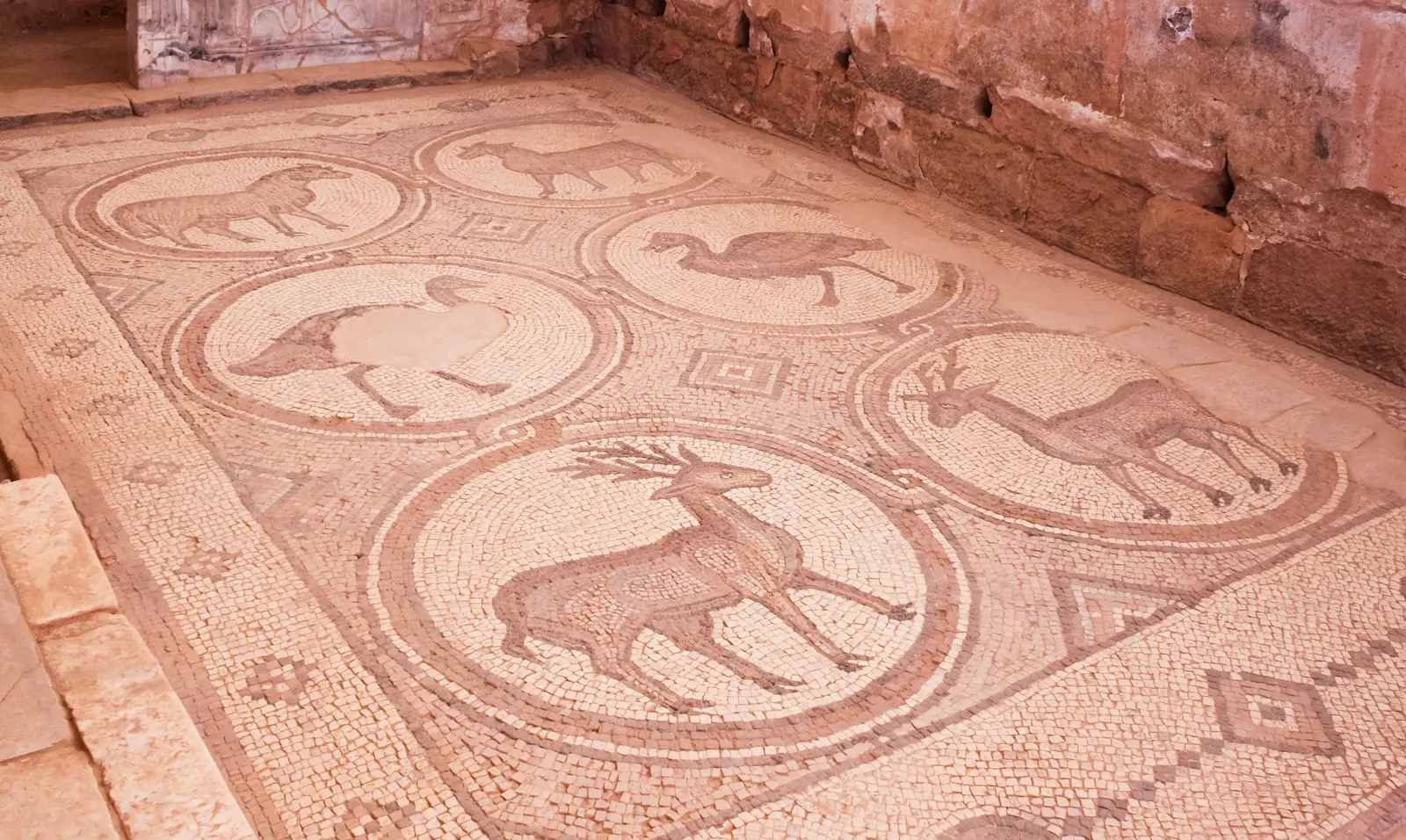
As Christianity spread, communities built churches across the land, many decorated with detailed mosaic floors showing plants, animals, daily life and cities. Madaba became especially famous for this art. The 6th-century Madaba Map, Mount Nebo and the churches of Jerash and Umm ar-Rasas preserve outstanding examples.
Umayyad desert castles
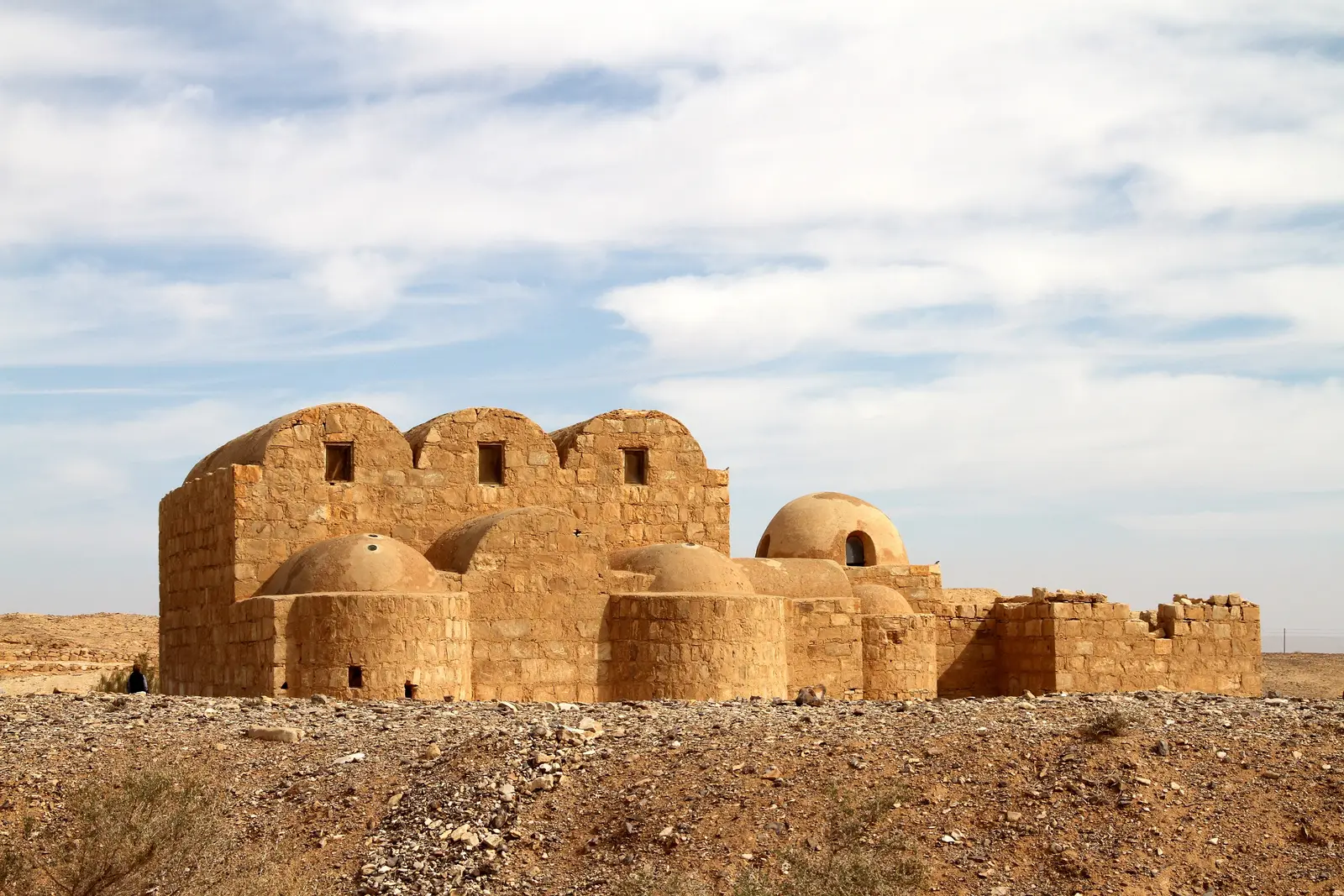
The Umayyad caliphs built a series of residences and halls in the eastern desert. Qusayr Amra, a small bathhouse with remarkable painted walls, is listed by UNESCO as a World Heritage Site. Qasr Kharana, Qasr al-Hallabat and the palace on the Amman Citadel are other notable buildings from this era.
Abbasid and Fatimid periods
After 750, the centre of the Islamic world moved east to Baghdad. Humayma, in southern Jordan, is known as a home of the Abbasid family before they came to power. Towns in Jordan continued as farming and trading centres, and many communities, both Muslim and Christian, lived side by side.
Ayyubid and Mamluk castles
Ajloun Castle was built in the 1180s under the Ayyubids, and the great hilltop castles of Karak and Shobak, begun in the 12th century, were expanded in this period. The Mamluks added inns, mosques and postal stations. Sugar was produced in the Jordan Valley, and roads connected Cairo, Damascus and the holy cities of Arabia.
Ottoman era and the Hejaz Railway
During the Ottoman period, the annual pilgrimage caravan to Mecca crossed Jordan, supported by forts and water stops. In the late 19th century, Circassian and Chechen families settled in Amman and other towns. Between 1900 and 1908, the Hejaz Railway was built from Damascus to Medina, passing through Amman and Ma'an.
Emirate of Transjordan
The Emirate of Transjordan was established in 1921, with Emir Abdullah bin al-Hussein as its ruler. Amman, then a small town, was chosen as the capital. During the following years, the first government institutions, schools and a modest network of roads were developed.
Independence
On 25 May 1946 the country became an independent kingdom, and Emir Abdullah became King Abdullah I. A few years later, the name Hashemite Kingdom of Jordan came into use. The date is celebrated every year as Independence Day, a national public holiday.
Building a modern country
Since independence, Jordan has expanded its roads, ports, airports, schools and health services. Universities opened across the country, and literacy rates rose to high levels. Tourism grew around Petra, Wadi Rum, the Dead Sea and Aqaba, while new museums and protected areas help to preserve the country's heritage and natural landscapes.
Ancient kingdoms and trading peoples
During the Iron Age, three local kingdoms grew up on the plateau east of the Jordan Valley: Ammon in the north, with its capital at Rabbath Ammon, today's Amman; Moab in the centre, around Dhiban and Karak; and Edom in the south, with its centre at Busayra. These kingdoms controlled farmland and trade routes, and they left inscriptions, pottery and fortified towns that archaeologists continue to study.
Later, the Nabataeans, an Arab people skilled in trade and water engineering, built a powerful network across the region. Their capital, Petra, became a meeting point for caravans carrying incense, spices and other goods. They carved monumental tombs and temples into the rose-coloured cliffs and built channels and cisterns that allowed a large city to thrive in a dry landscape.
Greek, Roman and Byzantine cities
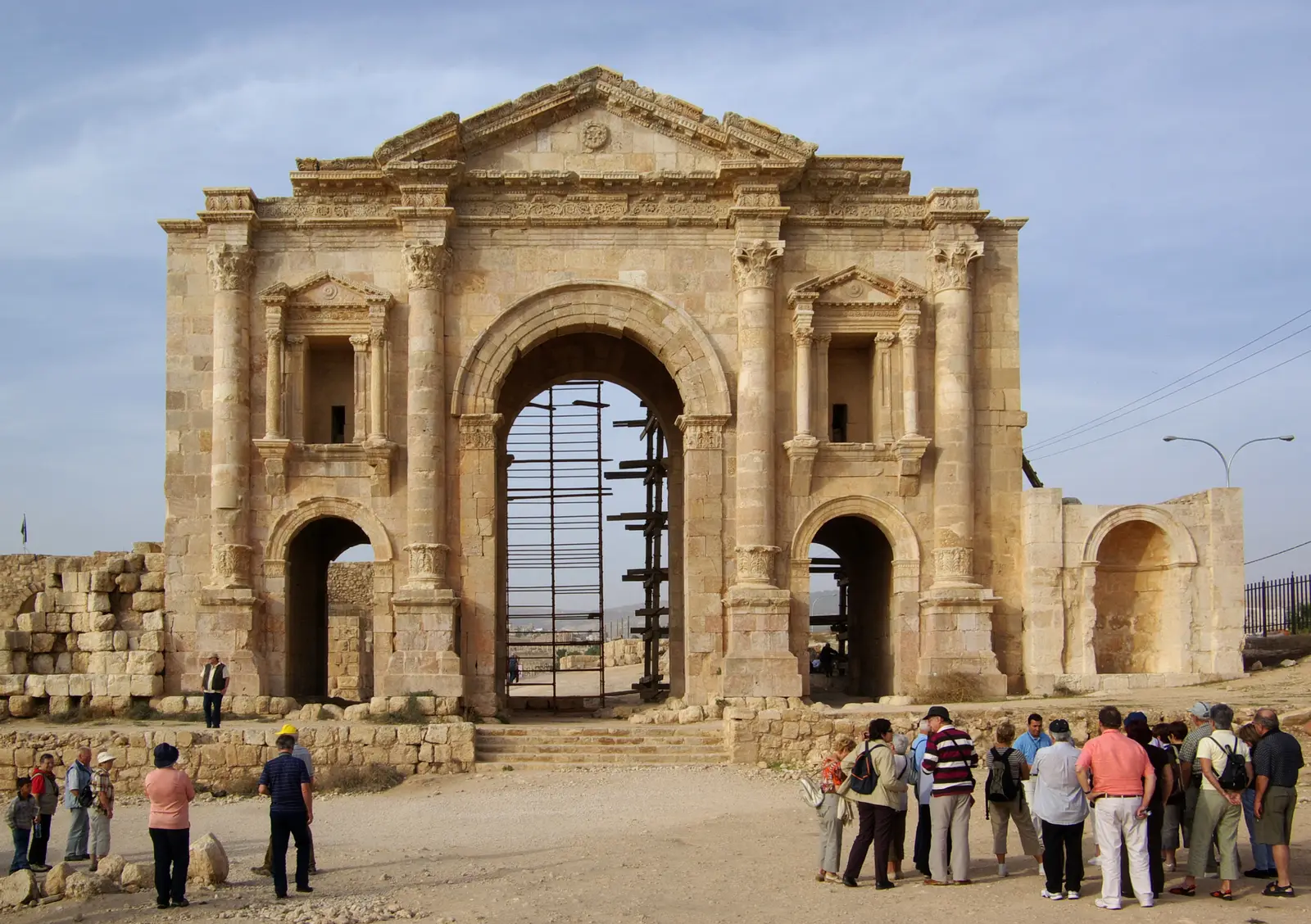
After the time of Alexander the Great, Greek-style cities were founded or renamed across the region, and Rabbath Ammon became Philadelphia. Under Roman rule, several of these cities belonged to a loose group known as the Decapolis, or ten cities. Jerash (Gerasa), Umm Qais (Gadara), Pella and Amman flourished with colonnaded streets, theatres, temples and baths, many of which still stand today.
In the Byzantine period, Christianity spread widely and many churches were built, often decorated with detailed floor mosaics. Madaba, Mount Nebo, Umm ar-Rasas and Jerash preserve some of the finest examples. The famous Madaba Map, a mosaic floor from the 6th century, shows the cities and landscapes of the region and is one of the oldest surviving maps of its kind.
Islamic eras
From the 7th century, the region became part of the early Islamic world. Under the Umayyad caliphs, who ruled from nearby Damascus, a number of elegant buildings were raised in the eastern desert. These desert castles, such as Qusayr Amra with its painted walls, Qasr Kharana and Qasr al-Hallabat, served as residences, meeting places and stops along travel routes. The Umayyads also built a palace on the Amman Citadel.
In later centuries, under the Ayyubids and Mamluks, hilltop castles at Ajloun, Karak and Shobak guarded roads and pilgrimage routes, and inns and watchtowers linked distant cities. Under the Ottomans, from the 16th century, the pilgrimage road to Mecca passed through Jordan, supported by a line of forts and water stations. In the early 20th century, the Hejaz Railway was built along much of the same route.
The modern kingdom
The Emirate of Transjordan was established in 1921, with Emir Abdullah bin al-Hussein at its head and Amman as its capital. On 25 May 1946 the country became an independent kingdom, and a few years later its name became the Hashemite Kingdom of Jordan. The constitution that still forms the basis of the state was adopted in 1952.
In the following decades, the country built roads, airports, schools, hospitals and universities, beginning with the University of Jordan in 1962. Education became widely available, and Amman grew from a small town into a large modern capital. Tourism developed around Petra, the Dead Sea, Wadi Rum and Aqaba, and new museums, protected areas and heritage projects now help to share Jordan's past with visitors from around the world.
More from the guide
Jordan at a Glance
Key facts and first impressions
Read the guideHow the State Is Organised
Institutions, governorates and national symbols
Read the guideRegions & Governorates
Twelve governorates, three landscapes
Read the guideClimate & Seasons
When to go and what to pack
Read the guideRoads & Getting Around
Airports, highways, buses and taxis
Read the guideFood & Flavours
The Jordanian table
Read the guideCulture & Traditions
Hospitality, heritage and daily life
Read the guideNature & Wildlife
Reserves, trails and living landscapes
Read the guidePractical Information
Before you go and while you are there
Read the guide