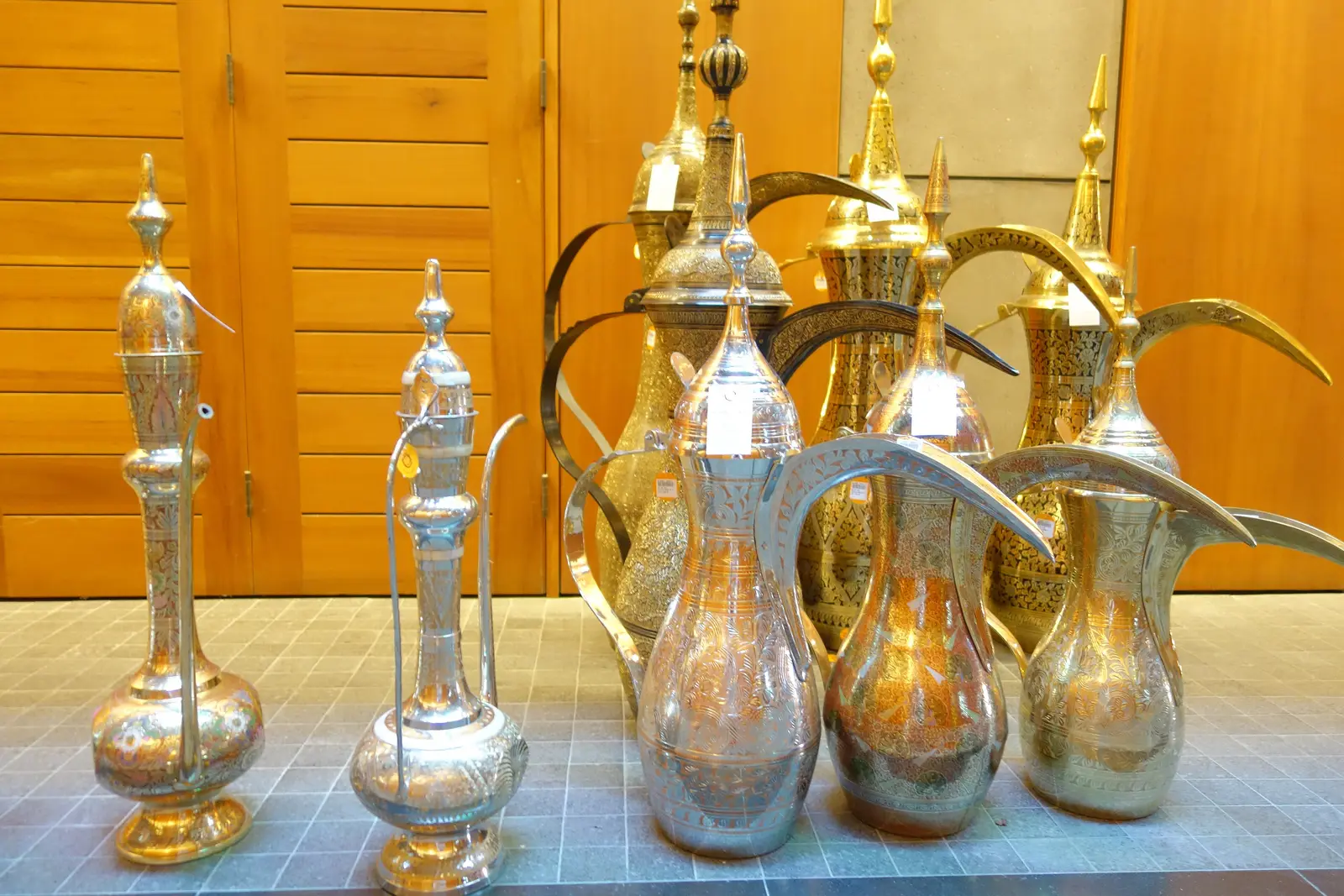
Culture & Traditions
Jordanian culture combines deep-rooted traditions with modern city life. Respect for family, generosity towards guests and pride in heritage shape everyday behaviour. Visitors who learn a few words of Arabic and a few local customs will find doors, and often kitchens, opened to them.
Hospitality and Bedouin heritage
Hospitality is at the centre of Jordanian life. Its roots lie in the customs of Bedouin tribes, for whom welcoming a traveller in the desert was a duty and an honour. Traditionally, a guest could stay for several days before being asked the purpose of the visit. Today, this spirit appears when strangers offer directions, shopkeepers serve tea, or families invite visitors to share a meal.
Many Jordanian families trace their origins to Bedouin tribes, and Bedouin culture remains a source of national pride. The black goat-hair tent, called beit al-sha'ar or 'house of hair', the coffee ritual around the fire, poetry recited from memory, and skills such as reading the desert and caring for camels are still valued. In Wadi Rum and the Badia, some communities continue to combine traditional life with modern work, including tourism.
Marhaba
Marhaba is a friendly, everyday way to say hello, suitable for almost any situation. A common reply is marhabtein, meaning 'two hellos', or ahlan. You will hear it in shops, taxis and offices, and using it is a simple way to begin any conversation politely.
As-salamu alaykum
As-salamu alaykum, meaning 'peace be upon you', is a respectful greeting widely used across the Arab and Muslim world. The usual reply is wa alaykum as-salam, 'and upon you be peace'. It is appropriate when entering a shop, a home or an office, and it is appreciated when visitors use it.
Ahlan wa sahlan
Ahlan wa sahlan means 'welcome' and is one of the first phrases visitors hear in Jordan. It is said to guests arriving at a home, customers entering a shop and travellers at hotels. A polite reply is ahlan bik when speaking to a man, or ahlan biki when speaking to a woman.
Shukran
Shukran means 'thank you'. To say 'thank you very much', use shukran jazeelan. The usual reply is afwan, meaning 'you are welcome' or 'not at all'. Jordanians also often say yislamu, a warm and informal way of thanking someone, literally wishing that their hands be kept safe.
Min fadlak / min fadlik
Min fadlak means 'please' when speaking to a man, and min fadlik when speaking to a woman. It is used when asking for something, such as directions, the bill or a seat. Another common word is law samaht (to a man) or law samahti (to a woman), meaning 'if you allow' or 'excuse me'.
Tfaddal / tfaddali
Tfaddal, said to a man, or tfaddali, said to a woman, is a very useful word with several meanings: 'please come in', 'please sit down', 'help yourself' or 'here you are'. Jordanians use it constantly when offering food, a chair or a cup of coffee, and it reflects the culture of hospitality.
Yalla
Yalla means 'let's go', 'come on' or 'hurry up', depending on the tone. It is one of the most frequently heard words in daily life, used by friends, drivers, parents and guides. It is friendly and informal, and visitors quickly start to use it themselves.
Inshallah
Inshallah means 'if God wills'. It is used by people of all backgrounds when speaking about the future, from a meeting tomorrow to a hope for good weather. It expresses the idea that the future is not fully in human hands, and it is said sincerely in many everyday situations.
Ya'tik al-afiyeh
Ya'tik al-afiyeh, meaning 'may God give you health and strength', is a warm greeting especially typical of Jordan and the Levant. It is said to someone who is working, such as a shopkeeper, a driver or a farmer. The usual reply is Allah y'afik, 'may God give you health too'.
Ma'a as-salama
Ma'a as-salama means 'go with safety' and is the most common way to say goodbye. The reply is often Allah ysalmak to a man or Allah ysalmik to a woman. When leaving a meal, you may also hear sahtein, meaning 'to your health', to which you can reply ala qalbak.
Eid al-Fitr
Eid al-Fitr celebrates the end of the fasting month of Ramadan. Families attend morning prayers, wear new clothes, visit relatives and give children small gifts of money. Homes fill with ma'moul and other sweets. The holiday lasts several days, and many businesses and offices close or work shorter hours.
Eid al-Adha
Eid al-Adha, the Feast of the Sacrifice, takes place during the season of the pilgrimage to Mecca. Families pray together, visit relatives and share meat with neighbours and people in need. The holiday lasts several days, and many Jordanians use it to travel or gather in their home towns.
Christmas
Christmas is a public holiday in Jordan. Christian families attend church services and gather for festive meals, while streets, shops and hotels in many cities are decorated with lights and trees. Towns with large Christian communities, such as Madaba, Fuheis and parts of Amman, hold especially lively celebrations.
Independence Day
Independence Day, on 25 May, marks the day in 1946 when Jordan became an independent kingdom. Flags appear on homes, cars and public buildings, and the day is marked with official ceremonies, concerts and fireworks. Families often spend the holiday outdoors in parks and the countryside.
Dress, music and dance
Traditional men's dress includes the thobe, a long robe, and the shmagh, a red and white checked headscarf, held in place by a black cord called an agal. A plain white or black and white headscarf, often called a hattah, is also worn. The red and white shmagh has become a recognised symbol of Jordanian identity. Women's traditional dresses are long and richly embroidered, with patterns and colours that differ from region to region.
Music and dance play a central role at weddings and celebrations. The dabke is a line dance in which dancers link arms and stamp their feet in rhythm, led by a dancer who waves a cloth or string of beads. Traditional instruments include the rababa, a one-stringed Bedouin fiddle, the oud, the reed pipe and drums. Folk songs often praise the land, family and generosity.
Faith and community
Most Jordanians are Muslims, mainly Sunni. The country is also home to long-established Christian communities of several churches, some of which trace their history back to the earliest centuries of Christianity. Mosques and churches stand close to one another in many towns, and the call to prayer is heard five times a day across the country.
Muslims and Christians share many customs, foods and celebrations, and neighbours commonly visit one another on religious holidays to offer greetings. Important places of pilgrimage include the Baptism Site on the River Jordan, Mount Nebo, Tell Mar Elias and the tombs of companions of the Prophet Muhammad in the Jordan Valley and near Karak.
Arts and crafts
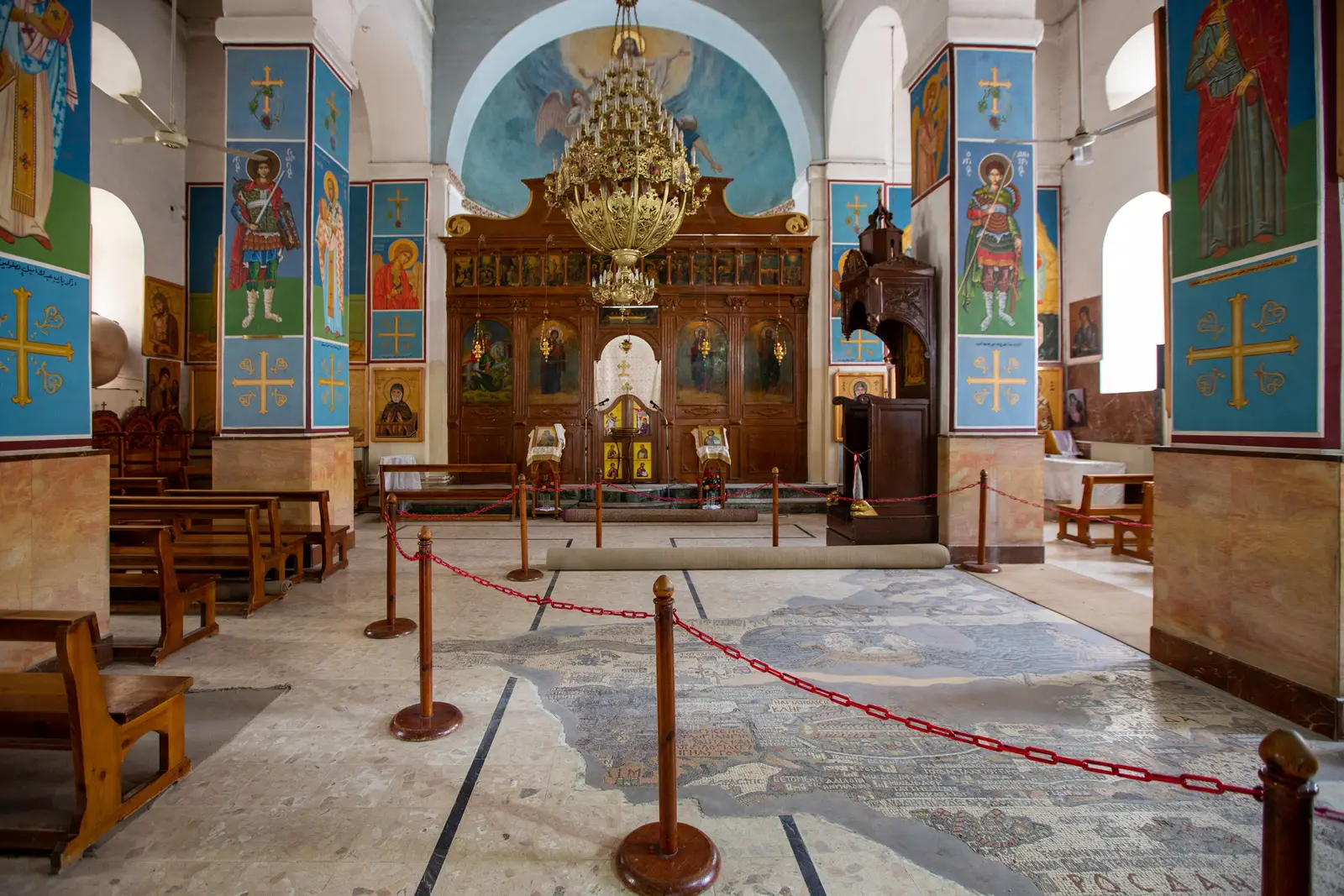
Jordan has a long tradition of handmade crafts. In Madaba, artisans continue the art of mosaic, cutting small stones by hand to create pictures and patterns inspired by ancient floors. Near Mukawir, the women of Bani Hamida weave colourful rugs and textiles on traditional looms, using wool from local sheep and natural designs. Embroidered cushions, bags and dresses are made in many towns.
At Petra and in Aqaba, craftspeople fill small glass bottles with layers of naturally coloured sand, forming detailed desert scenes and names without glue. Other crafts include silver jewellery, pottery, olive wood carving and natural soaps made with olive oil. Buying from cooperatives and craft centres helps support local families, especially women in rural areas.
Etiquette for visitors
Jordanians appreciate polite greetings. Shaking hands is common between men; between a man and a woman, it is best to wait and see whether the other person offers a hand first. Use the right hand when eating, giving and receiving. Dress modestly in towns and villages, covering shoulders and knees, and more fully when visiting mosques or churches.
It is polite to accept an offer of tea or coffee, at least for a few sips. Ask permission before photographing people, especially women and children, and respect the answer. Public displays of affection are uncommon. Removing shoes before entering a home is common, so watch what your hosts do. A friendly smile and a few words of Arabic are always well received.
Celebrations through the year
The main religious holidays follow the Islamic lunar calendar, so their dates move earlier by about eleven days each year. Eid al-Fitr marks the end of Ramadan with prayers, new clothes, visits and sweets. Eid al-Adha, during the season of the pilgrimage to Mecca, is a time of prayer, family gatherings and sharing meat. The Islamic New Year and the birthday of the Prophet Muhammad are also public holidays.
Christmas is a national public holiday, and in December many towns, malls and hotels are decorated with lights and trees. Easter is celebrated by Christian communities with church services and family meals. Independence Day on 25 May fills the streets with flags and celebrations, and the new year is greeted with gatherings and fireworks in the cities.
More from the guide
Jordan at a Glance
Key facts and first impressions
Read the guideHistory & Heritage
Ten thousand years of human story
Read the guideHow the State Is Organised
Institutions, governorates and national symbols
Read the guideRegions & Governorates
Twelve governorates, three landscapes
Read the guideClimate & Seasons
When to go and what to pack
Read the guideRoads & Getting Around
Airports, highways, buses and taxis
Read the guideFood & Flavours
The Jordanian table
Read the guideNature & Wildlife
Reserves, trails and living landscapes
Read the guidePractical Information
Before you go and while you are there
Read the guide