Food & Flavours
Jordanian food is generous, shared and full of flavour. It draws on Bedouin, village and city traditions, and it shares many dishes with neighbouring Levantine and Arab kitchens. Olive oil, yoghurt, lamb, chickpeas, fresh bread and herbs such as za'atar and sage appear again and again at the Jordanian table.
Hospitality at the table
In Jordan, a meal is an act of welcome. Hosts often prepare far more food than guests can eat, and they will offer second and third helpings with great insistence. It is polite to try a little of everything. When you have truly finished, a gentle phrase of thanks, together with a hand placed over the plate, usually tells the host you are full.
Food is traditionally eaten with the right hand, and bread is often used to scoop up dips and stews. On special occasions, guests may gather around a large shared tray. Before eating, many people say bismillah, meaning 'in the name of God', and after the meal it is common to praise the food and thank the host with words such as sahtein, 'to your health'.
Mansaf
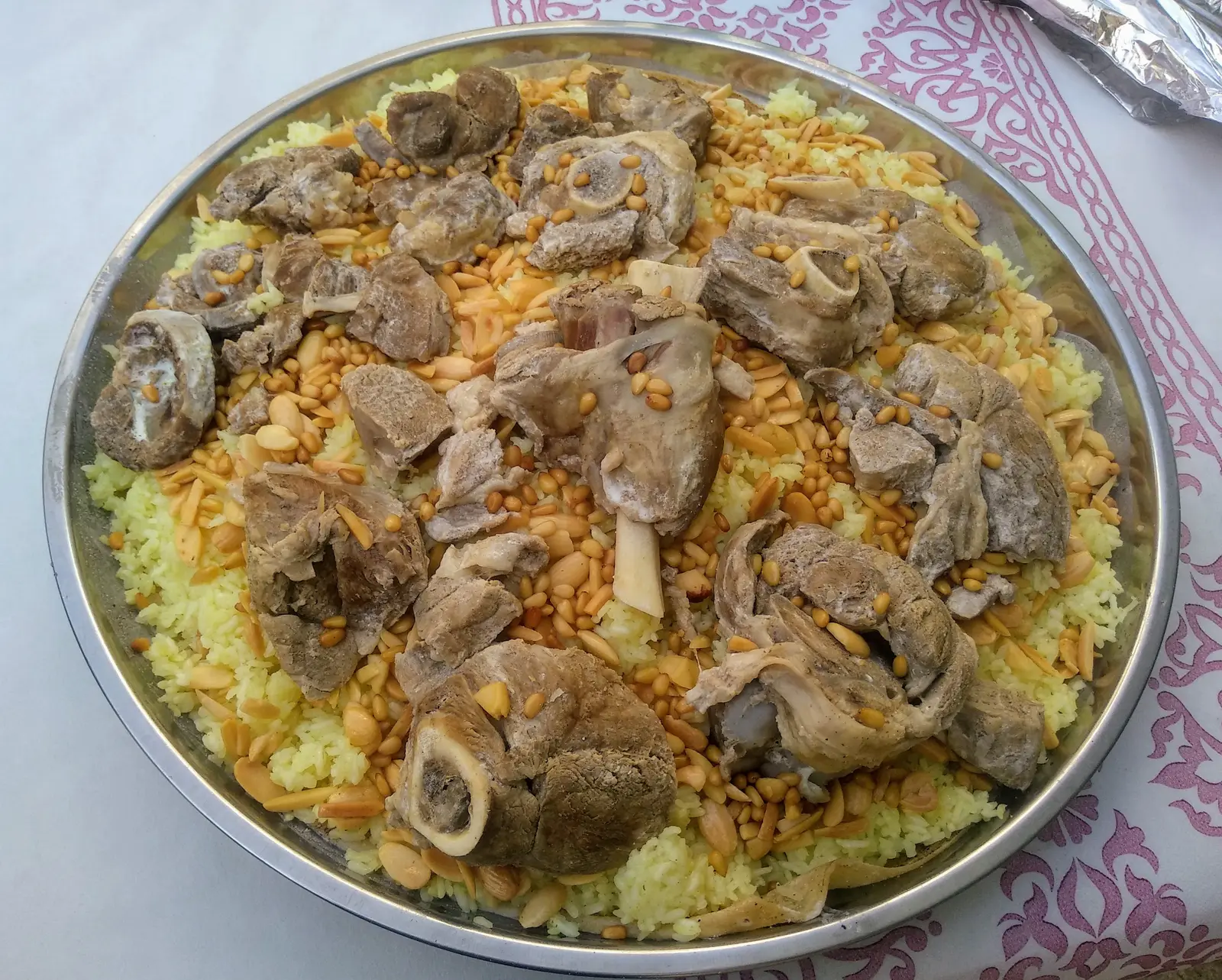
Mansaf is Jordan's national dish and a symbol of hospitality. Lamb is cooked in a sauce made from jameed, a dried fermented yoghurt, then served on a large tray over rice and thin shrak bread, topped with toasted almonds or pine nuts. It is traditionally eaten from a shared tray, often with the right hand, at weddings, feasts and family gatherings.
Read about this dishMaqluba
Maqluba means 'upside down'. Rice, fried vegetables such as aubergine, cauliflower or potato, and chicken or meat are layered in a deep pot and cooked together with spices. At the table, the pot is turned over onto a large plate, revealing a tall, fragrant cake of rice. It is usually served with yoghurt and salad.
Read about this dishMusakhan
Musakhan is a dish shared across the Levant. Large rounds of taboon bread are covered with onions slowly cooked in plenty of olive oil and sumac, then topped with roasted chicken and baked. The result is rich, tangy and deep red in colour. It is often eaten by hand and is especially popular when the new olive oil arrives.
Read about this dishZarb
Zarb is a Bedouin method of cooking in a pit dug into the sand. Meat, often lamb or chicken, and vegetables are placed on metal trays, lowered onto hot coals, covered and left to cook slowly for several hours. The food comes out tender and smoky. Visitors often enjoy zarb at desert camps in Wadi Rum.
Read about this dishGalayet bandora
Galayet bandora is a simple, much-loved dish of fresh tomatoes cooked in a pan with olive oil, garlic and hot green peppers, sometimes with onions. It is eaten with bread, often for breakfast or as a light supper, and it is a common meal on picnics and camping trips, cooked over an open fire.
Read about this dishMujaddara
Mujaddara is a humble and nourishing dish of brown lentils cooked with rice or cracked wheat, topped generously with onions fried until dark and sweet. It is filling, inexpensive and naturally vegetarian. Mujaddara is often served with yoghurt, a fresh salad or pickles, and it is a familiar home meal across Jordan.
Read about this dishShorbat adas (lentil soup)
Shorbat adas is a smooth soup of red or yellow lentils, flavoured with onion and cumin and served with a squeeze of lemon. Crisp pieces of toasted or fried bread are often added on top. It is a comforting dish in the cold months and a traditional way to begin the evening meal during Ramadan.
Read about this dishFalafel and hummus
Falafel are crisp fried balls made from ground chickpeas, herbs and spices, eaten in bread with salad and tahini sauce. Hummus is a creamy dip of cooked chickpeas blended with tahini, lemon and garlic, finished with olive oil. Together they form one of the most popular breakfasts and quick meals in Jordan.
Read about this dishFul
Ful, or ful medames, is a warm dish of cooked fava beans mashed with lemon juice, garlic, olive oil and sometimes cumin, tomato or chilli. It is a classic breakfast, eaten with fresh bread, raw onion, mint and pickles. Many small restaurants serve ful from early morning, often alongside hummus and falafel.
Read about this dishKubbeh
Kubbeh is made from a dough of fine cracked wheat and minced meat, shaped into ovals and filled with more spiced meat, onions and pine nuts. It is usually fried until crisp, though it can also be baked in a tray or served in yoghurt sauce. Making kubbeh by hand takes skill and is often a shared family task.
Read about this dishMlukhiyeh
Mlukhiyeh is made from the leaves of the jute mallow plant, cooked with chicken or meat broth, garlic and coriander. In Jordan the leaves are often cooked whole or roughly chopped, giving a hearty stew. It is served over rice, usually with lemon or chopped onion in vinegar, and is a well-loved family dish.
Read about this dishFatteh
Fatteh is built from layers of toasted or fried bread, warm chickpeas and a sauce of yoghurt mixed with tahini and garlic, topped with olive oil or butter, pine nuts and spices. Some versions include chicken or meat. It is especially popular for weekend breakfasts and during Ramadan.
Read about this dishShrak
Shrak is a very thin, large flatbread baked on a saj, a curved metal dome heated over a fire. The dough is stretched by hand and tossed until it is almost transparent. Shrak is an essential part of mansaf and is also used to wrap food, making it one of the most traditional breads of Jordan.
Read about this dishManakeesh
Manakeesh are flatbreads topped before baking with za'atar and olive oil, white cheese, minced meat or other toppings. They are sold fresh and warm by neighbourhood bakeries, mostly in the morning. Folded or rolled up, they make a popular and inexpensive breakfast for students and workers.
Read about this dishKunafa (knafeh)
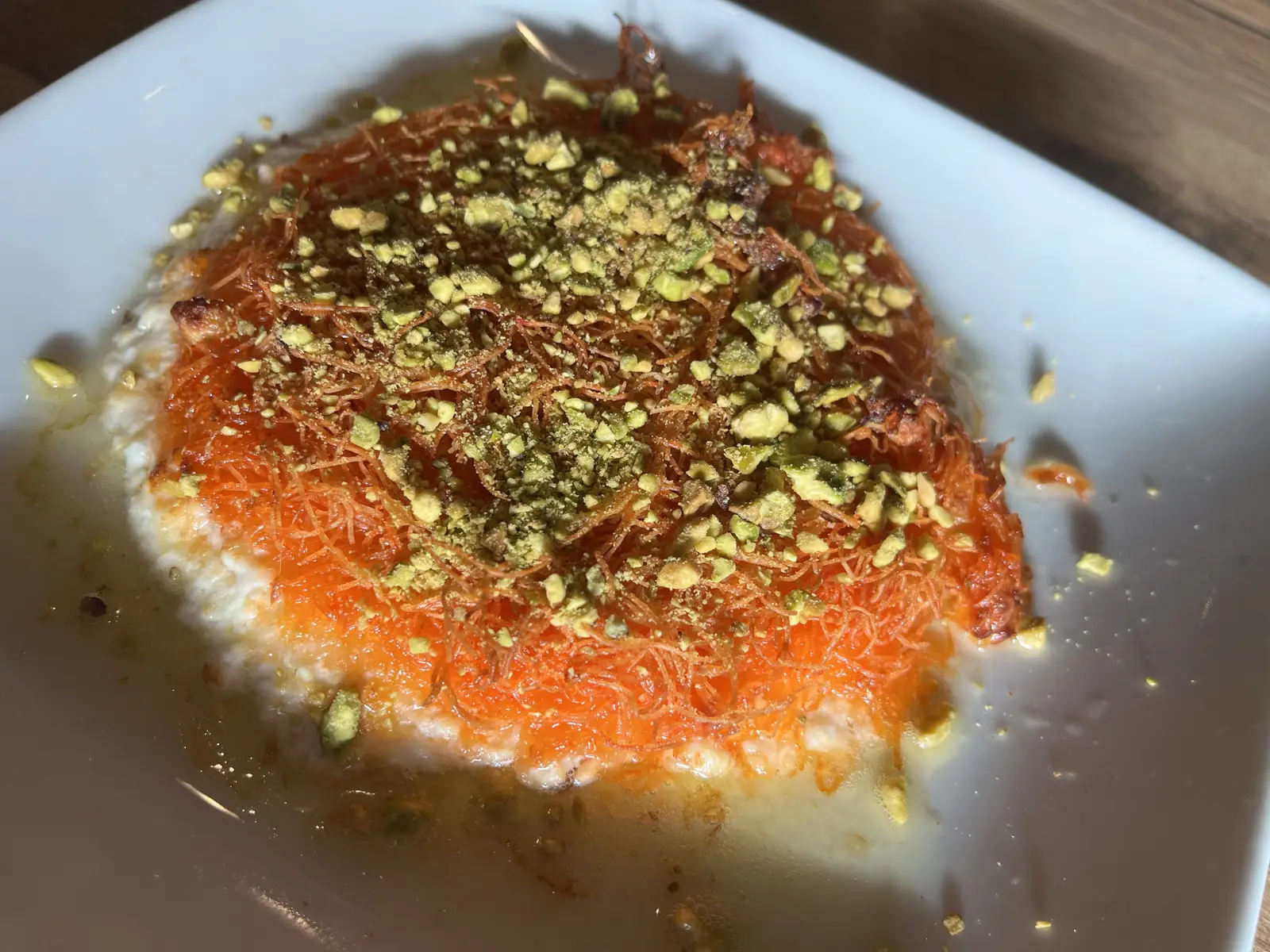
Kunafa is one of the most loved sweets in Jordan. A layer of soft white cheese is covered with fine shredded pastry or semolina, baked until golden and soaked in sweet syrup, then sprinkled with pistachios. It is served warm, often in the evening. Some shops in Amman are famous for their kunafa and draw long queues.
Read about this dishQatayef
Qatayef are small pancakes cooked on one side only, then filled with walnuts and cinnamon or with sweet cheese. They are folded into half-moons, fried or baked, and dipped in syrup. Some are served unbaked, filled with cream. Qatayef are closely linked with Ramadan, when street stalls prepare them fresh every afternoon.
Read about this dishHarisseh and basbousa
Harisseh, also widely known as basbousa, is a soft cake made from semolina, yoghurt or milk and sugar, baked in a tray and soaked in syrup after baking. It is cut into diamonds or squares, often decorated with an almond or peanut on each piece, and served with tea or coffee.
Read about this dishArabic coffee (qahwa sada)
Qahwa sada is a bitter coffee flavoured with cardamom, poured from a dallah, a brass coffee pot, into small cups without handles. The host serves it with the right hand, and guests receive it with the right hand. Gently shaking the empty cup from side to side signals that you do not want more. Offering coffee is a strong symbol of welcome.
Read about this dishSage tea
Tea is drunk throughout the day in Jordan, usually sweet and strong. A favourite version is shai bil-maramiya, black tea brewed with fresh or dried sage leaves, which gives it a fresh, herbal taste. In the desert, tea is often prepared on an open fire and offered to every visitor who arrives at a camp.
Read about this dishJameed
Jameed is yoghurt that has been strained, salted and shaped into hard balls, then dried in the sun. This traditional method allowed herding families to store milk for long periods. Before cooking, jameed is soaked and broken down into a thick, tangy sauce, which is the key ingredient of mansaf. The Karak area is especially known for it.
Read about this dishZa'atar and olive oil
Za'atar is a mixture of dried wild thyme, sumac and toasted sesame seeds. At breakfast, bread is dipped first in local olive oil and then in za'atar. Jordan has many olive groves, especially in the north, and the olive harvest in autumn is an important time when families gather to pick fruit and press new oil.
Read about this dishRamadan and feast days
During the holy month of Ramadan, Muslims fast from dawn to sunset, and the evening meal, called iftar, becomes a daily family gathering. It often begins with dates, water and soup, especially lentil soup, followed by main dishes such as maqluba, mansaf or stuffed vegetables. Drinks made from apricot paste, tamarind or liquorice are popular, and sweet shops prepare qatayef in large quantities.
The two Eids are also times of special food. During Eid al-Fitr, at the end of Ramadan, families bake ma'moul, small pastries filled with dates or nuts. Eid al-Adha is associated with sharing meat with relatives, neighbours and people in need. Weddings, births and graduations are often celebrated with mansaf served to many guests.
Street food and cafés
Street food is part of everyday life in Jordanian cities. Bakeries sell fresh manakeesh in the morning, falafel shops fill sandwiches with crisp patties and salad, and stalls offer roasted corn, sweet potatoes or boiled broad beans in the cooler months. In Amman's downtown, small restaurants serving hummus, ful and falafel are favourite breakfast spots for locals and visitors alike.
Sweet shops are busy late into the evening, especially those famous for kunafa. Juice stands press fresh oranges, carrots, pomegranates and sugarcane, while coffee kiosks along main roads serve strong cardamom coffee to drivers. Shawarma, sliced from rotating spits of chicken or meat and wrapped in thin bread, is one of the most popular quick meals.
Vegetarian and plant-based options
Although meat is central to festive meals, vegetarians eat well in Jordan. Many everyday dishes are naturally free of meat, including hummus, falafel, ful, mutabbal made from roasted aubergine, tabbouleh, fattoush, lentil soup, mujaddara and galayet bandora. A table of mezze, or small shared dishes, can easily make a full meal.
Some dishes that look vegetarian may be cooked with meat stock or contain small pieces of meat, so it is helpful to ask. Useful phrases include bidun lahma, meaning 'without meat'. Fresh fruit, vegetables, nuts and dried fruit are sold in every market, and many restaurants in larger cities now label vegetarian and vegan dishes on their menus.
More from the guide
Jordan at a Glance
Key facts and first impressions
Read the guideHistory & Heritage
Ten thousand years of human story
Read the guideHow the State Is Organised
Institutions, governorates and national symbols
Read the guideRegions & Governorates
Twelve governorates, three landscapes
Read the guideClimate & Seasons
When to go and what to pack
Read the guideRoads & Getting Around
Airports, highways, buses and taxis
Read the guideCulture & Traditions
Hospitality, heritage and daily life
Read the guideNature & Wildlife
Reserves, trails and living landscapes
Read the guidePractical Information
Before you go and while you are there
Read the guide