Jordan at a Glance
The Hashemite Kingdom of Jordan is a compact country in Western Asia, where deep valleys, green highlands, wide deserts and a short stretch of Red Sea coast meet within a few hours' drive. It has been home to people for many thousands of years, and its towns, ruins and landscapes tell the story of many civilisations. This page gathers the essential facts in one place.
- Official name
- The Hashemite Kingdom of Jordan, or Al-Mamlaka al-Urdunniyya al-Hashimiyya in Arabic. In everyday use the country is simply called Jordan, or Al-Urdun in Arabic. The name comes from the River Jordan, which flows along the western side of the country, while 'Hashemite' refers to the royal family.
- Capital
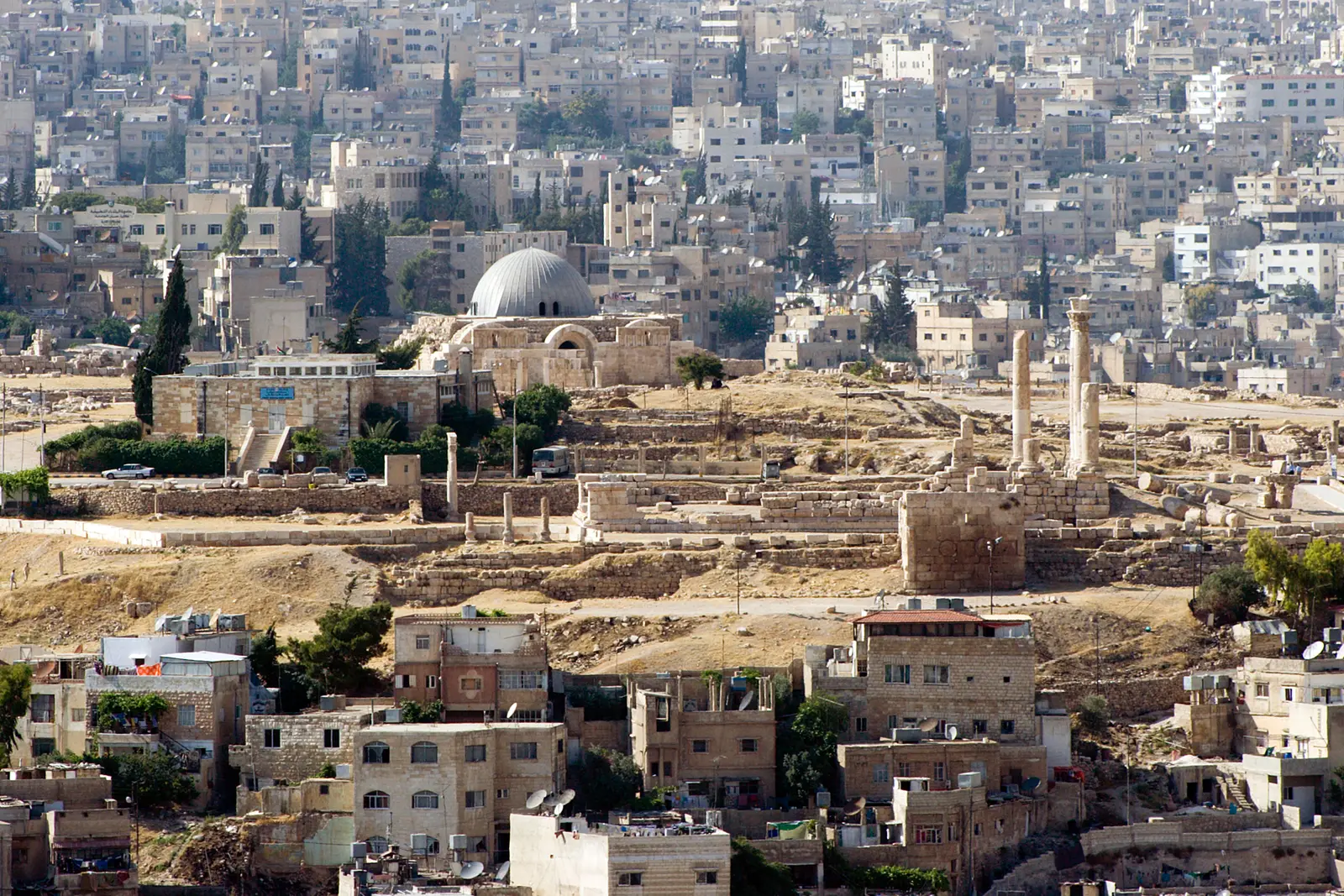
- Amman, the largest city and the centre of government, business and culture. It is built across a series of hills, called jabals, in the northern highlands, at an elevation of roughly 700 to 1,100 metres. In antiquity the city was known as Rabbath Ammon and later as Philadelphia.
- Area
- About 89,300 square kilometres, which makes Jordan roughly the size of Portugal or Austria. Most of this area is desert, while the majority of the population lives in a relatively narrow band of highlands and valleys in the west and north of the country.
- Population
- About 11 million people or more, according to recent estimates. The population is young and largely urban, with the greater Amman area home to a large share of all residents. Figures change over time, so official statistics give the most current number.
- Official language
- Arabic is the official language. Spoken Jordanian Arabic belongs to the Levantine family of dialects, close to those of neighbouring countries, while Modern Standard Arabic is used in writing, news and formal settings. English is widely spoken, especially in cities, universities, hotels and tourist areas, and is taught in schools.
- Currency
- The Jordanian Dinar (JOD), often written JD. One dinar is divided into 100 qirsh, also called piastres, or 1,000 fils. Banknotes and coins are both in common use, and prices in shops and restaurants are usually shown in dinars. Cash machines are easy to find in cities and larger towns.
- Time zone
- UTC+3 throughout the year. Jordan does not change its clocks between summer and winter, so the time difference with countries that use daylight saving time shifts by one hour across the seasons. When planning calls or flight connections, check the current difference with your home country.
- International calling code
- +962. When calling Jordan from abroad, dial the international access code of your country, then 962, then the local number without its first zero. Mobile numbers in Jordan usually begin with 07 when dialled locally, and landline numbers begin with a regional code such as 06 for Amman.
- Internet domain
- The country code top-level domain for Jordan is .jo. Government, university and many business websites use addresses that end in .gov.jo, .edu.jo or .com.jo, alongside international domains such as .com and .org. Official information for visitors is often published on websites ending in .gov.jo.
- Driving side
- Traffic drives on the right-hand side of the road, and most cars are left-hand drive. Road signs on main routes are usually written in both Arabic and English, which helps visitors who choose to rent a car. Distances are measured in kilometres, and speeds in kilometres per hour.
- Electricity
- The standard supply is 230 volts at 50 hertz. Plugs vary from building to building, and several European, British and other socket shapes are all encountered, sometimes in the same hotel. A universal travel adapter is the simplest way to be ready for any socket you find.
- Emergency number
- 911 is the single national emergency number for police, ambulance and civil defence, including fire and rescue services. Calls are free, and the number can be dialled from any phone, including mobile phones. It is useful to know the name or location of where you are staying when you call.
- Independence
- Jordan became an independent kingdom on 25 May 1946. Earlier, in 1921, the Emirate of Transjordan had been established with Amman as its capital. The present constitution dates from 1952 and has been amended several times since then. Independence Day is celebrated every year as a public holiday.
- National day
- Independence Day, celebrated every year on 25 May. It is a public holiday marked by flags across cities and villages, official ceremonies, fireworks and family gatherings. On this day the national colours of black, white, green and red are displayed on buildings, cars and balconies throughout the country.
The shape of the land
Jordan covers about 89,300 square kilometres. Along its western side runs the Jordan Rift Valley, part of a long natural fault that continues south to the Red Sea. This valley holds the River Jordan, fertile farmland and the Dead Sea, whose shore is the lowest point on land on Earth. East of the valley the ground rises steeply to a line of highlands, where most towns and cities stand, often between 700 and 1,200 metres above sea level.
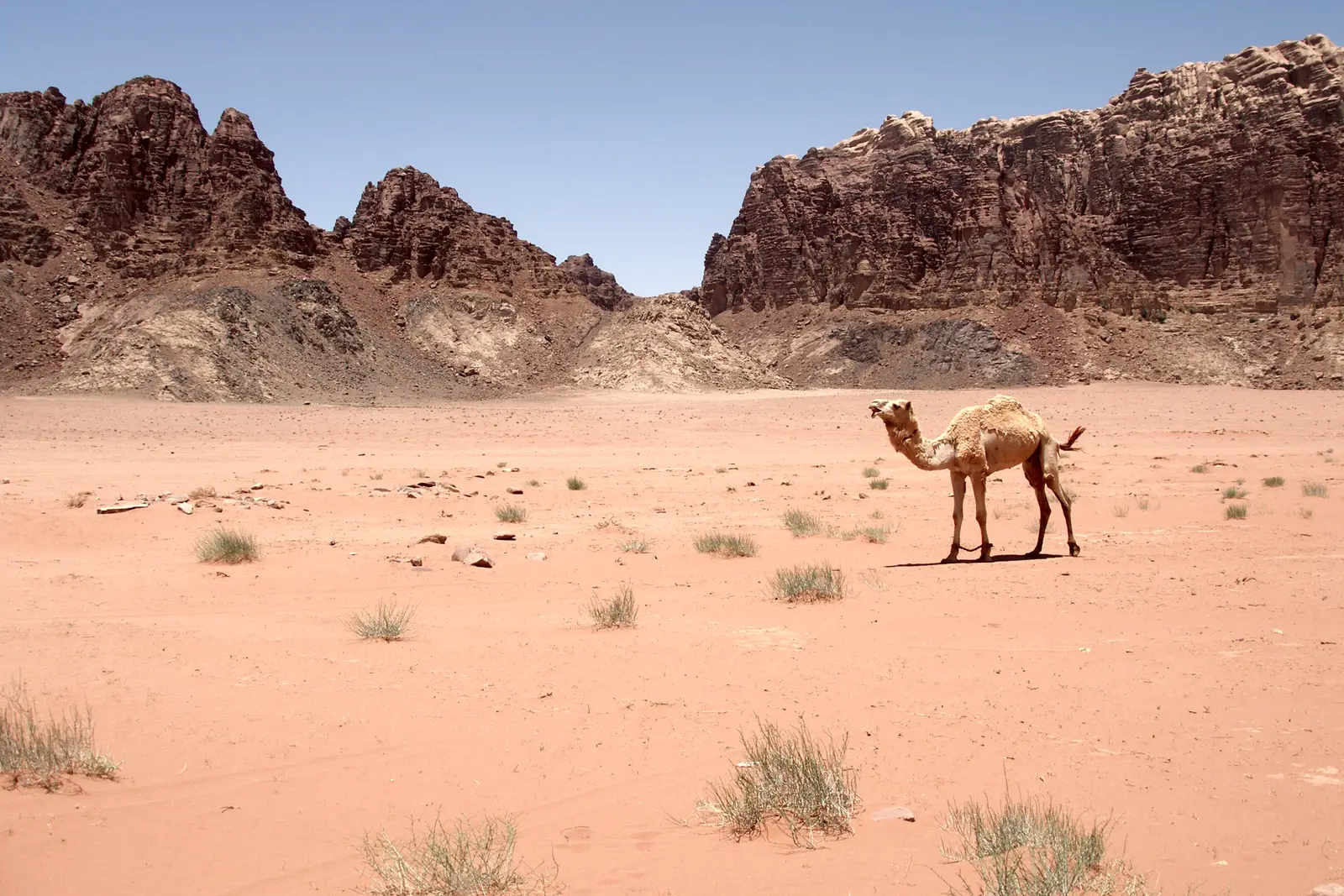
Further east, the highlands give way to the Badia, a wide desert of gravel plains, black basalt fields and sandstone that covers most of the country's area. In the far south, the land opens onto the Gulf of Aqaba, Jordan's only coastline, with warm water and coral reefs. Because these zones lie close together, a traveller can move from mountain forest to desert to seashore in a single day.
A crossroads of civilisations
Jordan sits where routes between Africa, Arabia, Mesopotamia and the Mediterranean world have crossed since ancient times. Caravans carrying incense, spices and textiles passed through its valleys and plateaus, and pilgrims, traders and scholars followed the same paths for centuries. Each passing culture left a mark, from Neolithic villages and Iron Age fortresses to Nabataean tombs, Roman streets, Byzantine churches and early Islamic palaces.
This long history is easy to see. In many places, ancient stones stand beside modern homes, and villages carry names that echo their Greek, Roman or Arabic past. Museums in Amman and other cities display objects from every period, while sites such as Petra, Jerash and the desert castles allow visitors to walk through the layers of the past.
The people and their hospitality
Jordanians are known for their warm welcome. Visitors are often greeted with the words ahlan wa sahlan, meaning 'you are welcome', and may be offered coffee or tea in a shop, a home or a desert camp. Hospitality has deep roots in Bedouin and village traditions, where caring for a guest is seen as a matter of honour.
The population is young, and most people live in the cities of the highlands, especially Amman, Zarqa and Irbid. Society brings together families of Bedouin, village and urban origin, as well as communities whose ancestors arrived from many places over the past two centuries. Arabic is the shared language, and English is widely understood, particularly in cities, hotels and tourist areas.
More from the guide
History & Heritage
Ten thousand years of human story
Read the guideHow the State Is Organised
Institutions, governorates and national symbols
Read the guideRegions & Governorates
Twelve governorates, three landscapes
Read the guideClimate & Seasons
When to go and what to pack
Read the guideRoads & Getting Around
Airports, highways, buses and taxis
Read the guideFood & Flavours
The Jordanian table
Read the guideCulture & Traditions
Hospitality, heritage and daily life
Read the guideNature & Wildlife
Reserves, trails and living landscapes
Read the guidePractical Information
Before you go and while you are there
Read the guide