
Vegetarian and vegan food in Jordan: what to order and what to ask
Jordan is easier for vegetarians than its reputation for mansaf suggests. Every table starts with mezze, and many of the best-loved dishes, from hummus and falafel to ful and mujaddara, contain no meat at all. Vegans need a little more care, because ghee, chicken stock and yoghurt appear in places you might not expect. This guide lists what is usually safe, what to ask about, and the Arabic phrases that make ordering simple.
Dishes that are usually plant-based
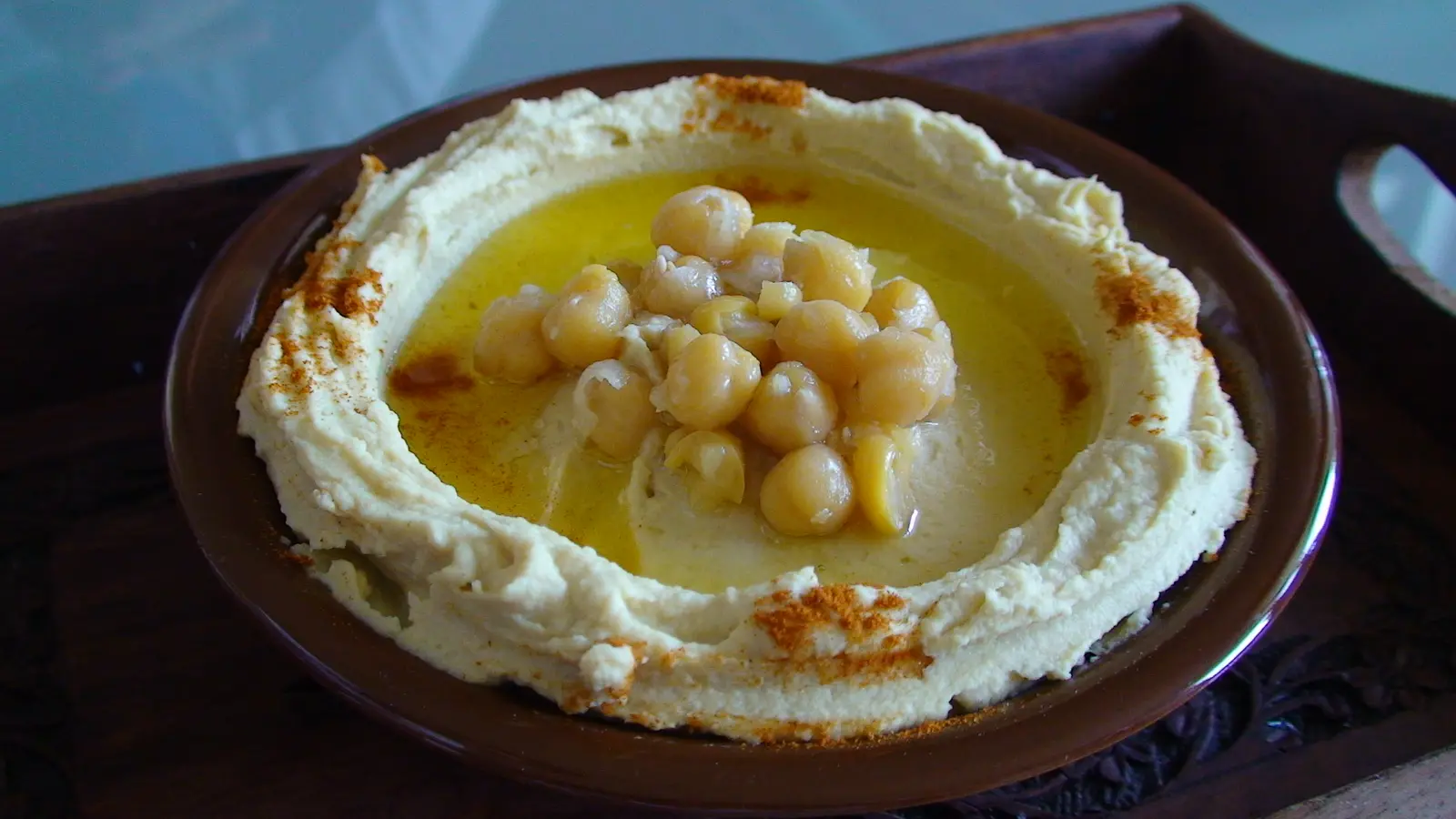
The classic Jordanian breakfast is almost entirely vegan: hummus, ful medames (slow-cooked fava beans with olive oil and lemon), falafel, fresh bread, tomatoes, cucumbers, olives and mint. Salads such as tabbouleh, Arabic salad and fattoush are usually vegan too, although some bakeries add milk to the bread used in fattoush.
Mujaddara, lentils and rice or bulgur topped with fried onions, is traditionally made with olive oil. Manakish with za'atar and olive oil is a vegan street snack. Vine leaves stuffed with rice and cooked in olive oil are vegan, but make sure you are not served the version filled with meat. Galayet bandora, a pan of tomatoes cooked with garlic and chilli, can be ordered with or without meat.
Vegetarian but not vegan
Several mezze contain dairy. Mutabbal, the smoky aubergine dip, is usually made with yoghurt or tahini and yoghurt; baba ghanoush, the chopped vegetable version, is more often dairy-free, but recipes vary. Labneh is strained yoghurt. Manakish with cheese, ka'ak sandwiches with egg and cheese, and cheese pastries are vegetarian but not vegan.
Sweets are the hardest part for vegans. Kunafa is made with white cheese and ghee or butter and soaked in syrup, and many pastries are brushed with ghee. Ask before ordering if this matters to you.
Hidden ingredients to ask about
Three ingredients catch vegetarians out. Samneh, clarified butter or ghee, is a common cooking fat, especially in rice and sweets. Lentil soup and rice are often cooked in chicken stock, even when no meat is visible. Jameed, the dried yoghurt that gives mansaf its sauce, is dairy, and mansaf itself is lamb cooked in that sauce.
One more point: in Jordanian Arabic the word for meat, lahmeh, usually means red meat. If you say you do not eat meat, you may still be offered chicken or fish, so say clearly that you do not eat any of them.
Useful Arabic phrases
Vegetarian is nabāti (نباتي), or nabātiyyeh (نباتية) for a woman. "I'm vegetarian" is ana shakhs nabāti (أنا شخص نباتي). "Without meat" is bidūn lahmeh (بدون لحمة), "without cheese" bidūn jibneh (بدون جبنة), "without ghee" bidūn samneh (بدون سمنة), "without chicken stock" bidūn maraqat jāj (بدون مرقة دجاج) and "without egg" bidūn bayd (بدون بيض).
To make yourself completely clear, say ma bākul luhūm wala jāj wala hatta samak (ما باكل لحوم ولا جاج ولا حتى سمك), "I don't eat meat, chicken or even fish". Vegans can add ma bākul muntajāt hayawāniyyeh (ما باكل منتجات حيوانية), "I don't eat animal products". There is no everyday Arabic word for vegan, so describing what you do not eat works better than a label.
Eating out and with families
Most restaurants do not mark vegetarian dishes on the menu, but almost every menu has a mezze and salad section, and a table of mezze with bread makes a full meal. Falafel and hummus shops are everywhere and are the easiest choice on the road. In Amman, newer cafés increasingly offer vegan options, but menus change, so check recent reviews.
If you are invited to a Jordanian home, hosts will often prepare a feast with meat at the centre. Mention your diet politely in advance; hospitality is a point of pride, and most hosts are happy to add vegetable dishes when they know.
Christians in Jordan, especially in the Eastern churches, traditionally fast from meat and dairy during Lent, and plant-based home dishes known as siyami, fasting food, are common in Christian homes at that time. Jordan's churches celebrate Easter together on the Orthodox date, which in 2027 is expected on 2 May.
Frequently asked questions
Is it easy to be vegetarian in Jordan?
Yes. Mezze such as hummus, falafel, ful and salads are served everywhere, and a mezze spread with bread is a full meal. You only need to ask about stock and ghee in cooked dishes.
Can vegans eat well in Jordan?
Yes, with a few questions. Breakfast dishes, falafel, hummus, ful, tabbouleh and mujaddara are usually vegan, but dips may contain yoghurt and rice or soup may be cooked with ghee or chicken stock. Most sweets contain ghee or cheese.
How do I say vegetarian in Arabic?
Nabāti (نباتي), or nabātiyyeh for a woman. "Without meat" is bidūn lahmeh (بدون لحمة).
Is falafel in Jordan vegan?
Yes. Jordanian falafel is made from chickpeas, herbs and spices and fried in vegetable oil, and it is usually served with tahini, salad and pickles.
Is mansaf vegetarian?
No. Mansaf, Jordan's national dish, is lamb cooked in a sauce of jameed, a dried yoghurt, and served on rice.
More travel essentials

Jordan visa by nationality: who needs one, how to get it and what it costs
Is Jordan safe to visit? A practical guide for travellers
Jordan Pass and visa: what it includes and is it worth it?
Petra by Night: candles, music and the Treasury after dark
Day trips from Amman: the best places within two hours
Shrines of the Prophet's Companions in Jordan
Prophets in Jordan: holy sites linked to their stories
Dead Sea products: mud, salt and minerals, and how to use them
Last updated: