Jordan for Muslim travellers: halal food, prayer, Friday and Ramadan
Jordan is a majority Muslim country, so most of what a Muslim traveller needs is simply part of daily life: halal meat, the call to prayer in every town, mosques within walking distance and a weekend that starts on Friday. This guide covers the practical details: food, prayer, visiting mosques, what changes in Ramadan, the expected dates for 2027 and the shrines of the Prophet's companions. Dates of Ramadan and Eid depend on the sighting of the moon, so confirm them nearer the time.
Halal food
Meat sold in Jordan is halal as standard. Jordan Customs lists an original halal slaughter certificate among the documents required to import meat, and pork is rarely found. In everyday restaurants, street food stalls and hotel buffets you can order lamb, chicken and beef without special requests.
The Jordan Standards and Metrology Organization (JSMO) also runs a voluntary halal certification service with its own logo, used mainly by Jordanian food producers who export. Because it is voluntary, you will not see this mark on every product, and its absence does not mean that a local product is not halal. If you want extra certainty about an imported packaged product, check its label as you would at home.
Prayer and mosques
You will hear the call to prayer five times a day across the country, and in towns there is usually a mosque within a short walk. Many hotels can tell you the direction of the qibla, and some rooms have a sign on the ceiling or in a drawer. From Amman the qibla is about 161 degrees from true north, that is south-south-east; from Aqaba it is about 154 degrees. A qibla app on your phone is the simplest tool. Travellers' guides report prayer rooms at Queen Alia International Airport; at desert camps and remote sites, ask your host where to pray.
Three mosques in Amman are worth knowing. The King Abdullah I Mosque in Abdali, with its large blue dome, was built between 1982 and 1989 and has a small Islamic museum; it is the mosque in Amman best known for welcoming non-Muslim visitors outside prayer times. The Grand Husseini Mosque in downtown Amman, beside the gold market, was rebuilt from 1924 on the site of an early Islamic mosque and is the heart of the old city. The King Hussein Bin Talal Mosque in West Amman, with four minarets, was inaugurated in 2006.
Friday and the weekend
The official weekend in Jordan is Friday and Saturday. On Friday the midday sermon and prayer, around noon to one o'clock depending on the season, is the quietest time of the week: many shops in downtown areas open later or close for a few hours, and traffic is light in the morning. Major sites such as Petra open every day, but it is worth planning a relaxed Friday morning and checking the opening times of any small shop, museum or office you want to visit.
Ramadan and Eid in 2027
Ramadan 2027 is expected to begin around 7 or 8 February and to end around 8 or 9 March, with Eid al-Fitr around 9 or 10 March. Eid al-Adha is expected around 16 or 17 May 2027, after the Day of Arafah around 15 May. These are astronomical estimates; in Jordan the dates are announced after the sighting of the new moon.
During Ramadan the rhythm of the day changes. Government offices work shorter hours (in 2026 they were set at 9:00 to 14:30), many shops and restaurants close in the afternoon and come alive after iftar at sunset, and streets are busy late into the night. Eating, drinking or smoking in public view during fasting hours is an offence under Jordan's penal code, which applies to everyone. Tourist restaurants and hotels may serve food during the day, usually behind screened windows. Roads are busier just before iftar, so allow extra time and drive carefully.
The shrines of the companions
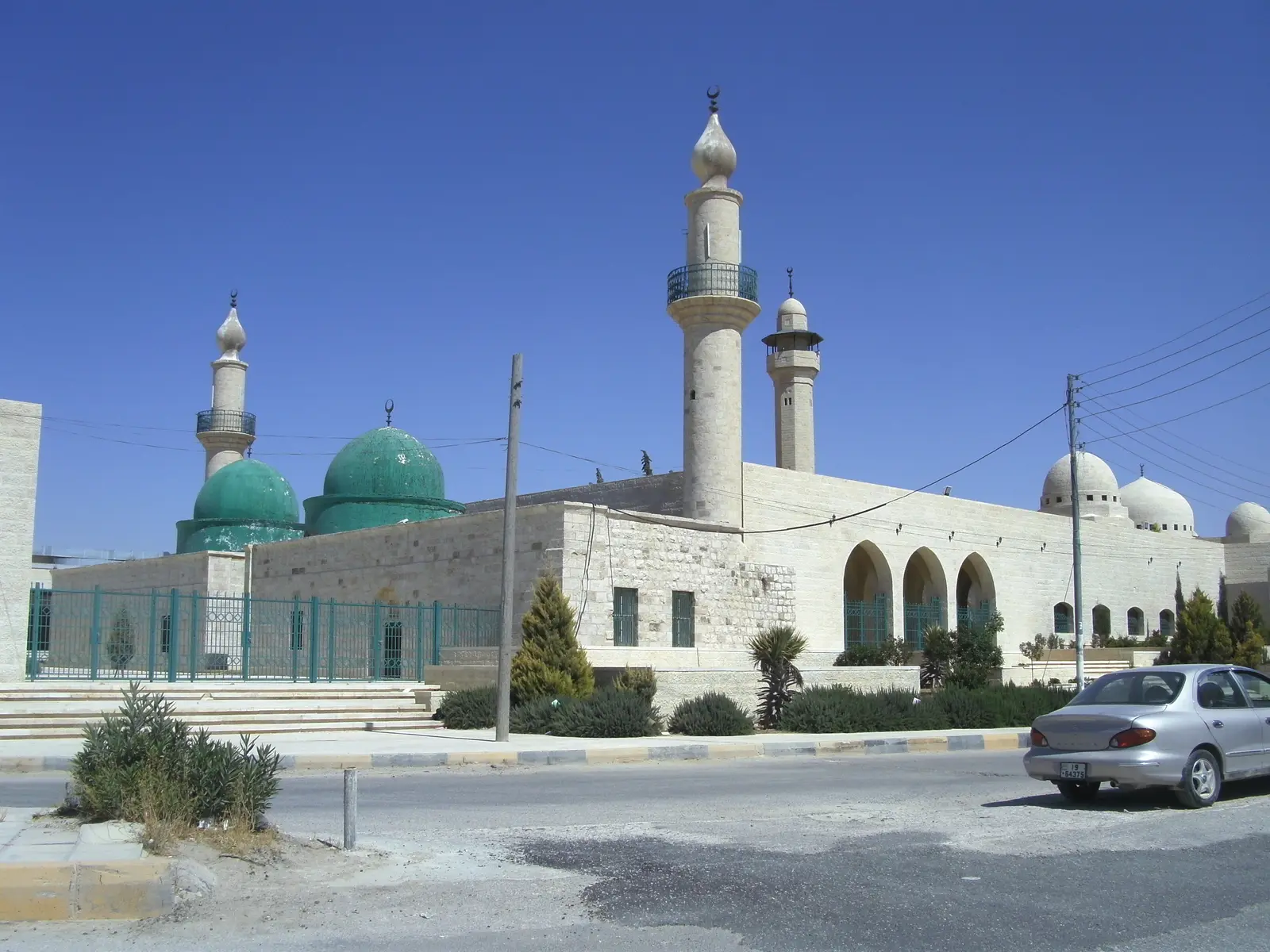
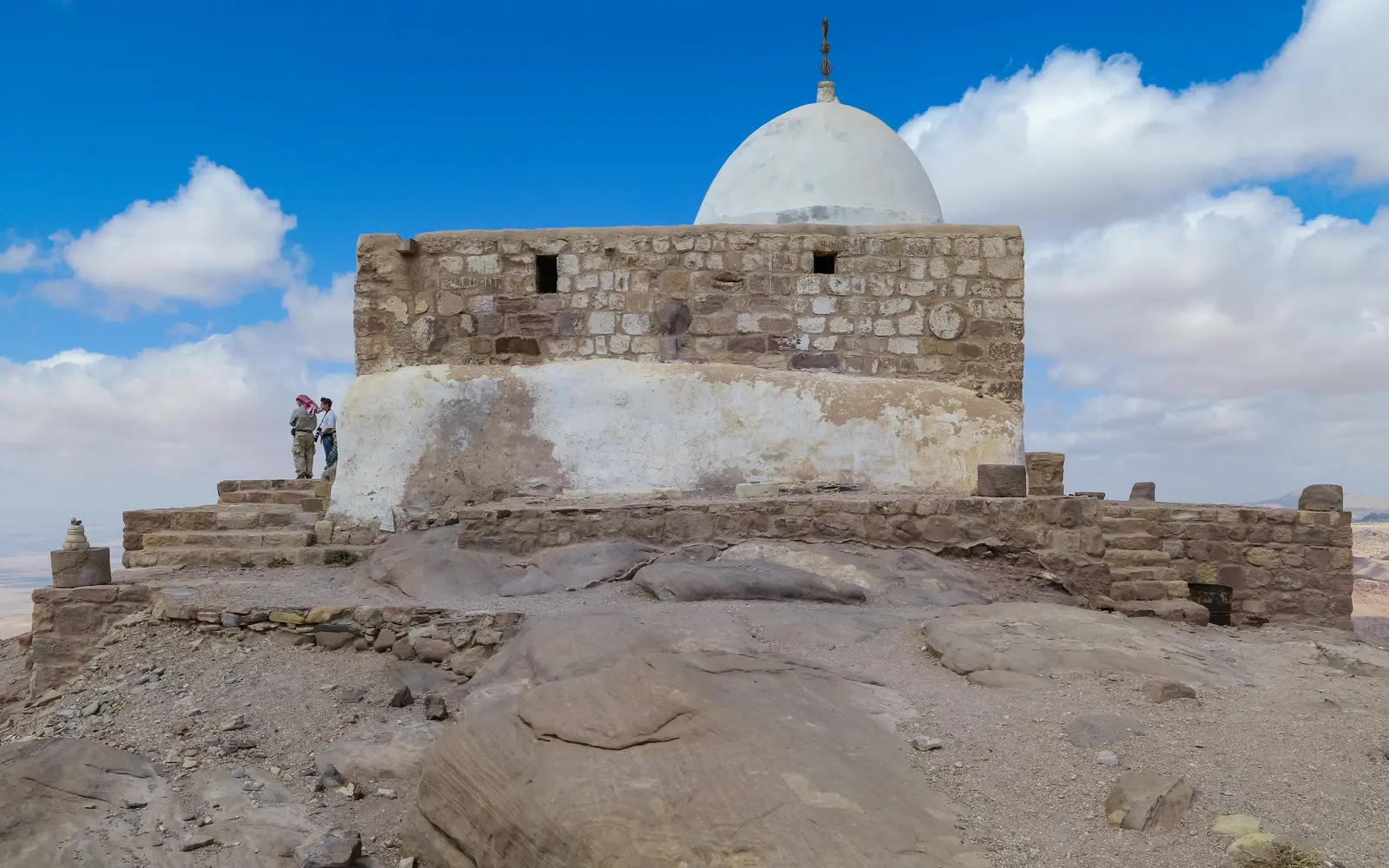
Jordan holds the tombs of several companions of the Prophet, peace be upon him, and they are a reason many Muslim visitors come. At Al-Mazar al-Janubi near Karak, a large mosque complex surrounds the shrines of Ja'far ibn Abi Talib, Zayd ibn Haritha and Abdullah ibn Rawaha, who fell at the Battle of Mu'tah in 8 AH. Services at the shrines are developed by the Ministry of Awqaf, and the buildings by a royal committee for the mosques and shrines of the prophets and companions. Our guides to the shrines of the companions and the sites of the prophets describe each place and how to reach it.
At a shrine, follow the same courtesy as in a mosque: modest dress, shoes off where the floor is carpeted, women covering their hair, and quiet voices, especially during prayer.
Dress and etiquette
There is no law requiring women to wear a headscarf, and many Jordanian women do not, but modest dress is the norm, especially outside the richer districts of Amman and during Ramadan. Covering shoulders and knees is a good rule for everyone. At a mosque, women also cover their hair, and the King Abdullah I Mosque lends long robes and headscarves at the entrance. Remove your shoes before entering a prayer hall and avoid walking in front of people who are praying.
Frequently asked questions
Is food in Jordan halal?
Yes. Meat sold in Jordan is halal as standard, imported meat needs a halal slaughter certificate, and pork is rarely found. You can order meat dishes in ordinary restaurants without special requests.
Is it easy to pray while travelling in Jordan?
Yes. The call to prayer is heard across the country, towns have mosques within a short walk, and hotels can show you the qibla. In remote areas such as Wadi Rum, ask your camp where to pray.
When is Ramadan in 2027?
It is expected to start around 7 or 8 February 2027 and end around 8 or 9 March, with Eid al-Fitr around 9 or 10 March. Jordan confirms the dates after the moon sighting.
Is it a good idea to visit Jordan in Ramadan?
Yes, if you enjoy a different rhythm: the days are quieter and the evenings after iftar are lively. Sites stay open, but opening hours of shops and offices are shorter, and eating in public during fasting hours is not allowed.
Which day is the weekend in Jordan?
Friday and Saturday. Friday morning is quiet and many shops open after the midday prayer.
Do women have to wear a headscarf in Jordan?
No, there is no such law, but modest dress is expected, and women cover their hair when entering a mosque or shrine.
More travel essentials

Vegetarian and vegan food in Jordan: what to order and what to ask
Jordan visa by nationality: who needs one, how to get it and what it costs
Is Jordan safe to visit? A practical guide for travellers
Jordan Pass and visa: what it includes and is it worth it?
Petra by Night: candles, music and the Treasury after dark
Day trips from Amman: the best places within two hours
Shrines of the Prophet's Companions in Jordan
Prophets in Jordan: holy sites linked to their stories
Last updated: