Ma'an Governorate
Ma'an Governorate is the largest in Jordan by area, covering southern highlands, sandstone mountains and wide desert plains. It is home to Petra, the country's most famous site, and to the town of Wadi Musa that welcomes its visitors. Medieval castles and a historic railway city add more layers to its story.
Highlands, sandstone and desert
The western edge of Ma'an Governorate follows the southern highlands, which rise to around 1,500 metres near Shobak before dropping west through a maze of sandstone mountains towards Wadi Araba. Petra lies hidden within these mountains. East of the highlands, a vast, flat desert plateau stretches for hundreds of kilometres, broken only by low hills and dry basins such as Al-Jafr. In the south, the escarpment of Ras an-Naqab offers sweeping views over the desert towards the mountains of Wadi Rum.
Ma'an, Wadi Musa and Shobak
The city of Ma'an is an old oasis town on the edge of the desert and the main commercial centre of the south. Wadi Musa, the town beside Petra, has grown into a busy centre for visitors, with hotels, restaurants and shops built on the hillside above the ancient city. Its name means the Valley of Moses, and local tradition links its spring, Ain Musa, with the story of Moses striking a rock to bring forth water. Shobak, in the north of the governorate, is a farming town known for its orchards and its castle.
From the Nabataeans to the railway
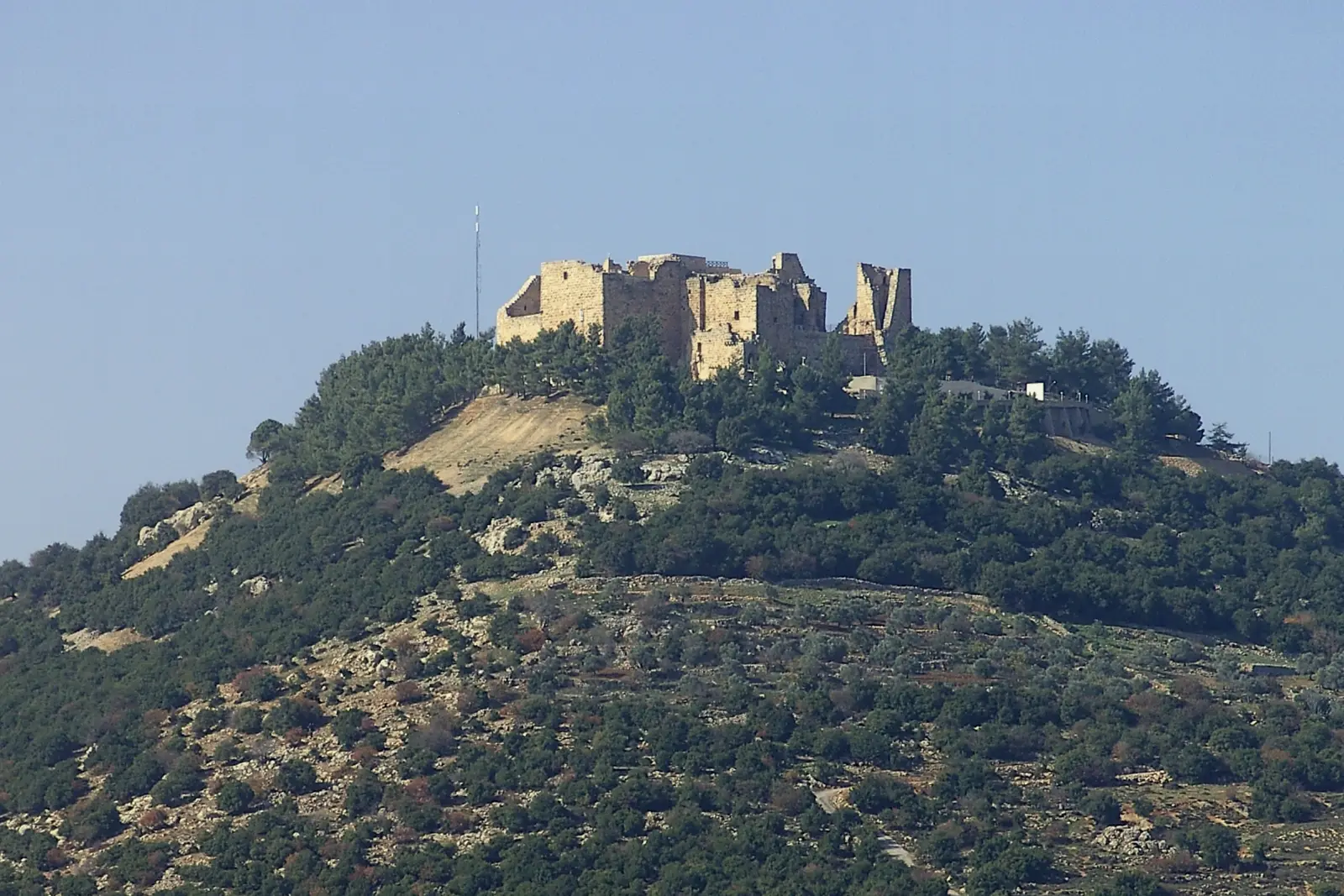
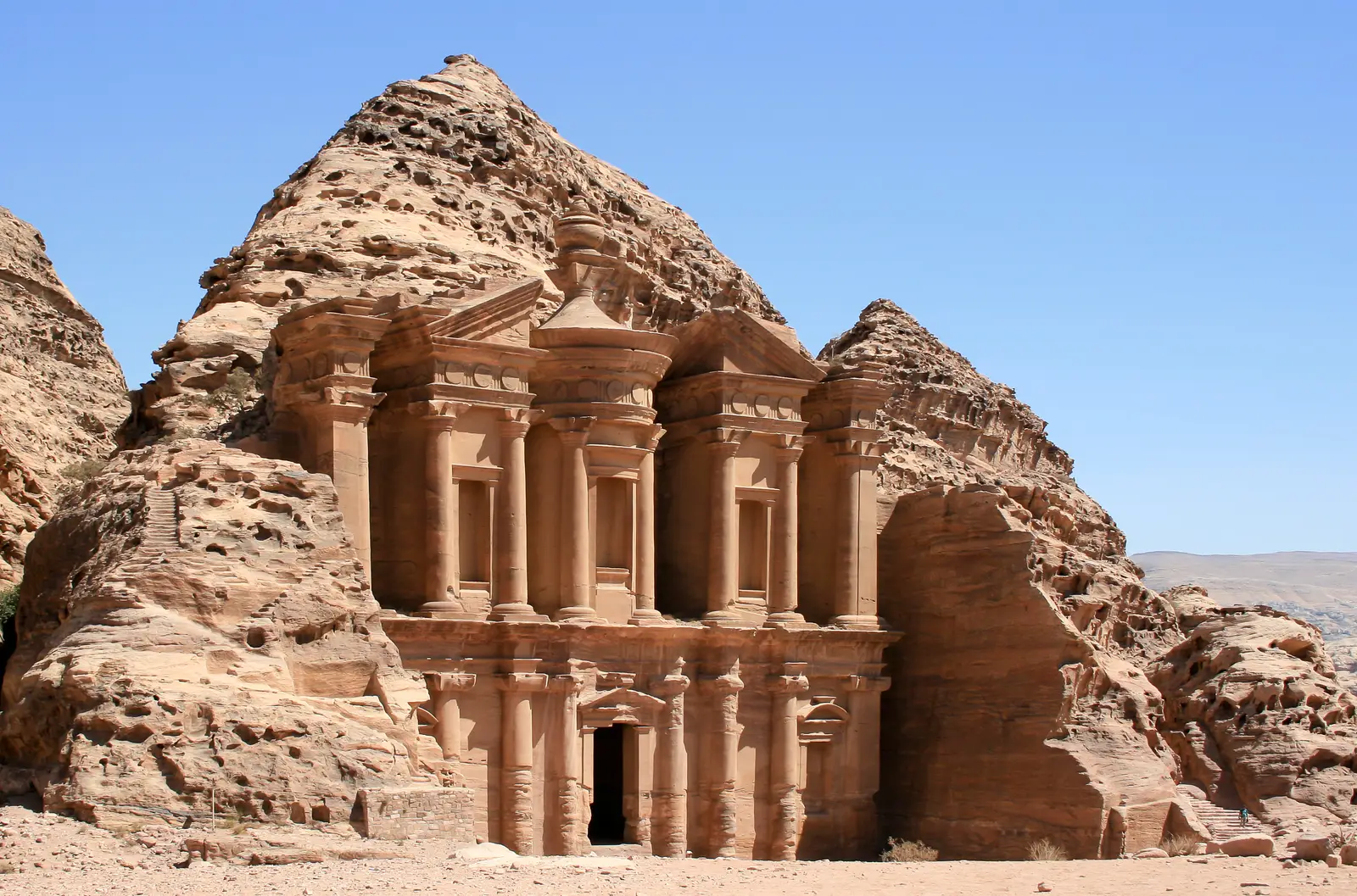
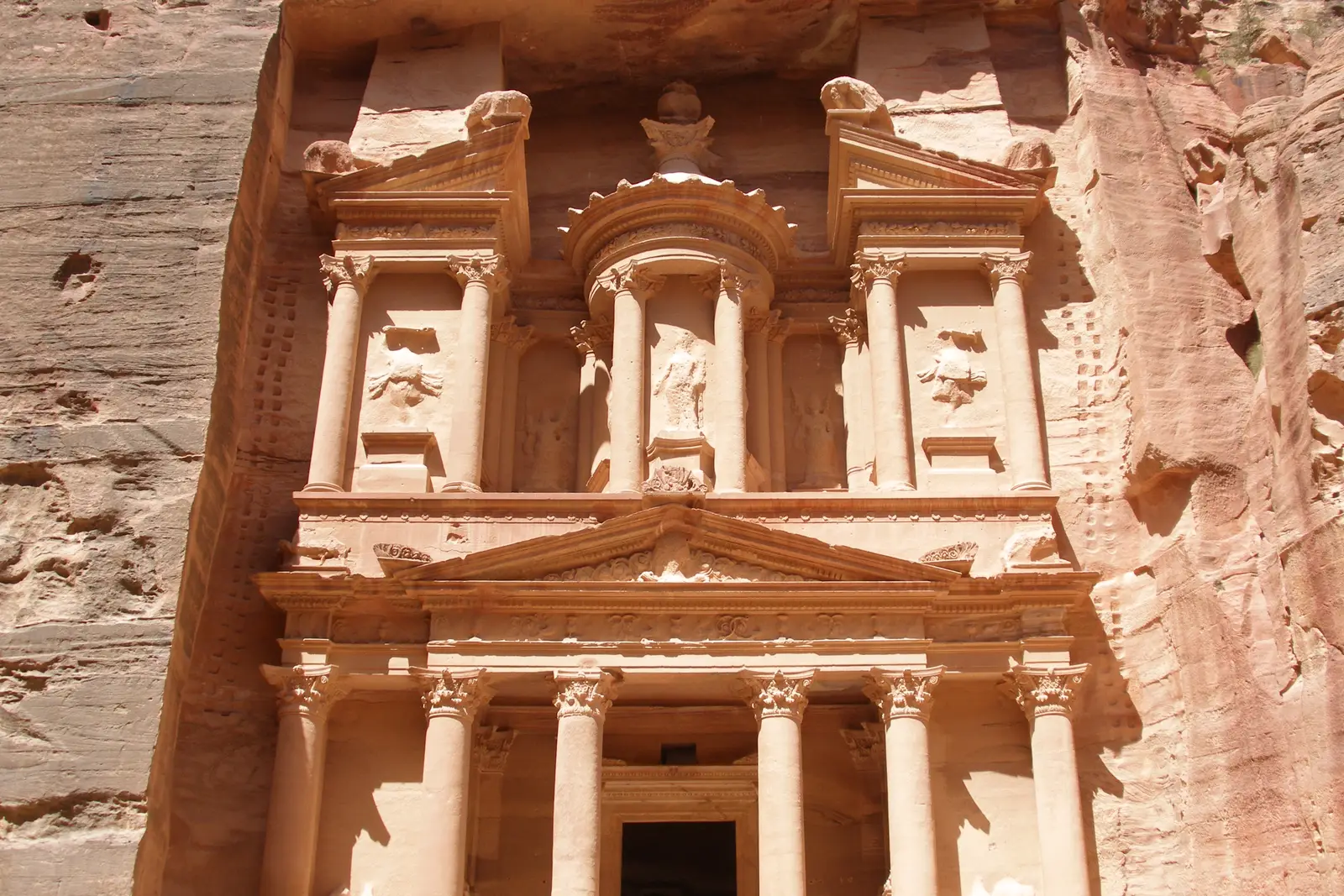
The Nabataeans made Petra their capital more than two thousand years ago, and their tombs, temples and water systems now form a UNESCO World Heritage Site. Little Petra, or Siq al-Barid, a smaller Nabataean area north of Petra, lies close to Beidha, one of the earliest farming villages in the region, about nine thousand years old. Shobak Castle, built by the Crusaders in 1115 and later rebuilt by the Ayyubids and Mamluks, stands on a steep hill. Ma'an was an important stop on the pilgrimage route to Mecca and on the Hejaz Railway, and its old station still stands.
Hiking and desert landscapes
Beyond the main trails of Petra, the mountains around Wadi Musa offer longer hikes, such as the route from Little Petra to the Monastery and the climbs to the high places above the ancient city. The Jordan Trail crosses the governorate, linking Dana and Shobak with Petra and continuing south towards Wadi Rum. The highlands around Shobak are cooler and greener, with fruit orchards and open views. East of Ma'an, the desert is home to hardy plants and small animals adapted to heat and drought, and the night skies are dark and clear.
Bedouin life and local food
Bedouin families who once lived among the caves and tombs of Petra now live in nearby villages, and many work as guides, traders and drivers around the site. Traditional dishes include maqluba, mansaf and zarb, meat and vegetables slow-cooked in a pit in the sand. Sweet Bedouin tea, often flavoured with sage, is offered everywhere as a sign of welcome. Shobak is known for its apples, almonds and other fruit, and the markets of Ma'an sell grain, spices and household goods to the surrounding region.
Highlights
- 1Petra and the Treasury
- 2The Monastery (Ad-Deir) and the high places of Petra
- 3Little Petra (Siq al-Barid) and Beidha
- 4Shobak Castle
- 5Ain Musa spring in Wadi Musa
- 6The Ras an-Naqab viewpoint
- 7The Hejaz Railway station in Ma'an
Frequently asked questions
Is Petra in Ma'an Governorate?
Yes. Petra and the neighbouring town of Wadi Musa are in Ma'an Governorate, in the mountains of southern Jordan. The city of Ma'an, the governorate's capital, lies about 35 kilometres to the east on the edge of the desert. Most visitors to Petra stay in Wadi Musa, which is next to the entrance of the archaeological park.
What else is there to see near Petra?
Little Petra, or Siq al-Barid, is a short drive north of Wadi Musa and has Nabataean buildings in a narrow canyon, close to the Neolithic village of Beidha. Shobak Castle, a Crusader fortress on a steep hill, is about 45 minutes away. Further afield, Dana Biosphere Reserve lies about an hour to the north and Wadi Rum about one and a half hours to the south.
Where should I stay when visiting Petra?
Most visitors stay in Wadi Musa, the town at the entrance to Petra, which has accommodation for every style of travel, from simple guesthouses to large hotels. Staying here lets you enter the site early in the morning, when it is cooler and quieter. Some travellers prefer camps and lodges in the countryside near Little Petra for a quieter, more rural setting.
When is the best time to visit southern Jordan?
Spring, from March to May, and autumn, from September to November, are the most comfortable seasons, with warm days and cool evenings. Summers are hot, especially in the lower valleys and the desert. Winters are cool to cold in the highlands around Petra and Shobak, with occasional rain and even snow, though days are often clear and sunny.
Other governorates
Aqaba Governorate
Amman Governorate
Irbid Governorate
Zarqa Governorate
Balqa Governorate
Mafraq Governorate
Jerash Governorate