Zarqa Governorate
Zarqa Governorate begins just north-east of Amman, around one of Jordan's largest cities, and reaches far into the eastern desert. Beyond the busy urban area lie wide basalt and gravel plains, the oasis of Azraq and some of the most remarkable early Islamic buildings in the region.
From river valley to open desert
The governorate takes its name from the Zarqa River, the second-largest tributary of the Jordan River, known in ancient times as the Jabbok. Its upper course runs through the city before turning west towards the Jordan Valley. East of the city, the landscape changes quickly into the Badia, a vast desert of gravel plains, low hills and fields of dark basalt. In the middle of this dry country lies the Azraq basin, where underground water once fed large pools and marshes, creating the only true oasis of the eastern desert and a resting place for travellers and birds.
Zarqa city and its towns
The city of Zarqa grew rapidly during the twentieth century and is today one of the most populous cities in Jordan, closely linked with Amman and Russeifa. It is an important centre of industry, trade and transport, with busy markets and many small workshops and family businesses. The Hashemite University lies just outside the city. Further east, the small town of Azraq grew around the oasis and has long been a meeting point for people crossing the desert, as well as the natural stop for visitors to the nearby castles and nature reserves.
Desert castles and early Islamic heritage
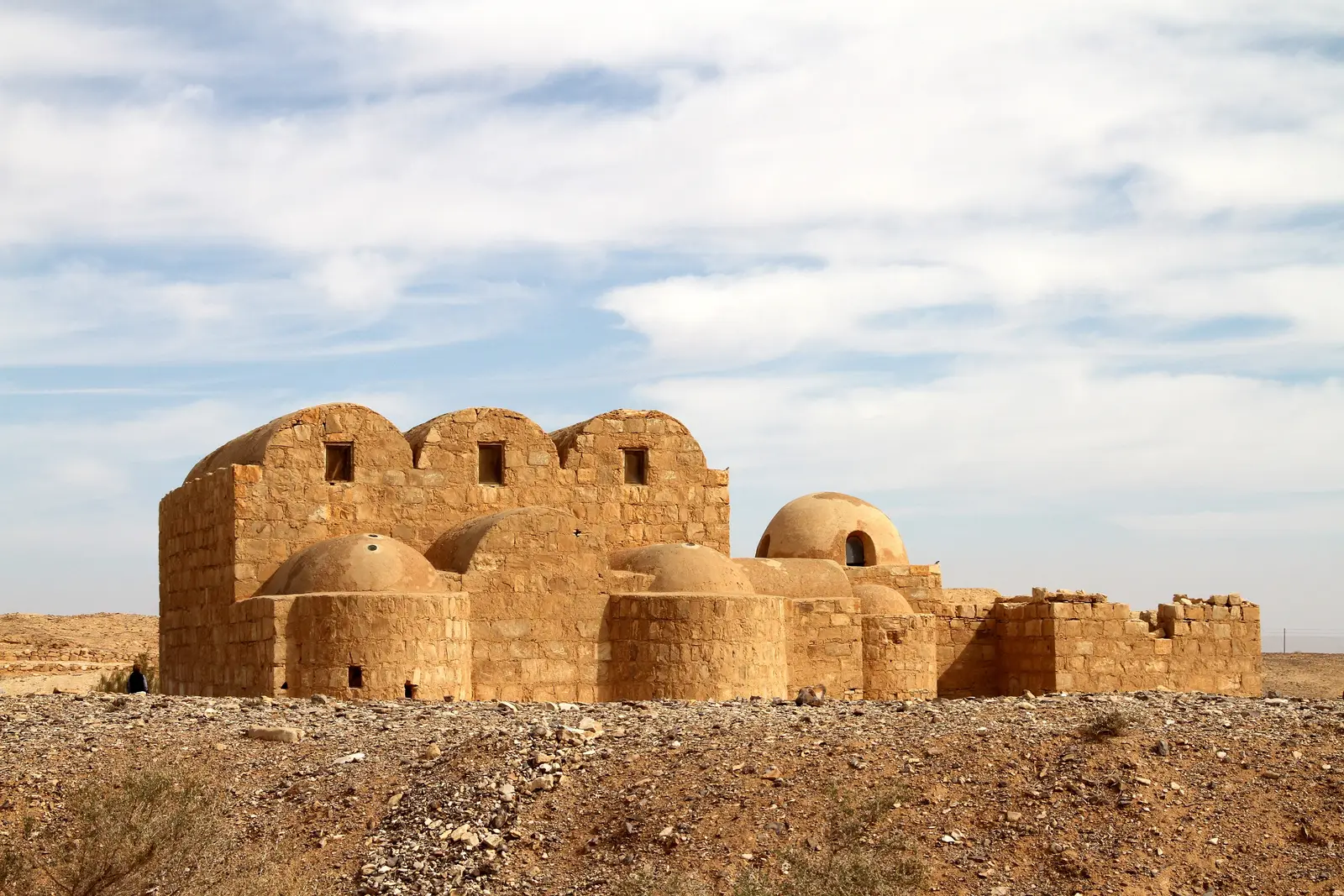
The eastern part of the governorate holds several of the famous desert castles, most of them built by the Umayyad caliphs in the seventh and eighth centuries. Qusayr Amra, a small bathhouse and reception hall, is a UNESCO World Heritage Site because of its remarkable wall paintings of hunting scenes, musicians and animals, and a dome painted with the night sky. Qasr al-Hallabat began as a Roman fort and was later turned into an Umayyad residence, with the bathhouse of Hammam as-Sarah nearby. In Azraq, a fortress of black basalt served as a winter base for T. E. Lawrence during the Arab Revolt.
Wetlands and wildlife
The Azraq Wetland Reserve protects what remains of the oasis pools and marshes. A wooden walkway leads through reeds and open water, where migrating birds stop in spring and autumn, and the small Azraq killifish, found nowhere else in the world, survives in its waters. Nearby, the Shaumari Wildlife Reserve was created to bring back animals that had disappeared from the wild in Jordan. Its best-known residents are Arabian oryx, which live alongside onagers, gazelles and ostriches. Visitors can see them on guided drives across the reserve.
Everyday life and local flavours
Life in Zarqa city is practical and busy, centred on work, family and the local market. Bakeries, grill restaurants and sweet shops line the main streets, and falafel, hummus and fresh bread are everyday staples. In Azraq, roadside restaurants serve grilled meat, rice dishes and strong tea to travellers. The desert communities of the east keep Bedouin traditions of hospitality, in which coffee flavoured with cardamom is offered to guests as a sign of welcome. Winter and spring are the most comfortable seasons for exploring the eastern part of the governorate.
Highlights
- 1Qusayr Amra and its Umayyad wall paintings
- 2Qasr al-Azraq, the black basalt fort
- 3Azraq Wetland Reserve
- 4Shaumari Wildlife Reserve and the Arabian oryx
- 5Qasr al-Hallabat and Hammam as-Sarah
- 6The markets of Zarqa city
Frequently asked questions
What is there to see in Zarqa Governorate?
Most visitors come for the east of the governorate. There you can see Qusayr Amra, a UNESCO-listed Umayyad bathhouse with painted walls, the black basalt fort of Qasr al-Azraq, Qasr al-Hallabat, the Azraq Wetland Reserve with its birdlife and the Shaumari Wildlife Reserve, home to Arabian oryx. The city of Zarqa itself is mainly a working city with busy markets and local restaurants.
How do I get to Azraq from Amman?
Azraq is about 100 kilometres east of Amman, roughly one and a half hours by car. Many visitors drive along the highway that passes Qasr al-Kharana and Qusayr Amra, so the castles can be visited on the way, and return through Zarqa past Qasr al-Hallabat. Public transport to Azraq is limited, so a rental car, a hired driver or an organised tour is the easiest option.
What animals can you see at Shaumari Wildlife Reserve?
Shaumari is best known for the Arabian oryx, a white desert antelope with long straight horns that had disappeared from the wild before being bred and returned here. The reserve also shelters onagers, gazelles and ostriches, as well as foxes, desert birds and reptiles. Animals are usually seen on guided drives, and early morning or late afternoon is the best time to watch them.
Is there still water in the Azraq oasis?
Much of the original oasis dried up in the late twentieth century, as water from the basin was pumped to supply growing cities. Conservation work has restored part of the wetland, which now holds pools, reeds and marshland inside the Azraq Wetland Reserve. Water levels change with the season and from year to year, and spring is usually the best time to see migrating birds.
Other governorates
Balqa Governorate
Mafraq Governorate
Jerash Governorate
Ajloun Governorate
Madaba Governorate
Karak Governorate
Tafilah Governorate