Irbid Governorate
Irbid Governorate covers the fertile far north of Jordan, from rolling wheat fields and olive groves to the warm farmland of the northern Jordan Valley. Its capital, Irbid, is one of the country's largest cities and a busy centre of student life. Ancient cities such as Umm Qais and Pella make the region rewarding for travellers.
Plains, hills and the Yarmouk valley
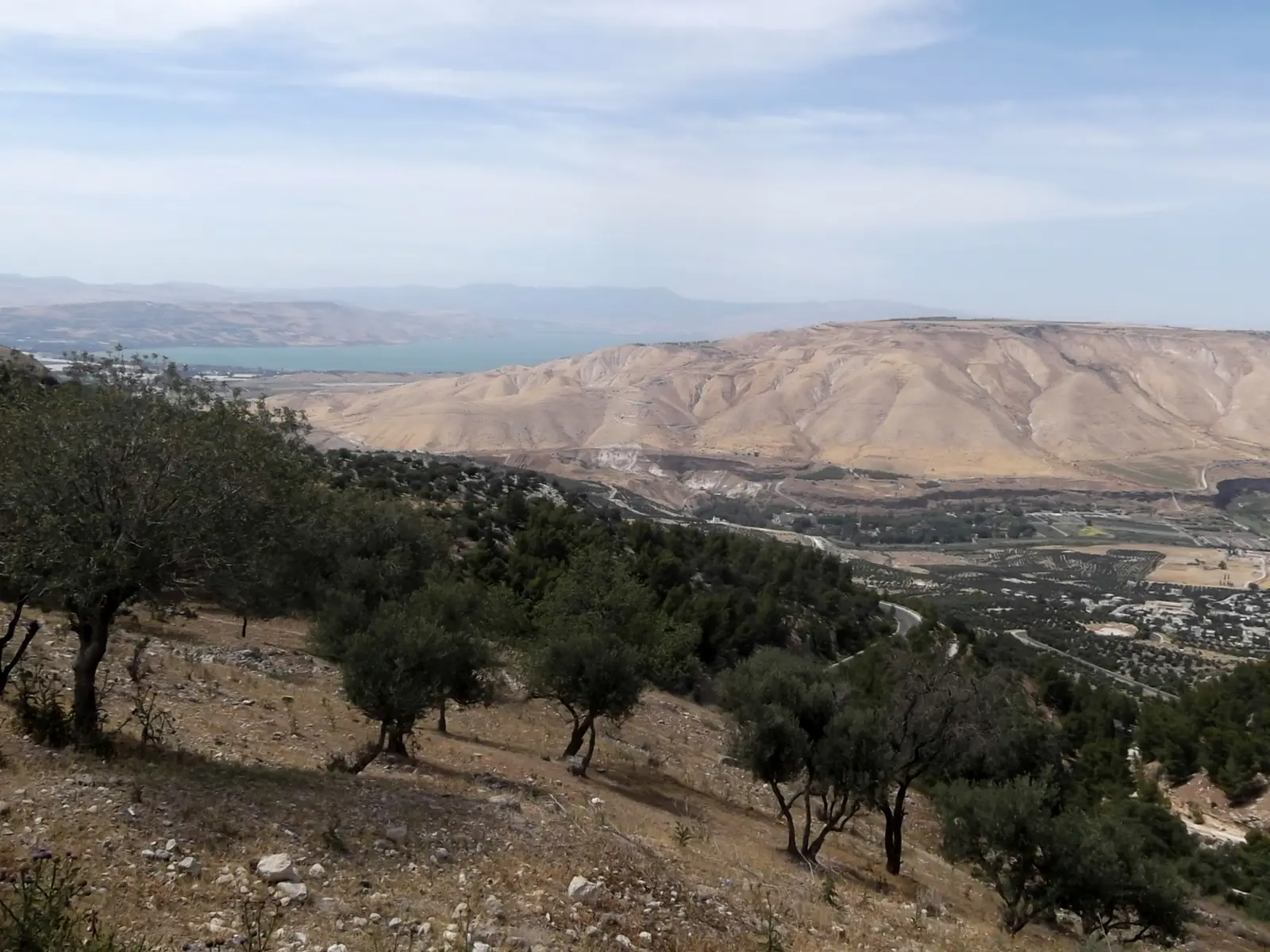
The north of Jordan receives more rain than most of the country, and Irbid Governorate shows it. Around the city of Irbid lies a broad, fertile plateau where wheat, barley and vegetables grow in winter and spring, and olive groves cover the slopes. To the north, the land drops steeply into the gorge of the Yarmouk River, the largest tributary of the Jordan. To the west, it falls into the northern Jordan Valley, where a warm climate and irrigation water support farming throughout the year, with citrus orchards, banana plantations and fields of vegetables.
Irbid and the towns of the north
Irbid is the main city of northern Jordan and one of the largest in the country. It is known above all as a university city, home to Yarmouk University and close to the Jordan University of Science and Technology. The streets near the campus are full of simple restaurants, bookshops and cafés that stay busy late into the evening. The city stands around an ancient mound, Tell Irbid, which shows that people have lived here since the Bronze Age. Smaller towns such as Ramtha and Al-Husn, and the villages of Bani Kinanah, are surrounded by farmland and orchards.
Ancient cities and heritage
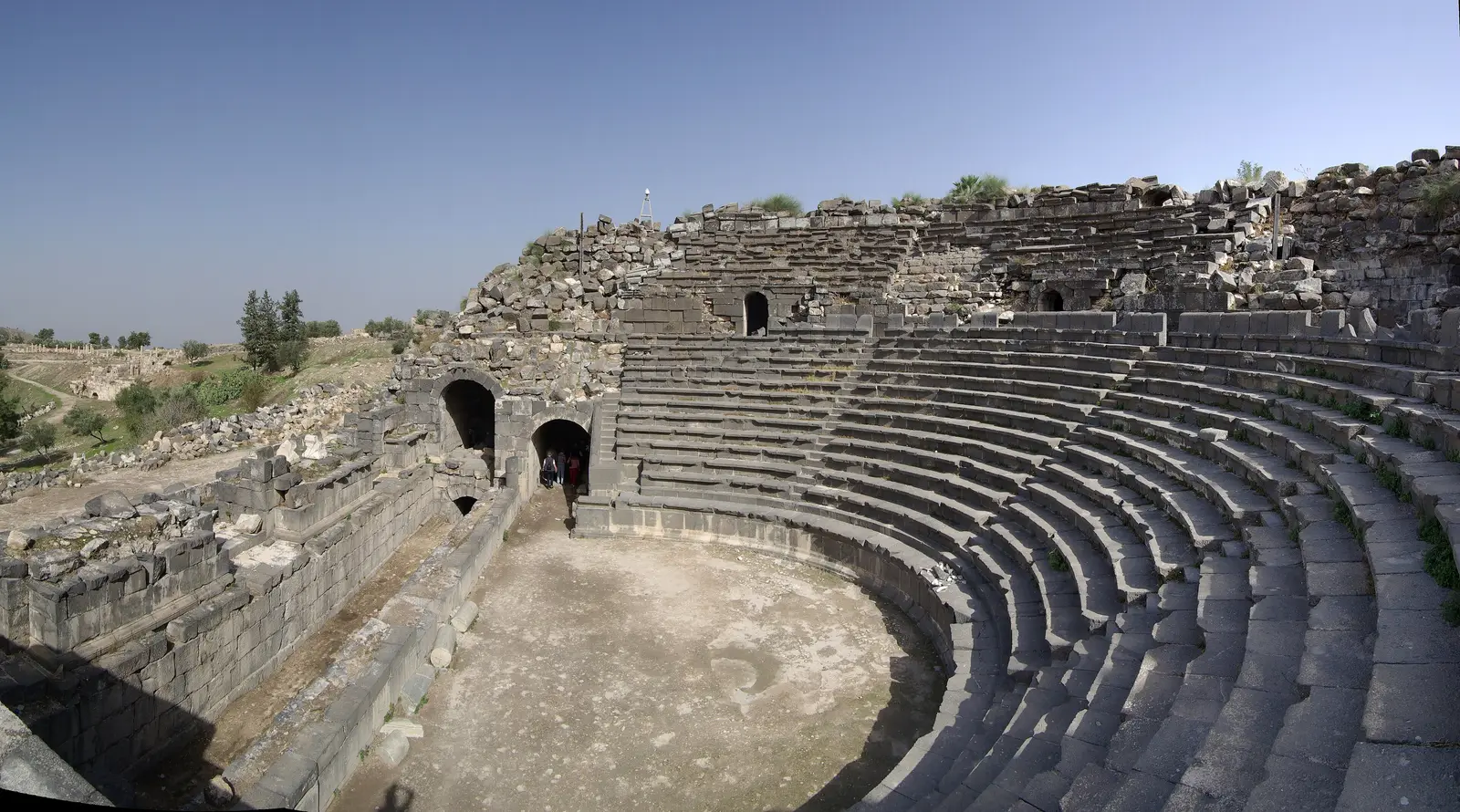
The governorate is rich in archaeology. Umm Qais, the ancient Gadara, was a Greek and Roman city of the Decapolis, built of black basalt and pale limestone on a ridge above the Yarmouk. In ancient times it was known for its poets and philosophers. Pella, in the Jordan Valley, has been inhabited for many thousands of years, with remains from the Stone Age through the Roman, Byzantine and Islamic periods. Beit Ras, ancient Capitolias, was another Roman city. The Museum of Jordanian Heritage at Yarmouk University displays archaeological finds and traditional crafts from across the country.
Nature and the outdoors
Spring is the best season to enjoy the countryside of the north, when the hills turn green and wildflowers appear in the fields and among the olive trees. The Yarmouk area has oak woodland and a protected forest reserve, and birds of prey can often be seen above its gorges. Walking routes cross the hills between villages, including the first sections of the long-distance Jordan Trail, which begins at Umm Qais and runs the length of the country. Near the river, the warm mineral springs of Al-Himma are a popular place for local families to relax.
Local life, farming and food
Farming shapes daily life across much of the governorate. The olive harvest in October and November is a family event, and fresh olive oil from the north is highly valued throughout Jordan. Markets in Irbid sell seasonal fruit and vegetables from the valley, as well as cheeses, labneh and za'atar. Popular dishes include mansaf, maqluba and musakhan, chicken roasted with onions and sumac on bread soaked in olive oil. The large student population keeps the city lively, and simple street food such as falafel and shawarma is available at almost any hour.
Highlights
- 1Umm Qais (ancient Gadara) and its views over Lake Tiberias
- 2Pella in the northern Jordan Valley
- 3The Museum of Jordanian Heritage at Yarmouk University
- 4The lively university district of Irbid
- 5Spring walks in the Yarmouk area
- 6The start of the Jordan Trail at Umm Qais
Frequently asked questions
What is Irbid known for?
Irbid is the main city of northern Jordan and one of the country's most important university centres, with a young, lively atmosphere. The governorate around it is known for its fertile farmland and high-quality olive oil, and for ancient sites such as Umm Qais, the Roman city of Gadara with views over Lake Tiberias, and Pella, one of the longest-inhabited places in the region.
How far is Irbid from Amman?
Irbid city is about 85 kilometres north of Amman, usually around one hour and fifteen minutes by car, depending on traffic. Regular buses and shared minibuses connect the two cities. Umm Qais is about 30 minutes north-west of Irbid, and Pella lies down in the Jordan Valley, roughly 45 minutes from the city.
Can I visit Umm Qais and Jerash in one day?
Yes, many travellers do. Jerash lies between Amman and Irbid, so a common day trip from Amman visits Jerash in the morning and continues north to Umm Qais for the afternoon and sunset. It is a long but manageable day by car, with about four hours of driving in total. Adding Ajloun Castle is possible, but it leaves less time at each site.
When is the best time to visit northern Jordan?
Spring, from March to May, is the most beautiful time, when the hills are green and covered with wildflowers. Autumn is also pleasant and is the season of the olive harvest. Summers are warm in the hills and hot in the Jordan Valley, while winters are cool and rainy, with occasional snow on the higher ground.
Other governorates
Zarqa Governorate
Balqa Governorate
Mafraq Governorate
Jerash Governorate
Ajloun Governorate
Madaba Governorate
Karak Governorate