Ajloun Governorate
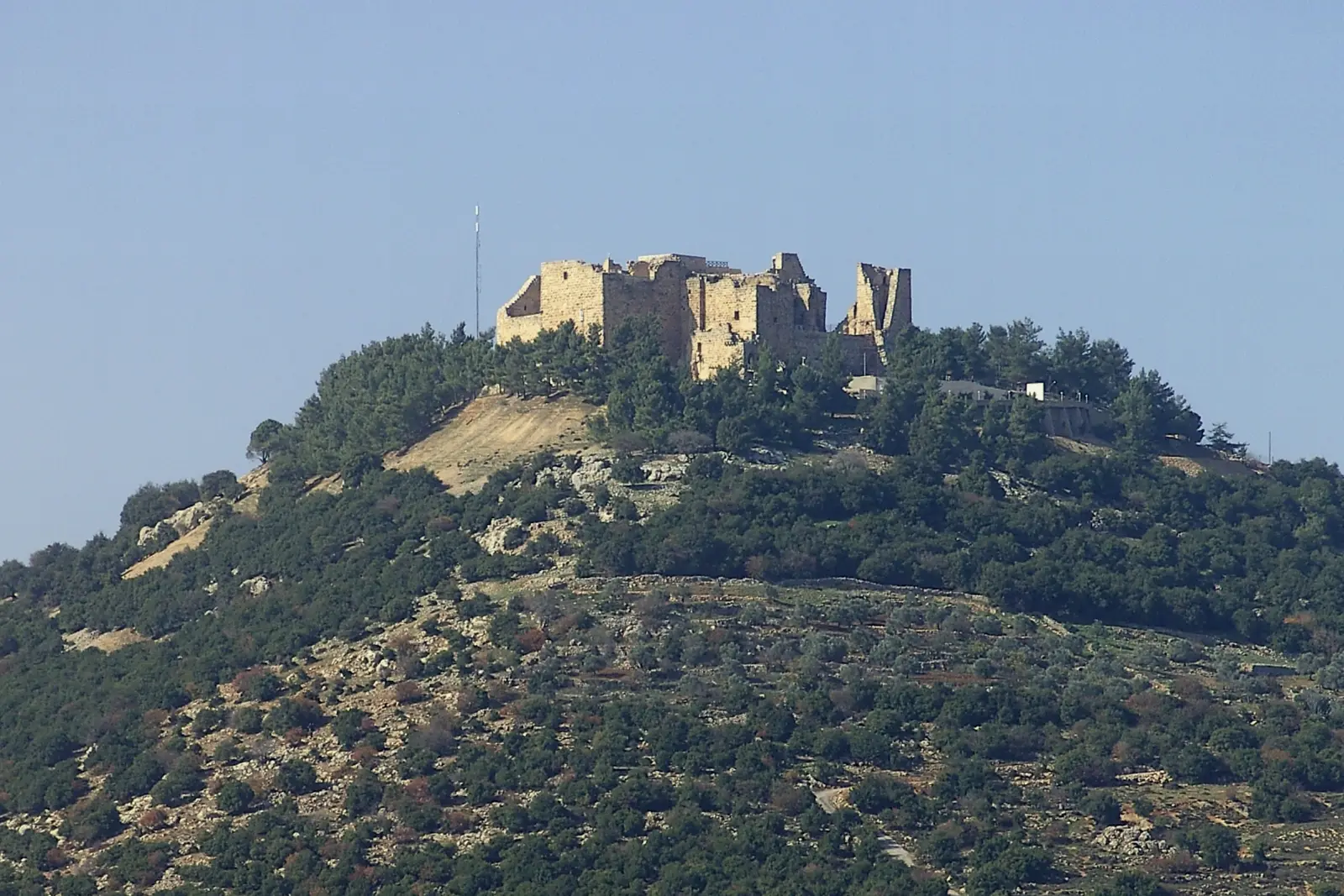
Ajloun Governorate is one of the greenest corners of Jordan, a landscape of wooded hills, olive terraces and stone villages. Above the town of Ajloun stands a medieval castle with views across northern Jordan. Forest trails, village homestays and holy sites make it a favourite escape from the city.
The green highlands
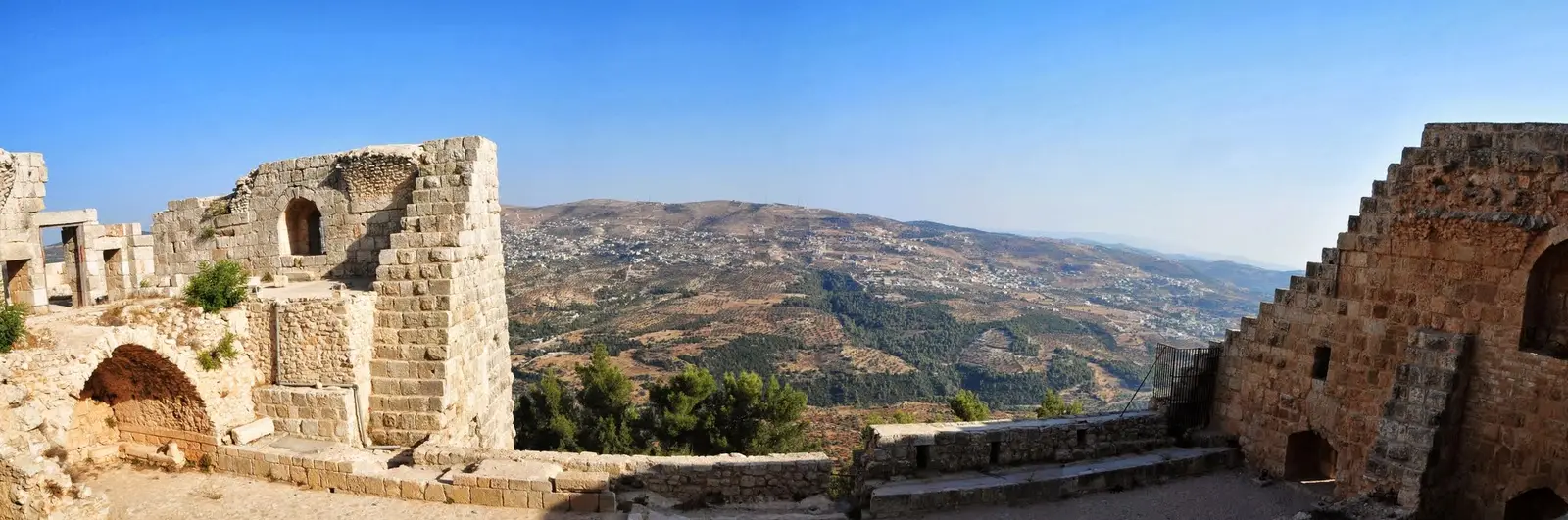
Ajloun lies in the northern highlands, at heights of up to about 1,200 metres. Some of the highest rainfall in Jordan falls here, and the hills are covered with evergreen oak, pine, wild pistachio and the strawberry tree, whose smooth red bark brightens the woodland. Deep valleys separate the hills and run west towards the Jordan Valley, which can be seen far below on clear days. Winters are cool, with rain and occasional snow, while summers are mild compared with most of the country.
Ajloun town and villages
The town of Ajloun is a market centre for the surrounding hills, with an old mosque at its heart whose minaret dates back to the Mamluk period. Around it are villages such as Anjara, Kufranjah, Orjan and Rasoun, each set among olive groves and orchards. Several villages have developed small community projects that offer homestays, guided walks, cooking sessions and local products to visitors. A cable car links the town with the hills near the castle, giving wide views over the valleys.
Castle and holy sites
Ajloun Castle, also called Qal'at ar-Rabad, was built in the 1180s by a commander of Saladin's army. From its hilltop it guarded the routes through the north, protected local iron mines and watched over the Jordan Valley. The Mamluks later enlarged it, and it remained in use for centuries. Nearby, Tell Mar Elias is linked with the Prophet Elijah, who is believed to have come from this area, and has the ruins of a large Byzantine church with mosaics. In Anjara, the Church of Our Lady of the Mountain is a place of Christian pilgrimage.
Forest walks and nature
The Ajloun Forest Reserve protects a large area of evergreen oak woodland and is one of the best places in Jordan for walking. Marked trails of different lengths lead through the forest, past springs, caves and viewpoints, and some continue to nearby villages. Roe deer have been reintroduced to the reserve, and the woods are home to foxes, porcupines, wild boar and many birds. Spring brings orchids, cyclamen and red anemones. The long-distance Jordan Trail also passes through the governorate, linking it with Jerash to the south and Umm Qais to the north.
Village products and local food
Ajloun is known for its olives and olive oil, and the autumn harvest is an important time for families. Orchards produce figs, pomegranates and grapes, and honey from the forest flowers is a favourite local product. Local women's groups make olive oil soap, preserves, dried herbs and handmade crafts. Village kitchens serve dishes such as maqluba, mujaddara and stuffed vine leaves, often with fresh bread baked in a taboon, a traditional clay oven. Eating a home-cooked meal with a local family is one of the most memorable experiences in the area.
Highlights
- 1Ajloun Castle (Qal'at ar-Rabad)
- 2Walking trails in the Ajloun Forest Reserve
- 3Tell Mar Elias and its Byzantine church
- 4The Church of Our Lady of the Mountain in Anjara
- 5Village homestays and cooking sessions
- 6The cable car above Ajloun town
- 7Spring wildflowers in the oak forests
Frequently asked questions
What is Ajloun famous for?
Ajloun is famous for its 12th-century castle, built by a commander of Saladin's army, and for some of the most beautiful forests in Jordan. The Ajloun Forest Reserve offers marked walking trails through oak woodland, and the surrounding villages are known for olive oil, honey and warm hospitality. Pilgrims also visit Tell Mar Elias, linked with the Prophet Elijah.
How far is Ajloun from Amman?
Ajloun is about 75 kilometres north-west of Amman. The drive usually takes between one hour and fifteen minutes and one and a half hours, often passing near Jerash on the way. Buses and minibuses run from Amman's northern bus station, but a car makes it much easier to reach the castle, the forest reserve and the villages.
Can you stay overnight in Ajloun?
Yes. There are cabins inside the forest reserve, family guesthouses and homestays in the villages, and small hotels in and around the town. Staying overnight lets you walk the trails in the cool early morning, enjoy a home-cooked dinner and see the castle lit at night. Spring weekends are busy, so it is wise to book ahead.
When is the best time to hike in Ajloun?
Spring, from March to May, is the best time, when the forest is green and full of wildflowers and the temperatures are comfortable. Autumn is also pleasant. Summer is mild compared with the rest of Jordan, but the trails can be dry and dusty. In winter, rain can make paths muddy and slippery, and there is sometimes snow.
Other governorates
Madaba Governorate
Karak Governorate
Tafilah Governorate
Ma'an Governorate
Aqaba Governorate
Amman Governorate
Irbid Governorate