Aqaba Governorate
Aqaba Governorate is Jordan's southern gateway, where desert mountains meet the warm waters of the Red Sea. Its capital is the country's only coastal city, with beaches, coral reefs and a history that goes back thousands of years. Inland lie the red sands and towering cliffs of Wadi Rum.
Sea, mountains and desert
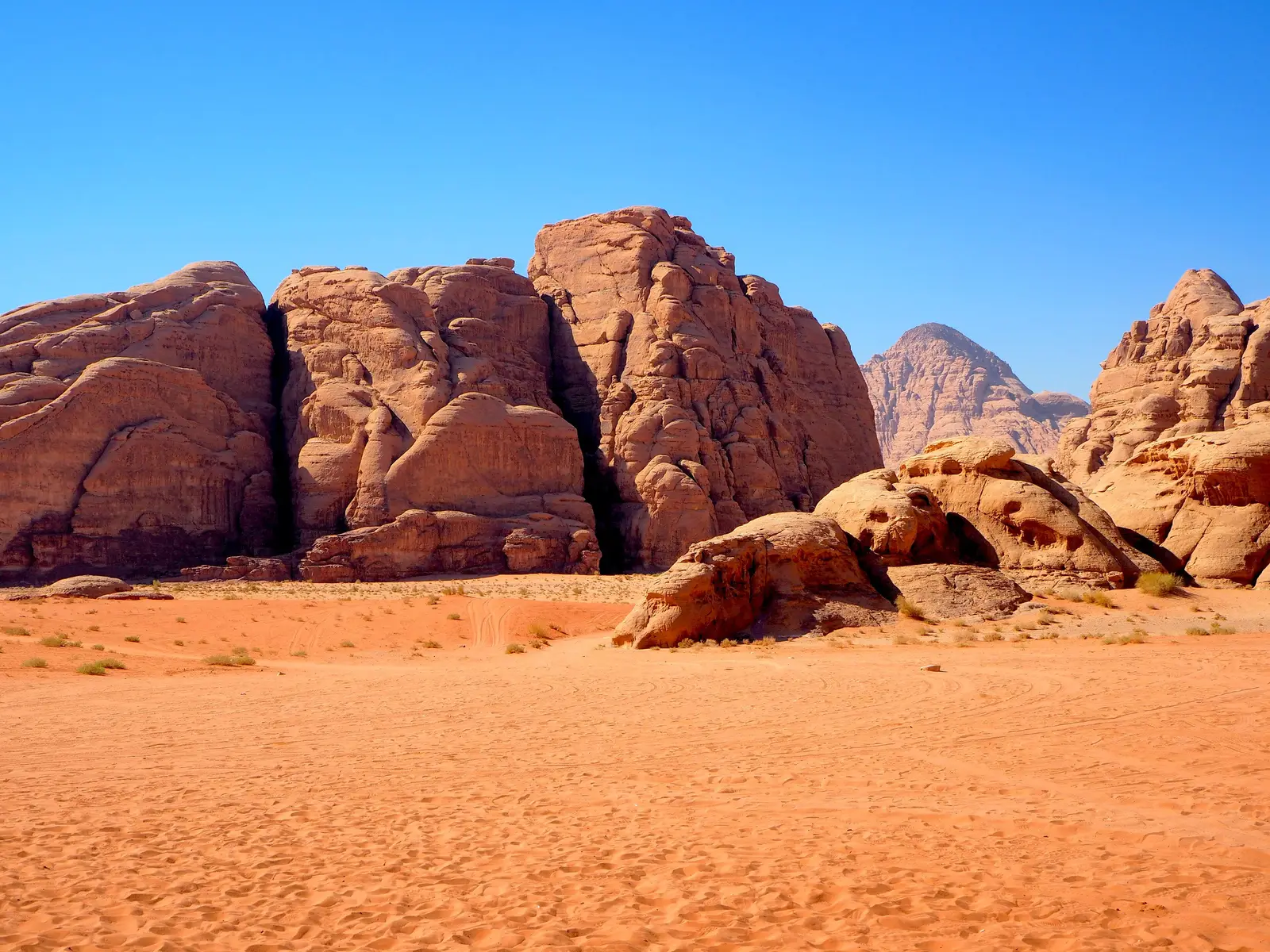
Aqaba Governorate covers the southern end of the Jordan Rift Valley, where Wadi Araba reaches the Gulf of Aqaba, the north-eastern arm of the Red Sea. The coastline is short, but the water is clear and warm, with coral reefs growing close to the shore. Behind the city, granite mountains in shades of red, pink and grey rise steeply. Further east lies the desert of Wadi Rum, where sandstone mountains stand above wide valleys of sand. The climate is hot in summer and mild and sunny in winter, when most of Jordan is cool.
Aqaba city
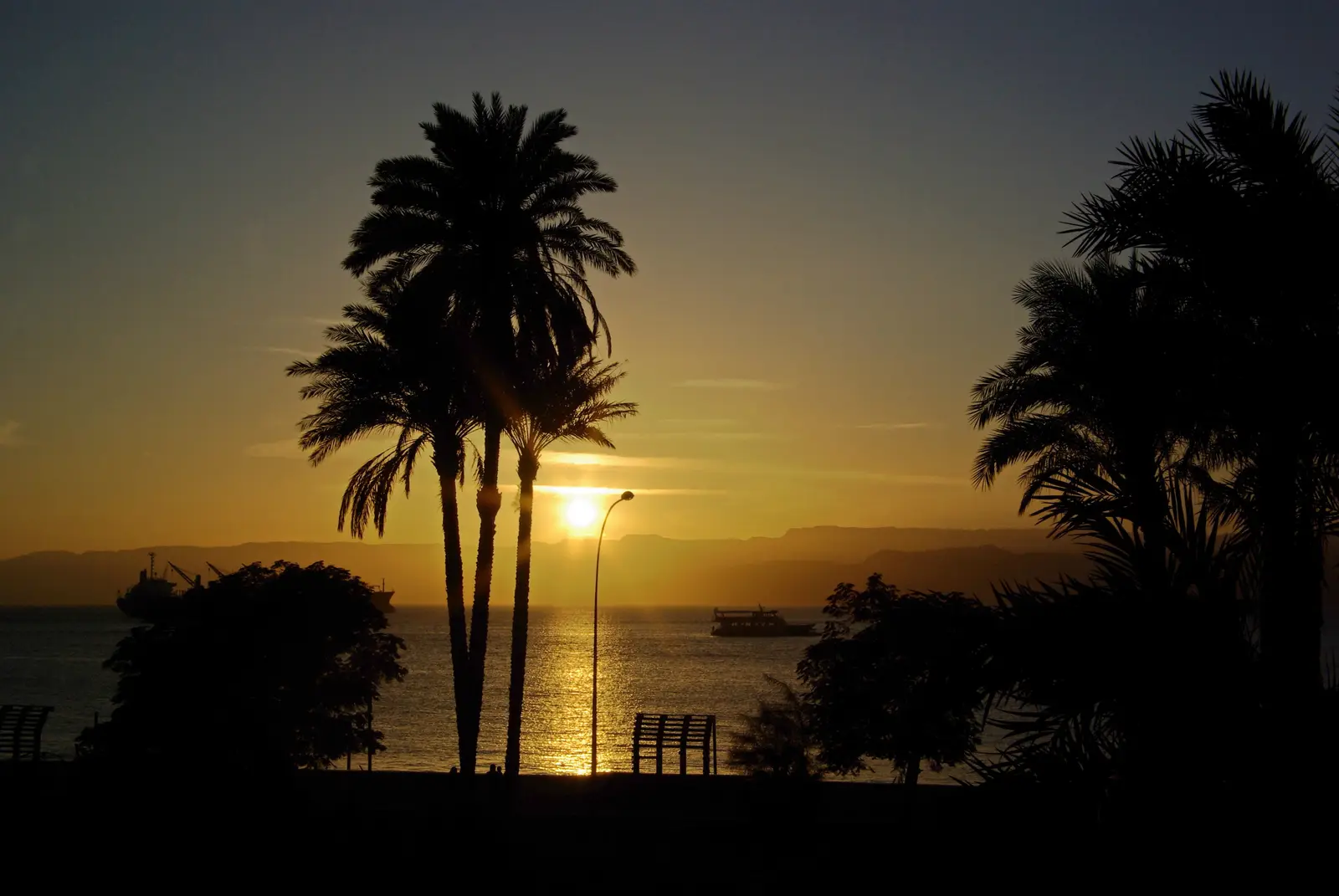
Aqaba is a relaxed seaside city and Jordan's only port, which handles much of the country's trade. Its centre has a seafront promenade, public beaches, parks, markets and fish restaurants, while the south coast has quieter beaches and the main diving and snorkelling areas. Many Jordanian families come here on holiday in winter and during public holidays. The city is also a convenient base for visiting Wadi Rum, about an hour's drive away, and Petra, about two hours to the north.
A long history by the sea
Aqaba's position at the head of the gulf has made it a crossroads of trade for thousands of years. Excavations have uncovered Ayla, an early Islamic city founded in the seventh century, whose walls and gates can still be seen near the seafront. The remains of a church from around the end of the third century AD, one of the earliest known purpose-built churches, were found nearby. Aqaba Fort, rebuilt by the Mamluks in the early sixteenth century, guarded the route of pilgrims travelling to Mecca. In 1917, Aqaba was taken by the forces of the Great Arab Revolt, a key event in the city's modern history.
Reefs, Wadi Rum and the outdoors
The coral reefs of the Aqaba coast are protected as a marine park and are home to colourful fish, sea turtles and many kinds of hard and soft coral. Snorkellers can see reefs just a few metres from the beach, while divers explore shipwrecks and deeper walls. Inland, Wadi Rum is a UNESCO World Heritage Site known for its sandstone mountains, natural arches, canyons and ancient rock inscriptions. Visitors explore by four-wheel drive, on foot or by camel, and spend the night in desert camps. Jabal Umm ad-Dami, usually considered Jordan's highest mountain, rises south of Wadi Rum.
Life, fish and local food
Life in Aqaba moves at an easier pace than in the cities of the north, with evenings spent along the seafront and in cafés. The local speciality is sayadieh, fish cooked with spiced rice and caramelised onions, and grilled fresh fish is served across the city. In Wadi Rum, Bedouin families still keep camels and goats, and visitors are offered sweet tea and meals cooked in the zarb, a traditional oven dug into the sand. In Wadi Araba, villages grow vegetables and dates using groundwater, despite the desert heat.
Highlights
- 1Snorkelling and diving on the coral reefs
- 2Aqaba Fort and the ruins of Ayla
- 3Exploring Wadi Rum by four-wheel drive
- 4A night in a Wadi Rum camp under the stars
- 5Sayadieh and fresh fish in Aqaba
- 6Glass-bottom boat trips on the gulf
- 7The desert landscapes of Wadi Araba
Frequently asked questions
What is Aqaba Governorate known for?
Aqaba Governorate is known for Jordan's only coastline, on the Gulf of Aqaba at the northern tip of the Red Sea, with coral reefs that are excellent for snorkelling and diving. It also includes Wadi Rum, a UNESCO-listed desert of red sand and sandstone mountains, and the long, dry valley of Wadi Araba. Its mild winters make it a popular holiday destination.
How far is Wadi Rum from Aqaba?
Wadi Rum is about 60 kilometres north-east of Aqaba, usually around one hour by car or taxi. Visitors first stop at the visitor centre and then continue to Rum village, where local guides and camps meet their guests. Many travellers spend one night in the desert and return to Aqaba the next day, or continue north towards Petra.
When is the best time to visit Aqaba?
The best time to visit Aqaba is from October to April, when days are warm and sunny and the sea is pleasant for swimming and snorkelling. Summer temperatures often rise above 40 degrees Celsius, so outdoor activities are best in the early morning and evening. The sea stays warm enough for diving throughout the year.
Can you visit Petra from Aqaba in a day?
Yes. Petra is about two hours north of Aqaba by road, so a day trip is possible if you leave early and return in the evening. It gives enough time to walk the Siq to the Treasury and see the main monuments of the city centre. However, Petra is large, and staying at least one night in Wadi Musa allows a much more relaxed visit.
Other governorates
Amman Governorate
Irbid Governorate
Zarqa Governorate
Balqa Governorate
Mafraq Governorate
Jerash Governorate
Ajloun Governorate