Karak Governorate
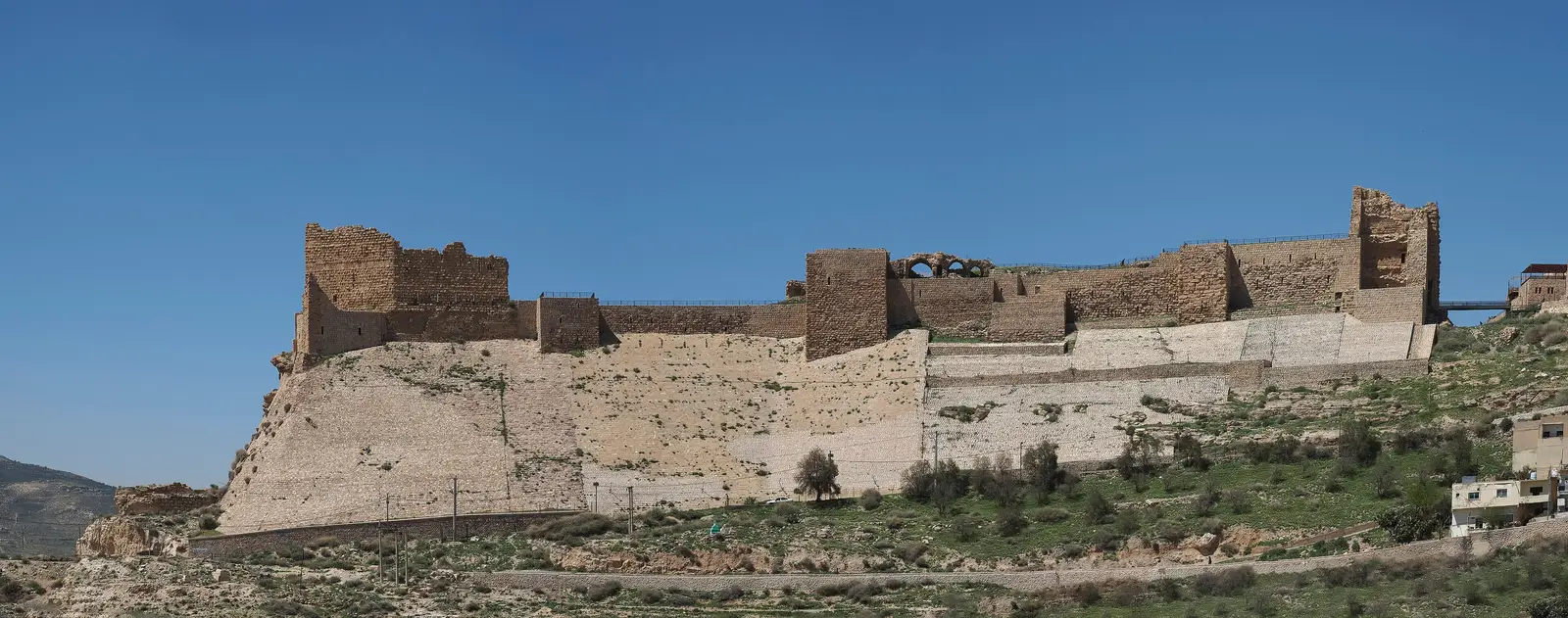
Karak Governorate stretches from a high, windswept plateau down to the southern shore of the Dead Sea. Its capital is crowned by one of the largest medieval castles in the region, a landmark on the King's Highway. Deep canyons, farming villages and a strong local identity give the area its character.
Plateau, canyons and the Ghor
The heart of the governorate is the Karak plateau, a fertile upland of wheat fields and small villages lying at nearly 1,000 metres. On every side, the plateau is cut by deep valleys, including the great Wadi Mujib to the north and Wadi al-Hasa to the south. To the west, the land falls steeply to the Ghor, the lowlands beside the southern Dead Sea, where the climate is hot and farmland is watered by streams flowing down from the mountains. The difference in height between the castle and the Dead Sea shore is well over 1,000 metres.
Al-Karak and its towns
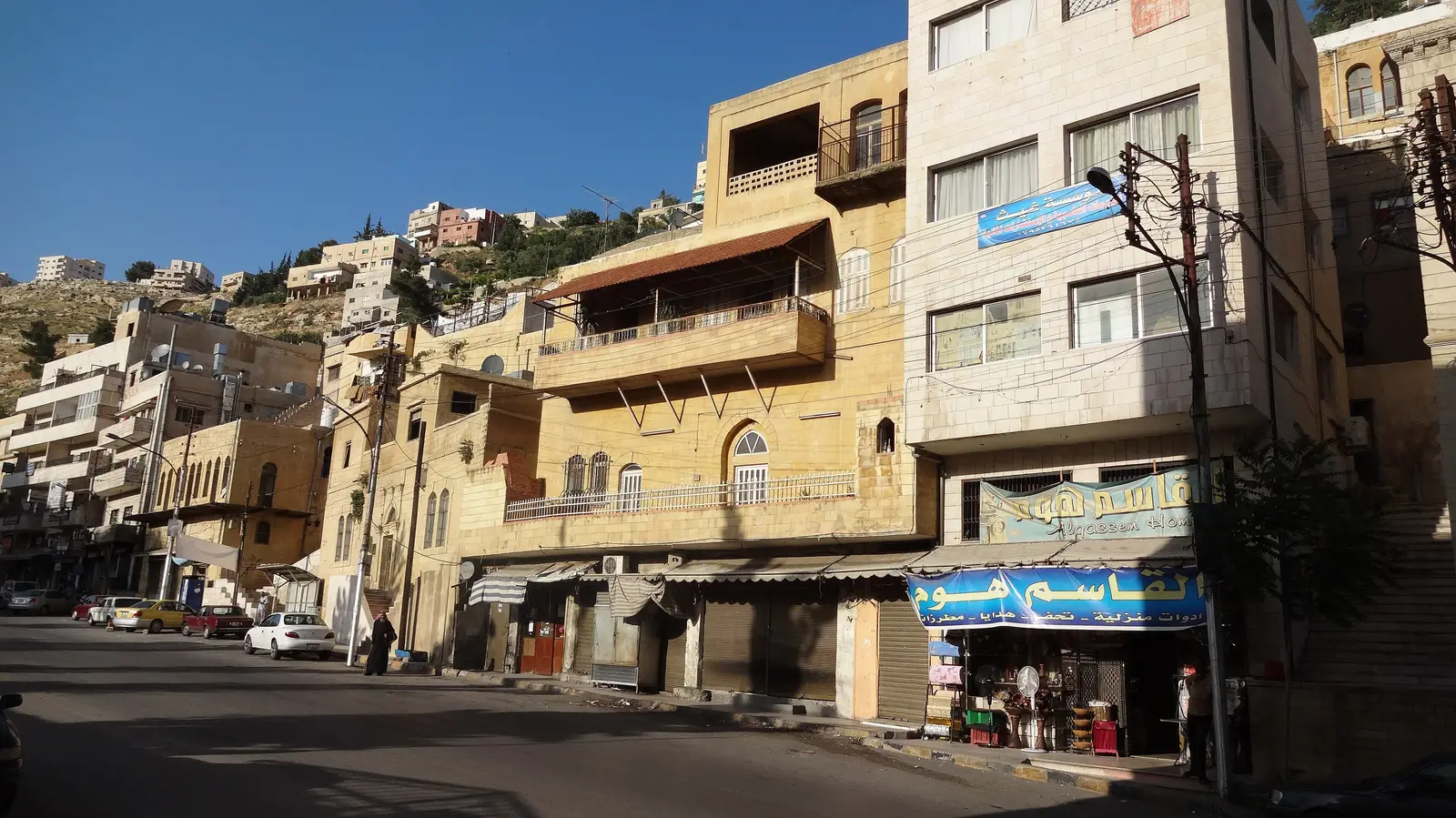
The city of Al-Karak is built on a narrow, triangular hilltop surrounded by valleys, with the castle at its southern end. Its old streets have stone houses from the Ottoman period, small shops and lively markets. Nearby Mu'tah is home to Mu'tah University and has grown into a busy town. In the Ghor, towns such as Ghor al-Mazraa and Ghor as-Safi are farming communities set among fields and date palms. On the plateau north of the city, the town of Rabbah has the remains of a Roman temple.
Castle, shrines and ancient sites
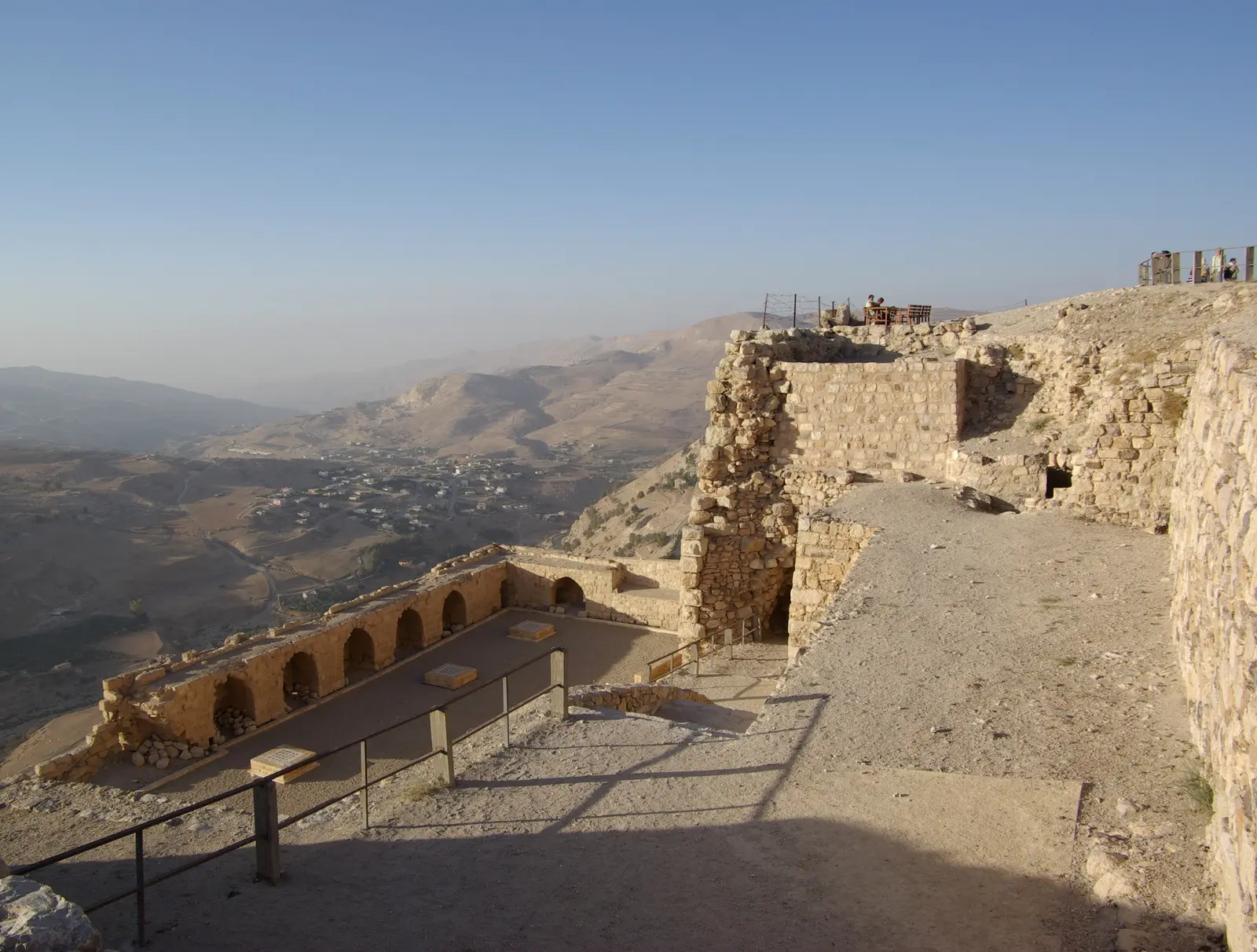
Karak Castle was begun by Crusaders in the 1140s and passed to Muslim rule in 1188, after which the Ayyubids and Mamluks strengthened it. Its long vaulted halls, passageways and towers can be explored on foot, and a museum inside tells the story of the area. In the village of Al-Mazar al-Janubi, near Mu'tah, are the shrines of early Muslim companions who fell in the Battle of Mu'tah in 629 AD. Near Ghor as-Safi, the Museum at the Lowest Place on Earth displays finds from the region, and the hillside site known as Lot's Cave has remains of a Byzantine monastery.
Canyons and hot springs
Karak offers some of the best canyon scenery in Jordan. The Mujib Biosphere Reserve protects the lower course of Wadi Mujib, with water trails through narrow sandstone gorges that open onto the Dead Sea shore. Wadi bin Hammad, south-west of the city, is a green valley where warm springs flow between palm trees and ferns, and walkers wade along the stream beneath tall cliffs. Nubian ibex live on the steep slopes above the Dead Sea, and birds of prey can be seen gliding over the valleys.
Farming traditions and Karaki mansaf
The people of Karak are proud of their farming and herding traditions. The plateau produces wheat, barley and olives, and the Ghor grows tomatoes, vegetables and dates during the warm winter months. Karak is especially known for its jameed, the dried yoghurt made from sheep's milk, which many Jordanians consider the best for preparing mansaf. Visitors who share a meal here will usually find generous portions and warm hospitality. Local markets also sell honey, ghee and dried herbs from the surrounding countryside.
Highlights
- 1Karak Castle and its museum
- 2The old streets of Al-Karak
- 3The water trails of the Mujib Biosphere Reserve
- 4The warm springs of Wadi bin Hammad
- 5The Museum at the Lowest Place on Earth
- 6The shrines of the companions at Al-Mazar al-Janubi
- 7Mansaf made with Karaki jameed
Frequently asked questions
Is Karak worth visiting?
Yes. Karak Castle is one of the largest and most atmospheric medieval castles in the region, with dark vaulted halls and wide views over the surrounding valleys. The governorate also offers canyon walks at Wadi Mujib and Wadi bin Hammad, the Museum at the Lowest Place on Earth and some of the best mansaf in Jordan. It fits easily into a journey between Amman and Petra.
How do I get to Karak from Amman?
There are two main routes. The faster one follows the Desert Highway south and then turns west to Karak, taking about two hours. The slower King's Highway passes Madaba and crosses the deep canyon of Wadi Mujib, taking around two and a half to three hours but offering spectacular views. Buses also run from Amman's southern bus station.
Can you visit Karak on the way to Petra?
Yes, and many travellers do. Karak lies roughly halfway between Amman and Petra. After visiting the castle, you can continue south along the King's Highway through Tafilah and past Dana and Shobak Castle, or return to the faster Desert Highway. From Karak to Petra takes about two to three hours, depending on the route and the stops.
What is Karaki mansaf?
Mansaf is Jordan's national dish: lamb cooked in a sauce made from jameed, a dried yoghurt, and served on rice and thin bread, often topped with almonds or pine nuts. Karak is famous for its jameed, made from the milk of local sheep, and many Jordanians believe that mansaf prepared the Karak way has the richest and most authentic flavour.
Other governorates
Tafilah Governorate
Ma'an Governorate
Aqaba Governorate
Amman Governorate
Irbid Governorate
Zarqa Governorate
Balqa Governorate