Masters of Water: How the Nabataeans Made the Desert Bloom
Most visitors come to Petra for its carved facades. But the greatest achievement of the Nabataeans may be something much easier to miss: a hidden network of water that allowed a thriving city to live in a land of very little rain.
A people who read the desert
The Nabataeans began as Arab nomads who travelled the trade routes of Arabia, carrying incense, spices and other precious goods. Ancient writers noted a special skill of theirs: they knew how to find and store water in the desert, digging hidden cisterns and keeping their location secret from outsiders. When they settled in Petra, they turned this knowledge into engineering on a grand scale. Rain in this region is rare, but when it comes it often falls in sudden storms that send floods racing through the valleys. The Nabataeans learned to control both problems at once: to protect the city from floods and to save every drop for the dry months.
Channels, pipes and cisterns
As you walk through the Siq, look at the walls at about waist height. You will see a channel cut into the rock on one side, and on the other side the remains of a pipeline made of clay pipes fitted end to end. These carried water from springs outside the city, including Ain Musa, all the way into Petra, with a gentle and carefully planned slope.
Across the city, rainwater was guided from rooftops and rock faces into channels that fed hundreds of cisterns and reservoirs. Settling basins allowed sand and mud to sink before the clean water flowed on. Some of the water fed public fountains, gardens and even a large pool with an island pavilion near the city centre. Very little water was wasted.
Taming the floods
The Nabataeans also built a dam at the entrance of the Siq and cut a tunnel through the rock to divert floodwater away from the gorge into a neighbouring valley. This kept the main entrance to the city safe during winter storms. Smaller dams across side valleys slowed the water down, so it could soak into the ground or be collected. Modern engineers who have studied these systems are impressed by their precision. The tunnel and dam system at the Siq entrance was later rebuilt on the Nabataean pattern to protect visitors today, a sign that ancient solutions can still work.
Seeing the waterworks today
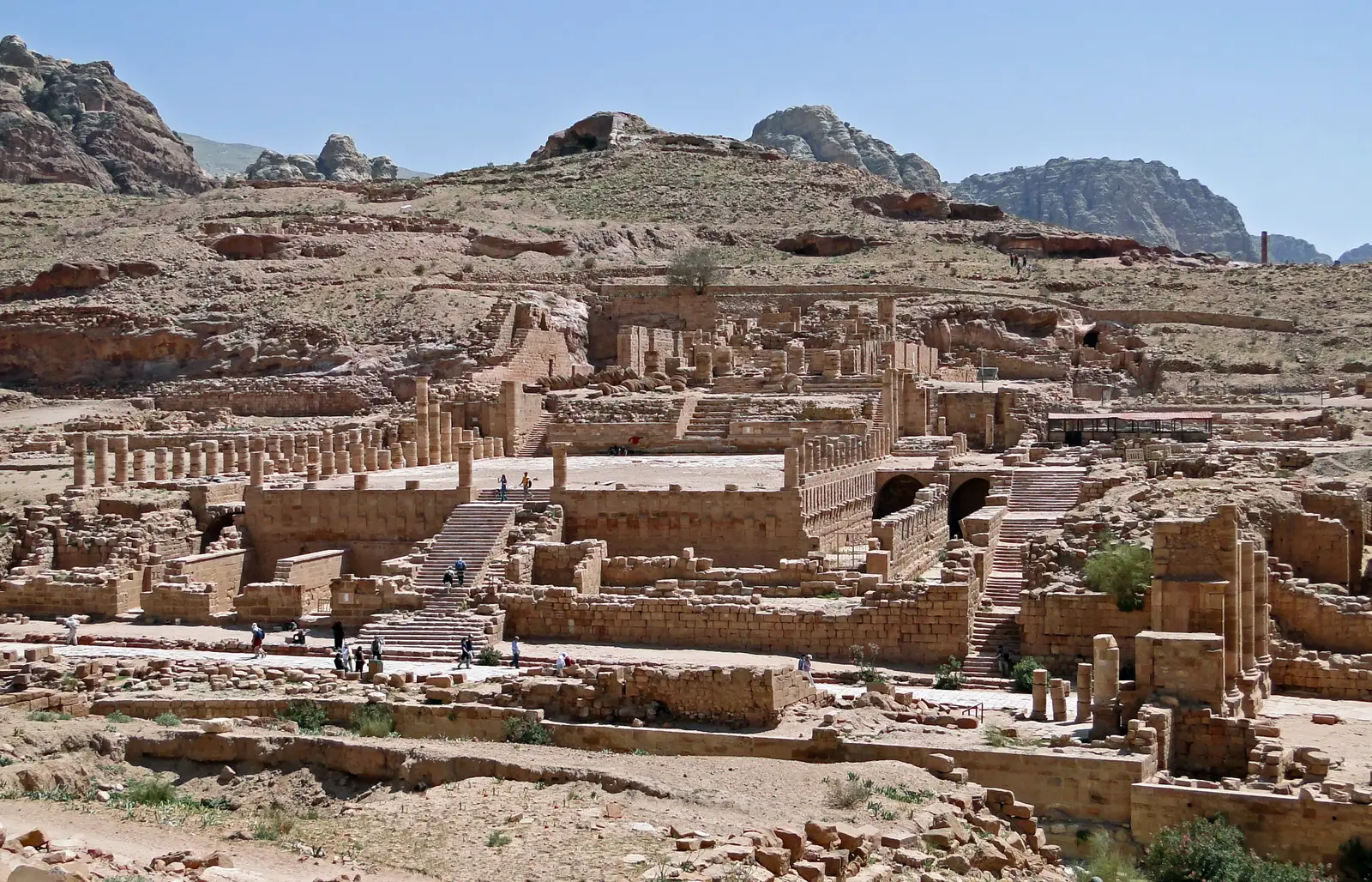
At the start of the Siq you can see the dam and the entrance of the diversion tunnel. Inside the gorge, follow the channels and the remains of clay pipes along the walls. In the city centre, look for cisterns cut into the rock, and visit the area of the ancient pool and garden. Further afield, the Nabataean site of Humayma, between Petra and Aqaba, preserves the remains of a long aqueduct and reservoirs. Wherever you see a neat square opening in the rock in southern Jordan, there is a good chance a Nabataean once stored water there.
Frequently asked questions
How did Petra get water?
The Nabataeans brought water to Petra from springs outside the city through rock-cut channels and clay pipelines, some of which can still be seen in the Siq. They also collected rainwater from rock surfaces into hundreds of cisterns and reservoirs, using settling basins to clean it. This system supplied homes, fountains and gardens.
Did the Nabataeans protect Petra from floods?
Yes. They built a dam at the entrance of the Siq and cut a tunnel through the rock to send floodwater into a neighbouring valley. Smaller dams in side valleys slowed the water. The modern flood protection at the Siq entrance follows the same Nabataean plan.
Where can I see Nabataean water channels?
The easiest place is the Siq at Petra, where channels and clay pipe remains run along both walls. Cisterns and the remains of a garden and pool can be seen in the city centre. Other Nabataean water systems survive in southern Jordan, such as the aqueduct and reservoirs at Humayma, and cisterns in the Wadi Rum area.
More stories
The Language of the Cup: Bedouin Coffee Rituals in Jordan
Three Days and a Third: The Bedouin Code of Hospitality
The Story of Mansaf: Jordan's Feast Around One Tray
The Black Iris: The Dark Flower of Jordan's Spring
Under the Desert Sky: Bedouin Star Lore in Wadi Rum
Fire on the Hilltop: Ajloun Castle, Beacon Fires and Messenger Pigeons
The Hejaz Railway: The Steam Train That Crossed the Desert