The Story of Mansaf: Jordan's Feast Around One Tray
When a Jordanian family wants to honour a guest, celebrate a wedding or bring people together after a quarrel, there is one dish that says everything: mansaf. It is not simply a meal. It is a ceremony served on a single great tray.
A dish that brings people together
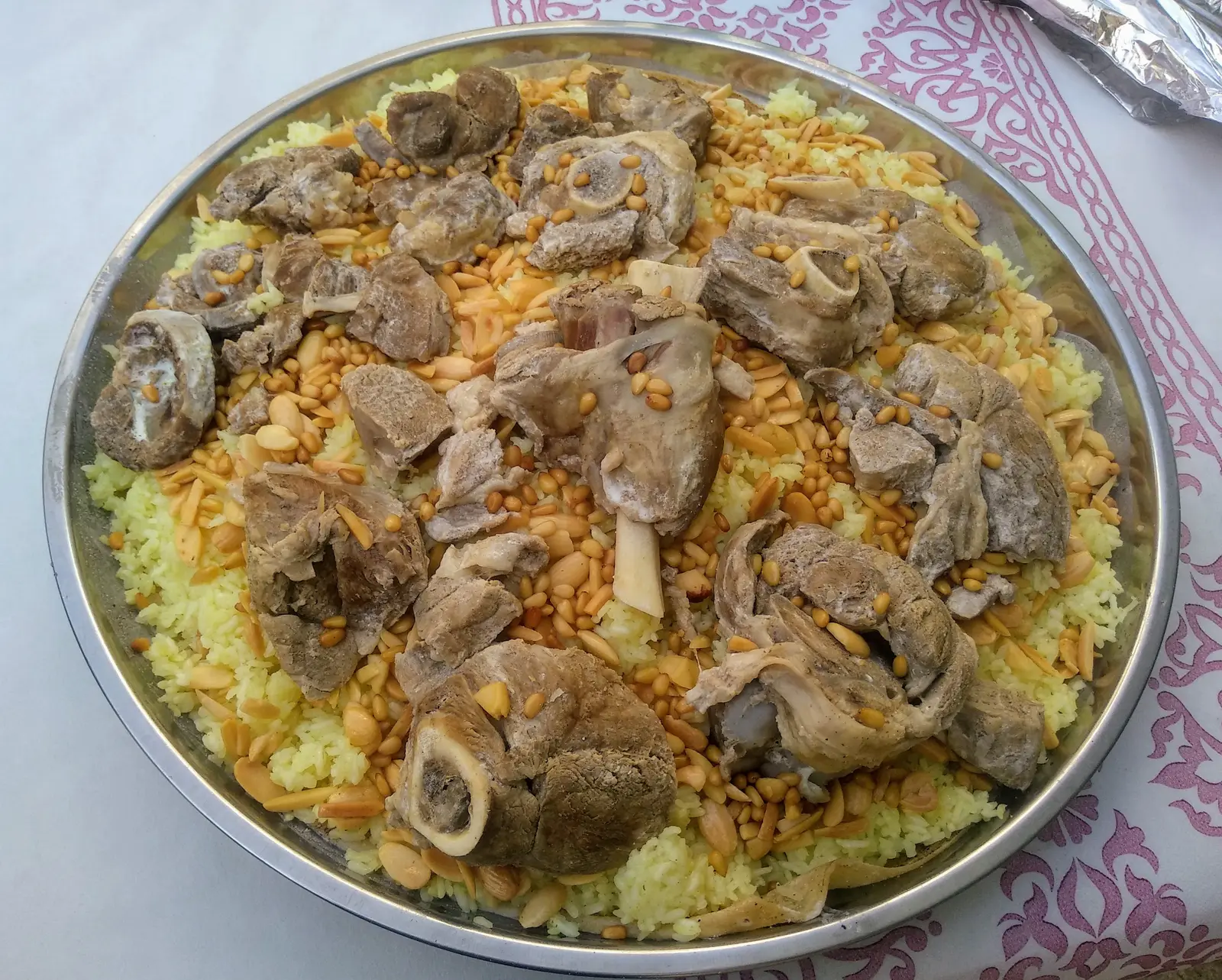
Mansaf is made of lamb cooked slowly in a sauce of jameed, a dried yogurt that is rehydrated and cooked until creamy and tangy. The meat is laid on a bed of rice over thin sheets of shrak bread, then sprinkled with toasted almonds or pine nuts, and the hot yogurt sauce is poured over everything. The result is rich, salty and slightly sour.
It is served on one large round tray placed at the centre of the gathering. Traditionally, guests stand around the tray and eat together with their right hands. The word mansaf is connected to an Arabic root linked to a large serving tray, and the shared tray is at the heart of its meaning: everyone eats from the same dish, as equals and as one group.
How it is eaten
Eating mansaf by hand is a skill. Using the fingers of the right hand, you gather a little rice, meat and sauce, press it gently into a small ball, and pop it into your mouth with a push of the thumb. Experienced eaters do this quickly and neatly, and first-time guests are often guided with friendly laughter. The host walks around the tray, tearing the best pieces of meat and placing them in front of the guests. Extra jameed is poured over the rice from a jug. In many homes today, spoons are offered to visitors, and no one will mind if you use one.
From the desert to the national table
The roots of mansaf lie in the herding life of the Bedouin and village communities of the region, who raised sheep and goats and preserved milk by drying it into jameed. In earlier times the dish was often made with bread and bulgur wheat, and rice became common later. The town of Kerak is especially famous for its jameed. Mansaf is served at the most important moments of life: weddings, the birth of a child, the return of a traveller, religious feasts, gatherings of condolence and reconciliations between families. In 2022 UNESCO added mansaf in Jordan to its list of the Intangible Cultural Heritage of Humanity, recognising its role in Jordanian social life.
Where to taste it
Mansaf is a large and generous dish, usually cooked for many people, so the best mansaf is often found at family celebrations. Visitors can also order it at traditional restaurants across the country, especially on Fridays, when many families gather for a long lunch. If you are invited to share mansaf, accept with pleasure. Stand or sit close to the tray, use your right hand, eat from the area in front of you, and thank your host. Afterwards, a small cup of bitter coffee is the traditional way to end the meal.
Frequently asked questions
What is mansaf made of?
Mansaf is made of lamb cooked in jameed, a fermented dried yogurt that is turned into a rich, sour sauce. It is served on a large tray over rice and thin shrak bread, topped with toasted almonds or pine nuts. Extra hot jameed sauce is poured over it at the table.
How do you eat mansaf the traditional way?
Traditionally, people stand around a shared tray and eat with the right hand. You gather a little rice, meat and sauce with your fingers, shape it into a small ball and push it into your mouth with your thumb. Spoons are commonly offered to visitors, and using one is perfectly acceptable.
Is mansaf recognised by UNESCO?
Yes. In 2022, UNESCO inscribed mansaf in Jordan on its Representative List of the Intangible Cultural Heritage of Humanity. The listing recognises mansaf not only as a dish but as a social tradition that marks weddings, feasts, reconciliations and other important moments in Jordanian life.
More stories
The Black Iris: The Dark Flower of Jordan's Spring

Under the Desert Sky: Bedouin Star Lore in Wadi Rum

Fire on the Hilltop: Ajloun Castle, Beacon Fires and Messenger Pigeons

The Hejaz Railway: The Steam Train That Crossed the Desert
Gadara: The City of Poets and Philosophers at Umm Qais

Machaerus and the Hot Springs: Herod's Fortress Above the Dead Sea
The Pharaoh's Gold: The Legend of the Urn at Petra's Treasury