Under the Desert Sky: Bedouin Star Lore in Wadi Rum
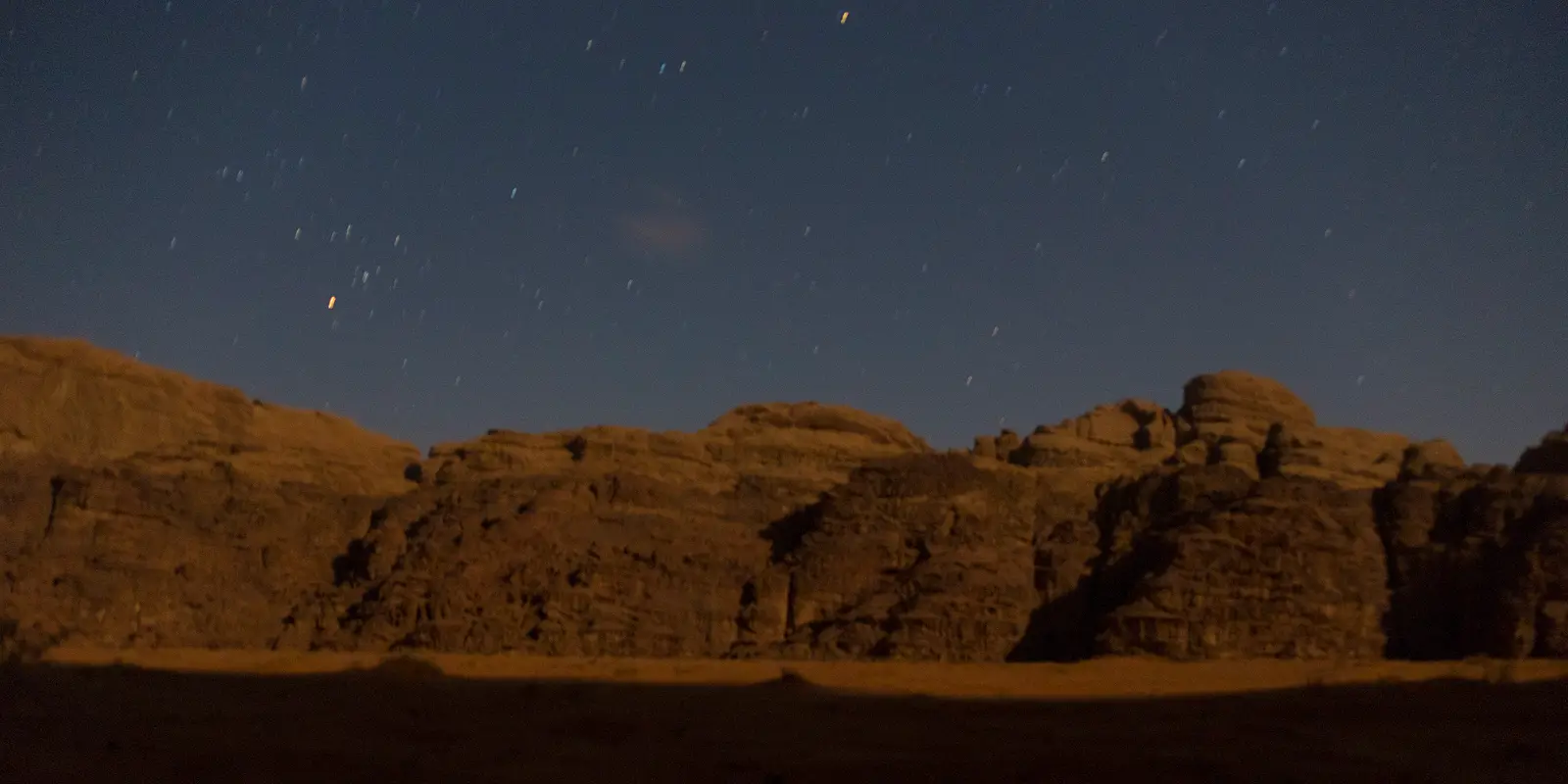
When the fire burns low in a Wadi Rum camp and your eyes adjust to the dark, the sky fills with more stars than most people have ever seen. For the Bedouin, this sky was never empty. It was a calendar, a compass and a book of stories.
A compass and a calendar
Long before modern maps, desert travellers crossed huge distances at night, when it was cooler, guided by the stars. The most important was al-Jadi, the star we call Polaris, which stays almost fixed in the northern sky while other stars turn around it. Knowing where it stood meant always knowing where north was. Children learned to find it early in life.
The stars also marked the seasons. Arab tradition divided the year according to the rising and setting of certain stars at dawn, and this helped herders know when rains might come and when to move their animals. One famous sign was the rising of Suhail, the bright star Canopus, low in the southern sky in late summer. A Bedouin saying holds that when Suhail rises, the nights begin to cool.
The suitor who follows the Pleiades
One of the most loved star stories concerns al-Thurayya, the small, sparkling cluster known in English as the Pleiades. According to old Arab legend, a star called al-Dabaran fell in love with al-Thurayya and wanted to marry her. She refused him, but he did not give up. So, every night, al-Dabaran follows al-Thurayya across the sky, never quite reaching her. He drives before him a little herd of camels, which are the stars that surround him, offered as a gift for the bride. Al-Dabaran is the bright orange star we call Aldebaran, and his name means the one who follows. Look east on a winter evening, and you can watch the chase for yourself.
Names that travelled the world
Many star names used in astronomy today come from Arabic. Rigel comes from the word for foot, Deneb from the word for tail, Altair from the word for the flying one, and Fomalhaut from a phrase meaning the mouth of the fish. These names travelled from Arabic books on astronomy into European languages during the Middle Ages, and they are still used by astronomers today.
Another old legend tells of the Daughters of Na'sh, the stars of the Big Dipper's handle. In one version they circle the northern sky forever, carrying their father's bier and seeking the one they blame for his death, who stands at the steady pole of the sky. These stories differ from tribe to tribe, but they all show how closely desert people watched the heavens.
Stargazing in Wadi Rum today
Wadi Rum is one of the best places in Jordan to see the night sky, thanks to its dry air and its distance from city lights. Stay overnight in a desert camp, walk a short distance away from the camp lights, and give your eyes twenty minutes to adjust. On moonless nights the Milky Way stretches clearly from one horizon to the other. Ask your Bedouin hosts about the stars. Many still know the old names and can point out the stars used for travel and for counting the seasons. Bring a warm layer, as desert nights can be cold even after a hot day.
Frequently asked questions
Is Wadi Rum good for stargazing?
Yes. Wadi Rum has dry, clear air and very little light pollution, which makes it one of the best places in Jordan for stargazing. On nights without a bright moon, the Milky Way is clearly visible. Staying overnight in a desert camp and stepping away from the camp lights gives the best view.
How did the Bedouin use the stars?
The Bedouin used stars to find direction when travelling at night, especially the North Star, called al-Jadi. They also followed the rising and setting of certain stars to track the seasons, predict rains and plan the movement of their herds. The star Suhail, or Canopus, was a well-known sign of the end of the hottest season.
Which star names come from Arabic?
Many familiar star names come from Arabic, including Aldebaran, Altair, Betelgeuse, Rigel, Deneb, Vega and Fomalhaut. They entered European languages through translations of Arabic astronomy books during the Middle Ages. Their original meanings often describe a body part or position within an old Arabic star figure.
More stories
Fire on the Hilltop: Ajloun Castle, Beacon Fires and Messenger Pigeons
The Hejaz Railway: The Steam Train That Crossed the Desert
Gadara: The City of Poets and Philosophers at Umm Qais
Machaerus and the Hot Springs: Herod's Fortress Above the Dead Sea
The Pharaoh's Gold: The Legend of the Urn at Petra's Treasury
Ain Musa: The Spring of Moses at the Gates of Petra
Sheikh Ibrahim and the Rose-Red City: How Burckhardt Reached Petra in 1812