Musakhan
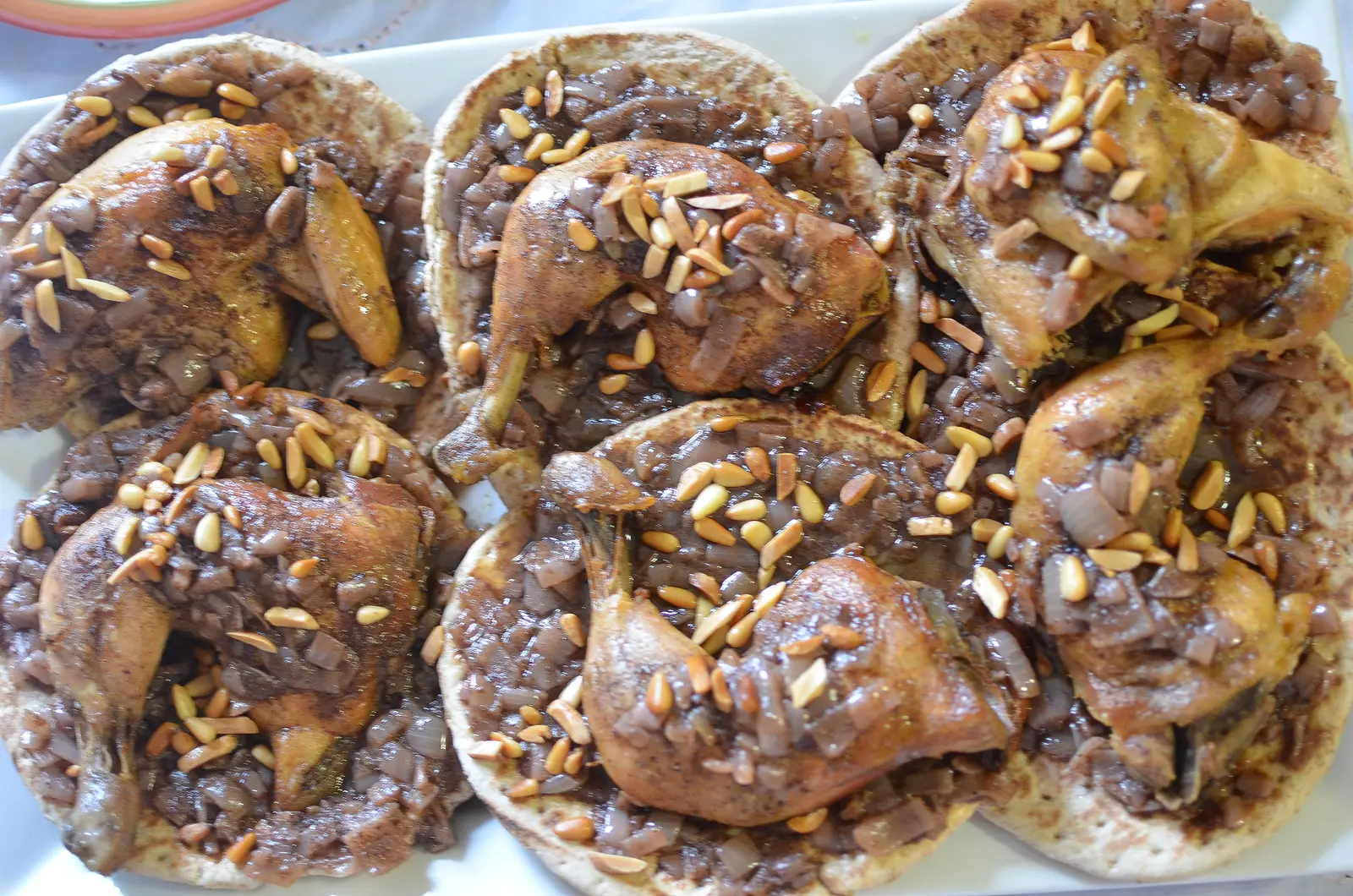
Musakhan is a celebration of olive oil. Soft rounds of bread are soaked in golden oil and piled with onions cooked down with sour, crimson sumac, then crowned with roasted chicken and toasted pine nuts. It is eaten with the hands, and it tastes of autumn in the olive-growing hills.
Origins and story
Musakhan is part of the shared culinary heritage of the Levant and comes from the farming villages where olive trees have been cultivated for thousands of years. The name comes from an Arabic word meaning 'heated' or 'warmed', since the assembled bread is warmed in the oven before serving. Traditionally it was made when the new olive oil was pressed in late autumn, as a way to celebrate the harvest and to enjoy the fresh oil at its best. In Jordan it is a much-loved dish for family gatherings and weekends.
Ingredients and how it is made
The essential ingredients are few but must be good: flatbread, a great deal of onions, generous olive oil, sumac and chicken. Traditionally the bread is taboon bread, a thick, soft round with a dimpled surface baked on hot stones. The onions are sliced and cooked slowly in olive oil until they are soft and sweet, then mixed with plenty of sumac, a ground red berry with a lemony sourness.
Chicken, usually whole or in large pieces, is seasoned with sumac, allspice and other warm spices and roasted until golden. To assemble, each round of bread is brushed or dipped in olive oil, covered with a thick layer of the sumac onions and topped with chicken. The whole tray is placed in a hot oven for a short time so the edges of the bread crisp. Toasted pine nuts or almonds are scattered on top just before serving.
How and when it is eaten
Musakhan is a dish for eating with the hands. Diners tear off pieces of the oily bread together with onions and chicken and eat them as one bite. It is usually served with plain yoghurt, a simple salad or a bowl of soup, which help balance its richness. Families prepare it for weekend lunches, for guests and especially in late autumn and early winter, when the olive harvest brings fresh oil. In recent years, small musakhan rolls, made by wrapping the filling in thin bread and baking it, have become a popular snack at gatherings.
Variations and where to try it in Jordan
When taboon bread is not available, home cooks use other thick flatbreads or even thin bread folded in layers. Some families add the chicken as shredded meat rather than whole pieces, which makes the dish easier to share. You can find musakhan at traditional restaurants in Amman and northern cities such as Irbid and Jerash, and some bakeries prepare musakhan rolls. The northern hills, where most of Jordan's olive groves grow, are a fitting place to enjoy it during the pressing season.
Related dishes
Musakhan shares its love of olive oil with za'atar and olive oil, the classic Jordanian breakfast. Manakeesh, flatbreads baked with za'atar or cheese, come from the same bread-based tradition. If you enjoy dishes eaten with the hands from a shared platter, try mansaf, Jordan's national dish, or the slow-cooked meat and vegetables of a Bedouin zarb. Each of these dishes shows how bread, oil and shared trays sit at the centre of the Jordanian table.
Frequently asked questions
What is musakhan made of?
Musakhan is made of flatbread, usually taboon bread, covered with onions slowly cooked in olive oil and seasoned with sumac, then topped with roasted chicken and toasted pine nuts or almonds. The assembled bread is warmed in the oven so that it becomes slightly crisp at the edges while staying soft and oily in the middle.
What does sumac taste like?
Sumac is a deep red spice made from dried, ground berries. It has a sour, fruity taste similar to lemon, but softer and less sharp. In musakhan, it gives the onions their distinctive colour and a tangy flavour that cuts through the richness of the olive oil. Sumac is also one of the main ingredients of the za'atar mixture.
How do you eat musakhan?
Musakhan is traditionally eaten with the hands. Tear off a piece of the bread with some of the onions and chicken on top and eat it all together. Because the bread is soaked in olive oil, it can be messy, so napkins are useful. Many people enjoy it with yoghurt or a simple salad on the side.
Is musakhan healthy?
Musakhan uses wholesome ingredients such as olive oil, onions and chicken, but it contains a large amount of oil and bread, so it is a rich and filling meal. It is best enjoyed as an occasional feast rather than an everyday dish. Serving it with salad and yoghurt makes for a more balanced meal.
Can musakhan be made vegetarian?
The traditional dish includes chicken, but the bread, sumac onions and olive oil are the true heart of musakhan. Some home cooks make a meat-free version by leaving out the chicken or replacing it with roasted mushrooms or vegetables. It is not a common restaurant option in Jordan, so vegetarians may want to ask in advance.
More dishes to discover

Zarb
Galayet bandora
Mujaddara
Shorbat adas (lentil soup)
Falafel and hummus
Ful
Kubbeh