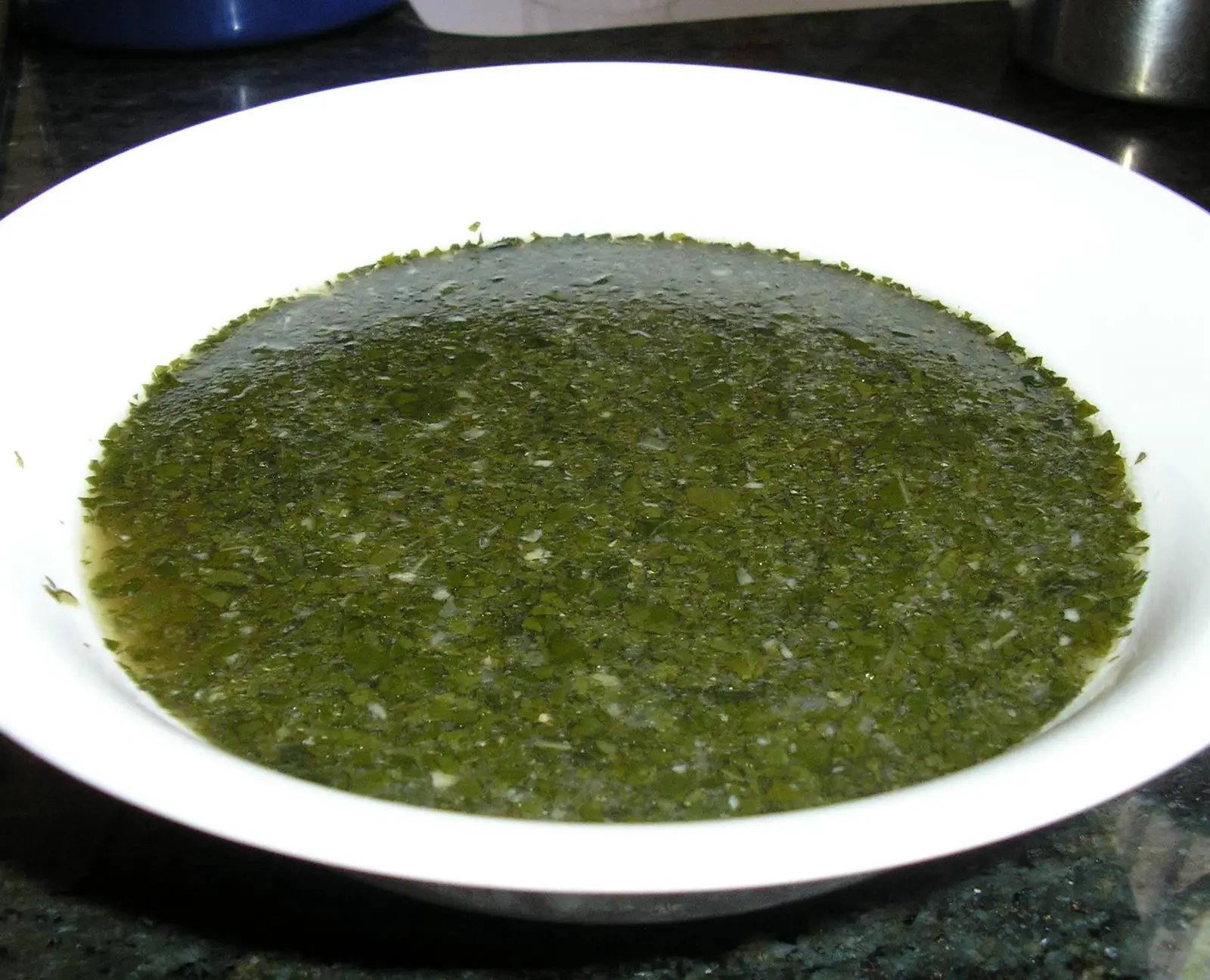
Mlukhiyeh
When the summer markets fill with bundles of dark green leaves, kitchens across Jordan begin the long, sociable work of preparing mlukhiyeh. The leaves are stripped from their stems and cooked in a rich broth with a sizzle of garlic and coriander, then served over rice with chicken or meat and a bright squeeze of lemon.
Origins and story
Mlukhiyeh, also spelled molokhia or mulukhiyah, is made from the leaves of the jute mallow plant. The dish has been eaten in Egypt for a very long time and is now loved across the Arab world, with each region cooking it differently. In Jordan and the wider Levant, the leaves are often left whole or roughly chopped, giving a hearty, textured stew rather than the smooth, finely minced version common in Egypt. It is a dish of family kitchens, closely linked with summer, when fresh leaves are in season.
Ingredients and how it is made
Preparation often begins with the whole family sitting together and picking the leaves from the stems, then washing and drying them. Some cooks use them fresh, while others dry or freeze large amounts to enjoy through the winter. Chicken or lamb is boiled with onion and spices such as cardamom, bay leaf and black pepper to make a flavourful broth, and the meat is set aside. Dried leaves are usually crumbled and soaked or rinsed before cooking, while fresh leaves only need washing.
The leaves are then cooked in the broth until tender. The defining flavour comes from the finishing step: plenty of crushed garlic and ground or fresh coriander are fried quickly in oil or clarified butter and stirred into the pot, releasing a wonderful aroma. Some cooks add a little lemon juice or dried chilli. Fresh and dried leaves give slightly different results, and many families have a firm opinion about which is better.
How and when it is eaten
Mlukhiyeh is served hot as a main meal. Rice, often cooked with toasted vermicelli, is placed on the plate first, and the stew is spooned over it, with pieces of chicken or meat on top or on the side. Lemon wedges and a small bowl of chopped onion soaked in vinegar or lemon juice are classic accompaniments that cut through the richness. It is a typical family lunch, especially in summer, and it is also a popular dish to cook for guests at home.
Variations and where to try it in Jordan
The biggest difference is between whole-leaf mlukhiyeh, common in Jordanian homes, and the finely chopped style, which is smooth and slightly thick. Chicken is the most common meat, but lamb and beef are also used, and some families cook a version with only vegetable broth. Dried leaves give a deeper, more concentrated flavour, while fresh leaves taste lighter. Because it is home cooking at heart, mlukhiyeh is easiest to find in traditional and home-style restaurants in Amman and other cities, usually as a daily or weekly special.
Related dishes
Mlukhiyeh belongs to the family of stews served over rice that form the backbone of everyday Jordanian cooking. If you enjoy it, try maqluba, which also brings together rice, meat and vegetables, or mujaddara, a simple dish of lentils and rice. For a comforting soup in the colder months, look for shorbat adas, the smooth lentil soup with lemon. Like mlukhiyeh, these are dishes most Jordanians grew up eating at the family table.
Frequently asked questions
What is mlukhiyeh?
Mlukhiyeh is a dish made from the leaves of the jute mallow plant, cooked in chicken or meat broth with garlic and coriander. In Jordan, the leaves are usually left whole or roughly chopped, giving a hearty stew. It is served over rice with pieces of chicken or meat, lemon, and chopped onion in vinegar.
What does mlukhiyeh taste like?
Mlukhiyeh has a deep, earthy and slightly grassy flavour, often compared to a mix of spinach and other leafy greens. The garlic and coriander added at the end give it a strong, fragrant aroma, while lemon brightens it. The leaves can have a slightly silky texture, which is more noticeable in finely chopped versions.
Is mlukhiyeh vegetarian?
Usually not. Mlukhiyeh is normally cooked in chicken or meat broth and served with the meat. However, the leaves themselves are a vegetable, and some families prepare a vegetarian version using vegetable broth. In restaurants, assume it contains meat broth unless the staff tell you otherwise.
Why is mlukhiyeh slimy?
Jute mallow leaves naturally contain a substance that becomes slightly thick and silky when cooked, similar to okra. Chopping the leaves finely increases this effect, which is why the smooth style is more silky. Jordanian whole-leaf mlukhiyeh is generally less so. Many people enjoy this texture, and lemon juice helps balance it.
More dishes to discover
Fatteh
Shrak
Manakeesh
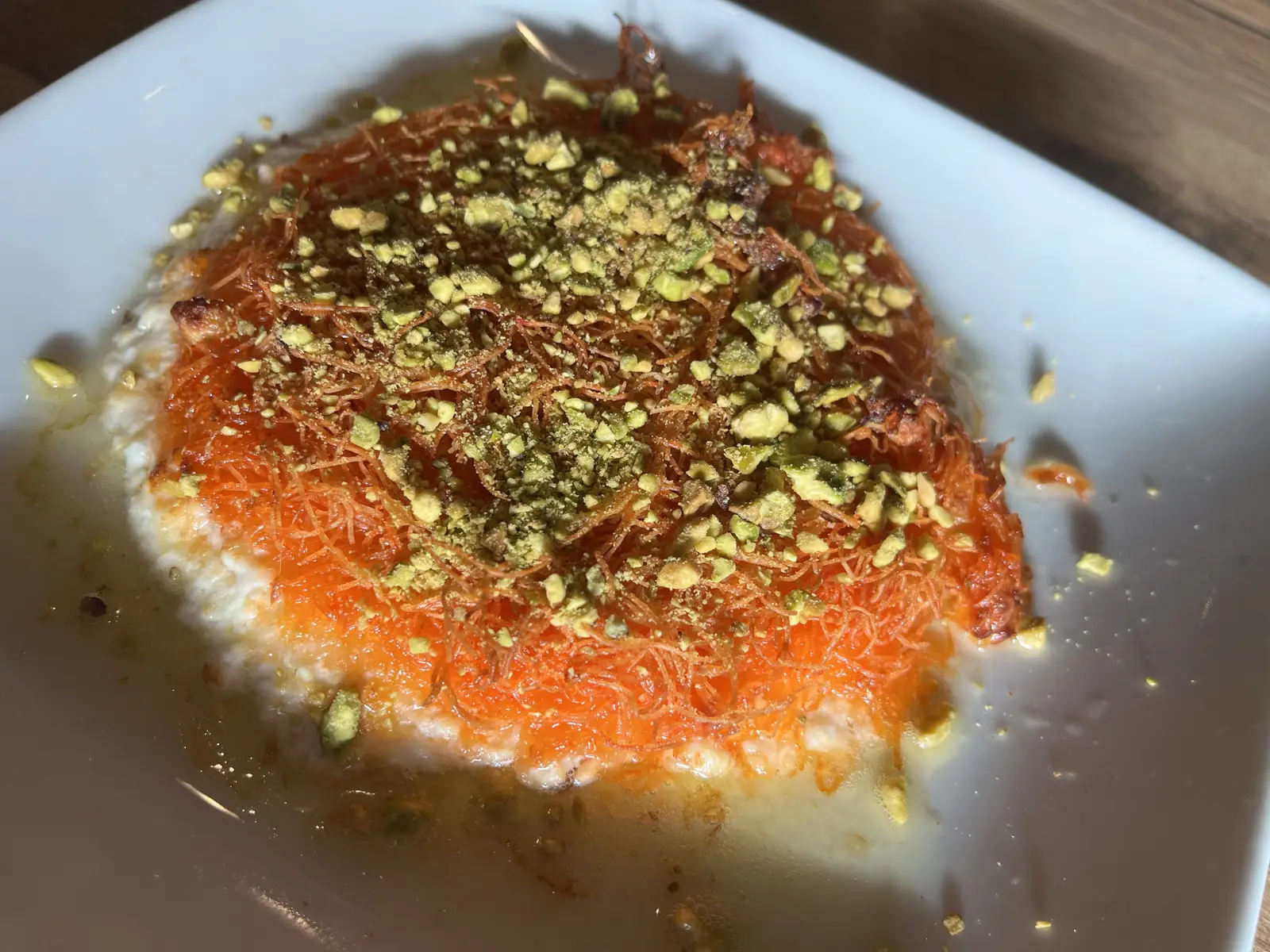
Kunafa (knafeh)
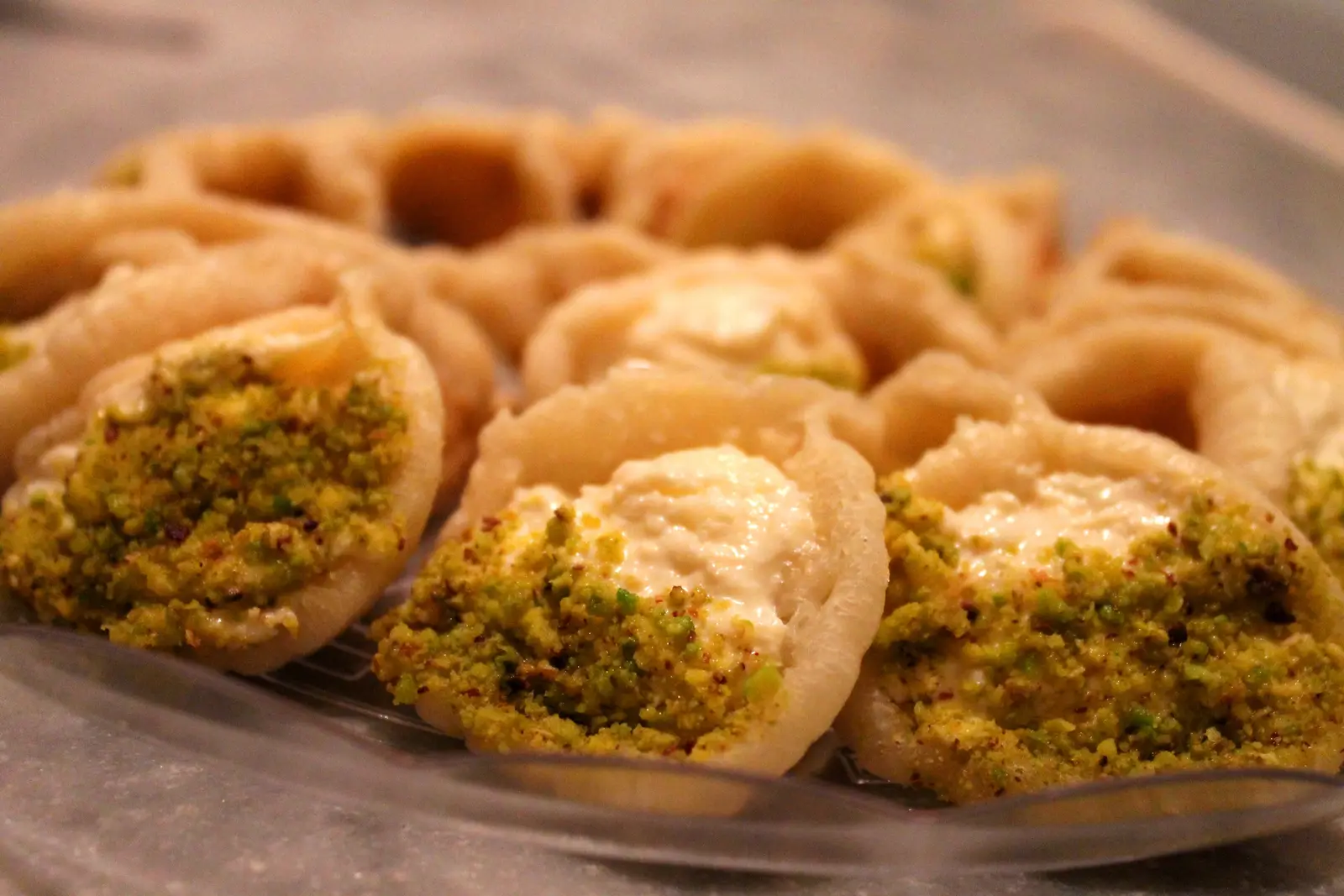
Qatayef
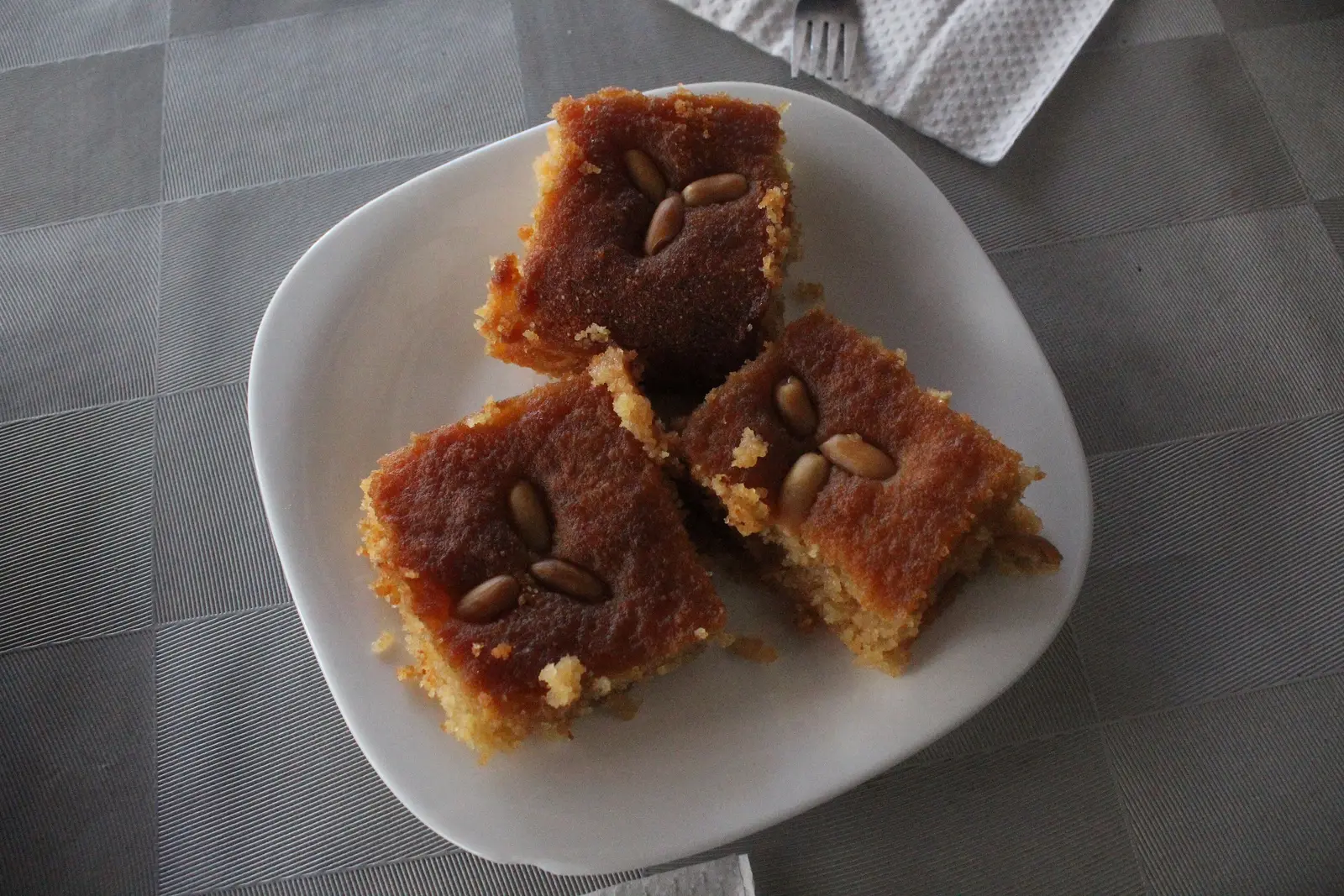
Harisseh and basbousa