Sheikh Ibrahim and the Rose-Red City: How Burckhardt Reached Petra in 1812
In the summer of 1812, a traveller dressed as a scholar from the East asked a local guide to take him to the tomb of Aaron. He said he wanted to make a sacrifice. In truth, he wanted to see a hidden city that no European had described for centuries.
A Swiss traveller with an Arabic name
Johann Ludwig Burckhardt was born in Switzerland in 1784. As a young man he was hired by an association in London to explore Africa, and he prepared for the journey with great care. He spent years in Syria learning Arabic, studying the Quran and Islamic law, and living among the people he met. He took the name Sheikh Ibrahim ibn Abdallah and became fluent enough to be accepted as a learned traveller. In 1812 he set out from Damascus to travel south towards Cairo, following the old routes east of the Jordan Valley. Along the way, villagers told him about remarkable antiquities hidden in a valley called Wadi Musa. His curiosity was immediately awakened.
The goat and the guide
Burckhardt knew that a stranger asking openly about ruins would raise suspicion. Many people in the region believed that foreigners came looking for buried treasure. So he used a reason that everyone would respect: he explained that he had made a vow to sacrifice a goat at the tomb of the Prophet Aaron on the mountain above the valley. Such a vow was a familiar act of devotion, and no one would question it.
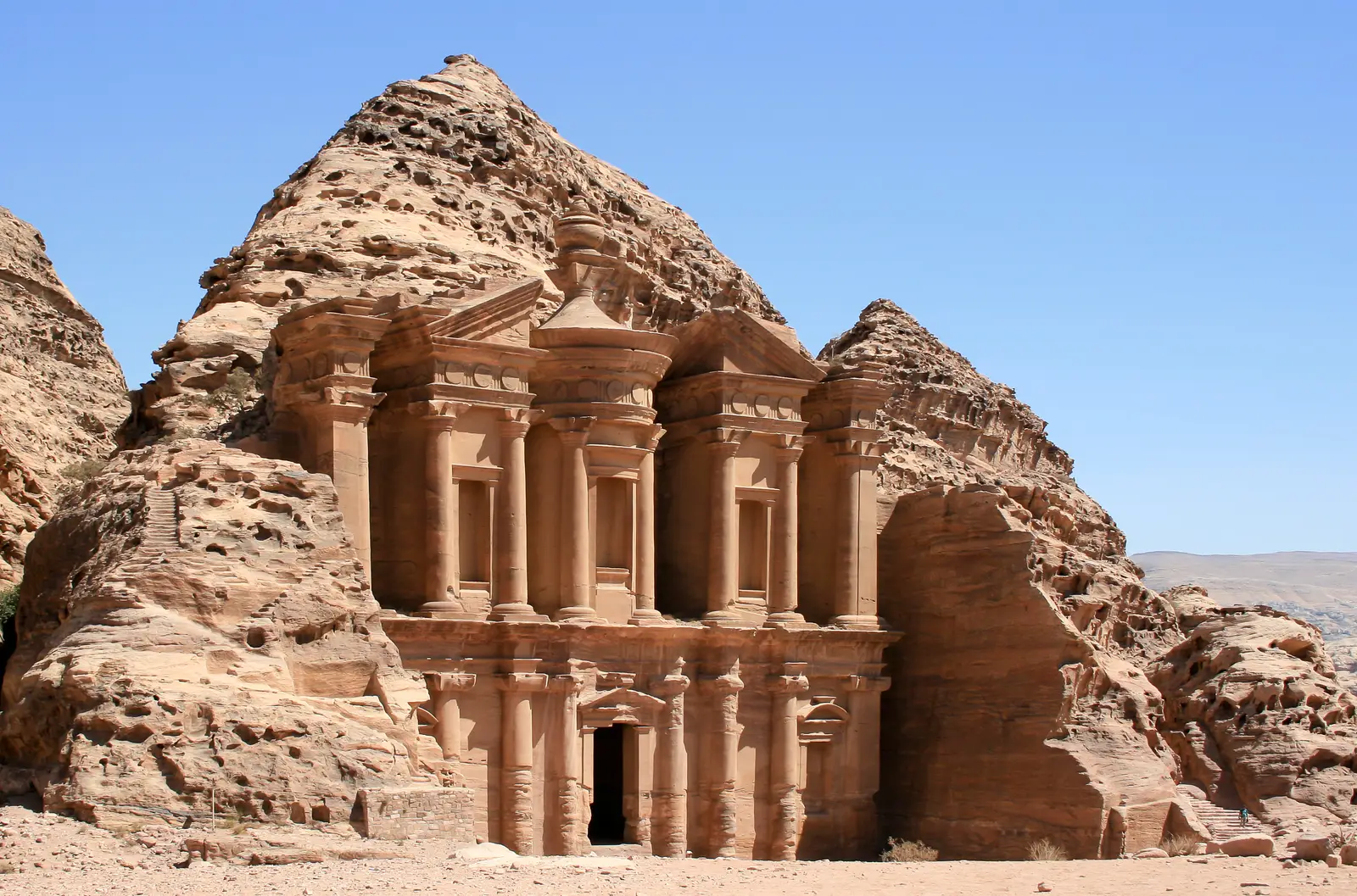
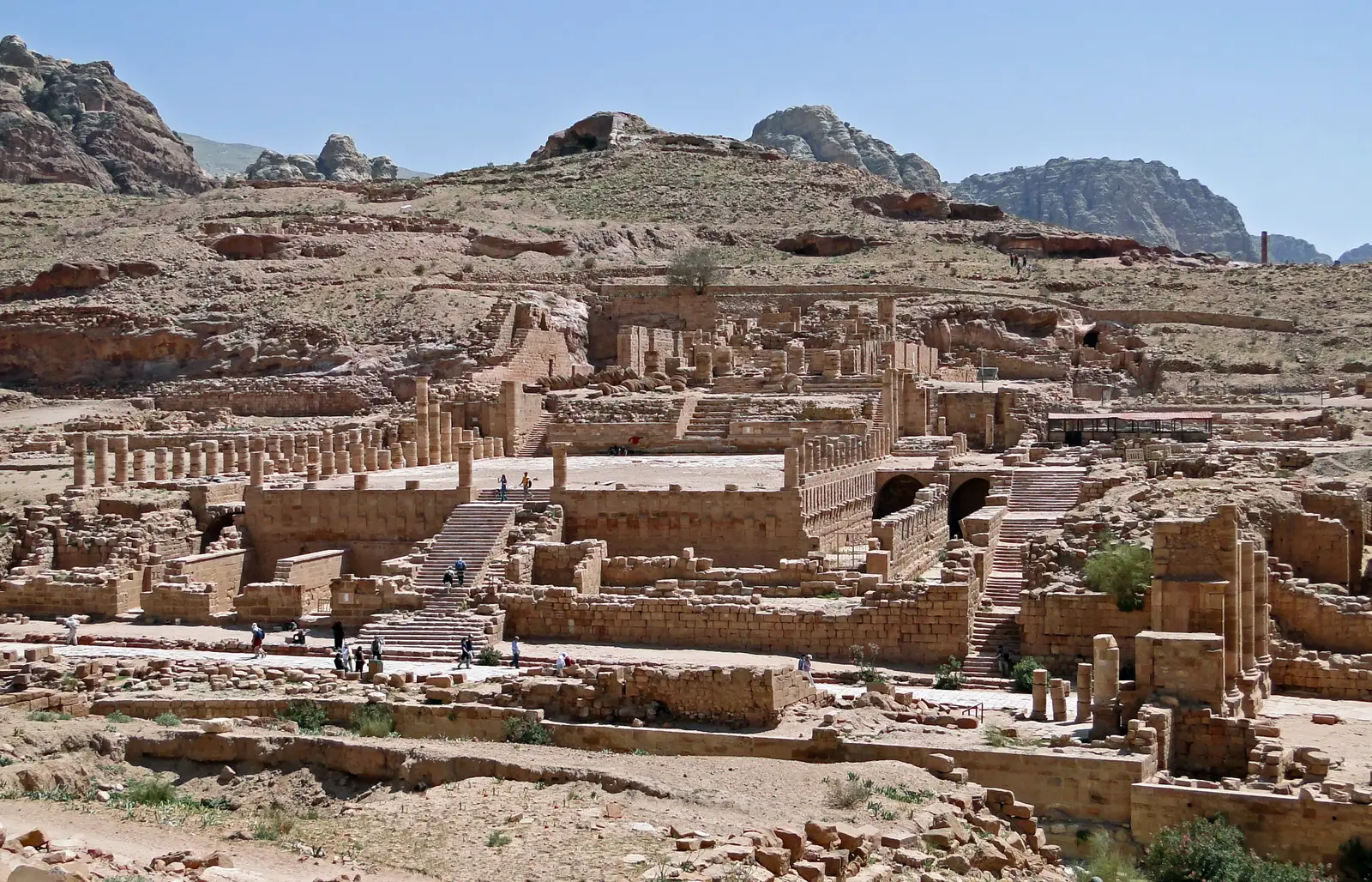
A local guide agreed to lead him. Together they walked through the Siq, past the Treasury, the theatre and the great buildings of the city centre. Burckhardt looked at everything with growing excitement, but he could not stop to measure or draw. When his guide began to grow suspicious of his interest, he made his sacrifice at the foot of the mountain and continued his journey. His visit lasted only part of a day.
A city that was never truly lost
Burckhardt wrote that he believed these ruins were the ancient city of Petra, known from Greek and Roman writers. He died in Cairo in 1817, and his account was published in 1822. Soon afterwards, artists and travellers began to arrive, and in 1839 the Scottish painter David Roberts made the famous images that carried Petra's beauty to readers across Europe.
It is important to remember that Petra was never lost to the people who lived around it. Bedouin families grazed their animals in its valleys, used its caves and knew every path through its mountains. The word rediscovery describes the moment Petra re-entered European books, and that moment depended entirely on the knowledge and guidance of a local man. Burckhardt himself never claimed otherwise.
Following in his footsteps
You can trace Burckhardt's route by walking from the visitor centre through the Siq to the Treasury, then continuing along the main valley past the Street of Facades and the theatre to the colonnaded street. Try to imagine seeing it all for the first time, without maps or photographs, while hiding your excitement from your companion. Today, Bedouin guides from the Petra area still lead visitors along the trails their families have known for generations. Walking with them is the best way to understand that the story of Petra's rediscovery is also a story of local knowledge and hospitality.
Frequently asked questions
Who rediscovered Petra?
The Swiss traveller Johann Ludwig Burckhardt was the first European in modern times to describe Petra, after visiting it in August 1812 under the name Sheikh Ibrahim ibn Abdallah. However, Petra was never lost to the local Bedouin, who lived in and around it. Burckhardt was guided into the city by a local man.
How did Burckhardt get into Petra?
Burckhardt told a local guide that he had vowed to sacrifice a goat at the tomb of Aaron, on a mountain above Petra. This gave him a respected reason to cross the valley. He walked through the Siq and the city centre, observed as much as he could without drawing attention, and made his sacrifice before continuing south.
When did Petra become famous around the world?
Petra became widely known in Europe after Burckhardt's account was published in 1822, followed by the drawings of travellers and artists such as David Roberts in 1839. In 1985 it was inscribed as a UNESCO World Heritage Site, and in 2007 it was chosen as one of the New Seven Wonders of the World in a global public vote.
More stories
Lot's Wife, the Pillar of Salt and the Cave Above the Dead Sea
The Madaba Mosaic Map: The Oldest Map of the Holy Land Found Under a Church Floor
The Silent Faces of 'Ain Ghazal: Among the Oldest Statues of the Human Form
Jerash: The Roman City That Slept Under the Earth
Masters of Water: How the Nabataeans Made the Desert Bloom
The Language of the Cup: Bedouin Coffee Rituals in Jordan
Three Days and a Third: The Bedouin Code of Hospitality