Maqluba
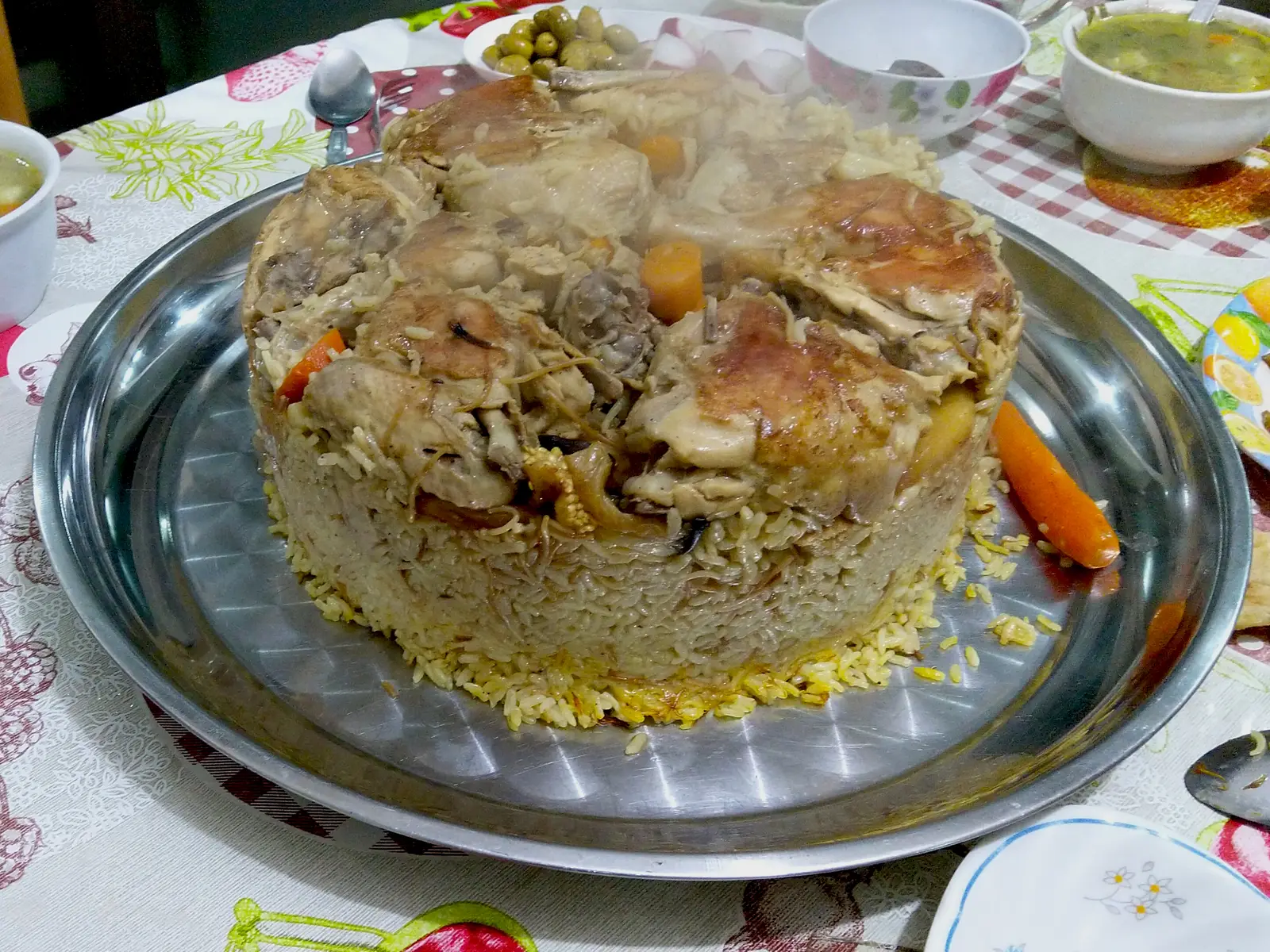
Few moments at a Jordanian family lunch draw as much attention as the turning of the maqluba. A heavy pot is flipped onto a wide platter, lifted slowly, and a tall cake of spiced rice, golden vegetables and tender meat stands for a moment before everyone reaches in. It is a dish of patience, skill and celebration.
Origins and the meaning of the name
Maqluba means 'upside down' in Arabic, a name that describes the way the dish is served. It is a shared heritage of the Levant and is also known in neighbouring regions, with each family and area adding its own touch. In Jordan it is one of the best-loved home dishes, often cooked for Friday lunch, for visiting relatives and for gatherings during Ramadan and the holidays. Because the whole meal is cooked in a single pot, it has long been a practical way to feed a large family generously.
Ingredients and how it is made
Making maqluba begins with the vegetables. Slices of aubergine, florets of cauliflower or rounds of potato are fried or roasted until golden. Chicken pieces or chunks of lamb are boiled with onion and whole spices to make a flavourful stock. The cook then arranges the layers in a deep pot: often tomato slices or meat at the bottom, followed by the vegetables, and finally washed rice seasoned with spices such as allspice, cinnamon, turmeric and black pepper.
The hot stock is poured over the layers until the rice is just covered, and the pot is cooked slowly over low heat until the rice is tender and the liquid has been absorbed. After a short rest, a serving platter is placed on top of the pot and the two are turned over together in one confident movement. When the pot is lifted, the layers should hold their shape. Toasted almonds or pine nuts and chopped parsley are scattered on top.
How and when it is eaten
Maqluba is served hot from the large central platter, with each person helping themselves or being served by the host. It is almost always accompanied by plain yoghurt, either on its own or mixed with cucumber, and by a fresh salad of chopped tomato, cucumber and parsley dressed with lemon and olive oil. The cool yoghurt and sharp salad balance the richness of the fried vegetables and spiced rice. It is common to gather around the moment of turning the pot, and some families tap the pot gently to help it release.
Variations and where to try it in Jordan
There is no single correct maqluba. Aubergine with lamb is a classic pairing, while cauliflower with chicken is perhaps the most common everyday version. Some cooks add carrots, peppers or chickpeas, and vegetarian versions made only with vegetables and vegetable stock are easy to find in homes. Because maqluba is a home dish at heart, the best way to taste it is at a family table. Traditional restaurants in Amman and other cities sometimes offer it on set days, especially Fridays.
Related dishes
Maqluba belongs to a family of generous rice dishes served on large platters. Mansaf, Jordan's national dish, is the most famous of these. Mujaddara offers a simpler meal of rice and lentils, while mlukhiyeh is a leafy stew usually served over rice. To finish a maqluba lunch, many families serve sweet tea with sage, fresh fruit or a tray of harisseh, the semolina cake soaked in syrup.
Frequently asked questions
What does maqluba mean?
Maqluba is an Arabic word meaning 'upside down' or 'turned over'. The name refers to the moment of serving, when the cooking pot is inverted onto a large platter so that the layers of rice, vegetables and meat come out as a single tall mound. This moment is often treated as a small celebration at the table.
What is maqluba made of?
Maqluba is made of rice, fried or roasted vegetables and usually chicken or lamb, all cooked together in one pot with spices and stock. The most common vegetables are aubergine, cauliflower and potato. It is finished with toasted almonds or pine nuts and is typically served with yoghurt and a fresh salad.
Is maqluba vegetarian?
Traditional maqluba usually contains chicken or lamb and is cooked in meat stock, so it is not vegetarian. However, the dish adapts very easily. Many families prepare a vegetable-only version using aubergine, cauliflower, potatoes and sometimes chickpeas, cooked in vegetable stock. If you are eating out, ask how it was prepared before ordering.
How do you flip maqluba without it falling apart?
Cooks let the pot rest for several minutes after cooking so the rice can settle. A large platter is placed upside down over the pot, and both are turned over together quickly and firmly. The pot is then left for a moment before being lifted slowly. Packing the layers evenly and not using too much liquid also help the dish keep its shape.
Is maqluba spicy?
Maqluba is aromatic rather than hot. It is seasoned with warm spices such as allspice, cinnamon, turmeric and black pepper, which give it a gentle, fragrant flavour. There is normally no chilli in the dish itself, although some people like to add hot sauce or green chilli at the table.
More dishes to discover
Musakhan

Zarb
Galayet bandora
Mujaddara
Shorbat adas (lentil soup)
Falafel and hummus
Ful