Za'atar and olive oil
The simplest breakfast in Jordan may also be the most beloved. A piece of warm bread is dipped first into a small bowl of green-gold olive oil, then into a bowl of fragrant za'atar, and eaten in one bite. Behind this everyday ritual lie ancient olive groves, wild hillside herbs and a harvest season that brings families together each autumn.
Origins and story
Olive trees have been cultivated in the Levant for thousands of years, and archaeological sites in Jordan show that olive oil has been produced in the region since ancient times. Za'atar, both a wild herb and the spice mixture made from it, has long been gathered from the hillsides and dried for use through the year. Together, bread, olive oil and za'atar form a food tradition shared across the Levant. In Jordan, they appear on almost every breakfast table and in lunch boxes, and many families make their own za'atar mix.
What za'atar and olive oil are
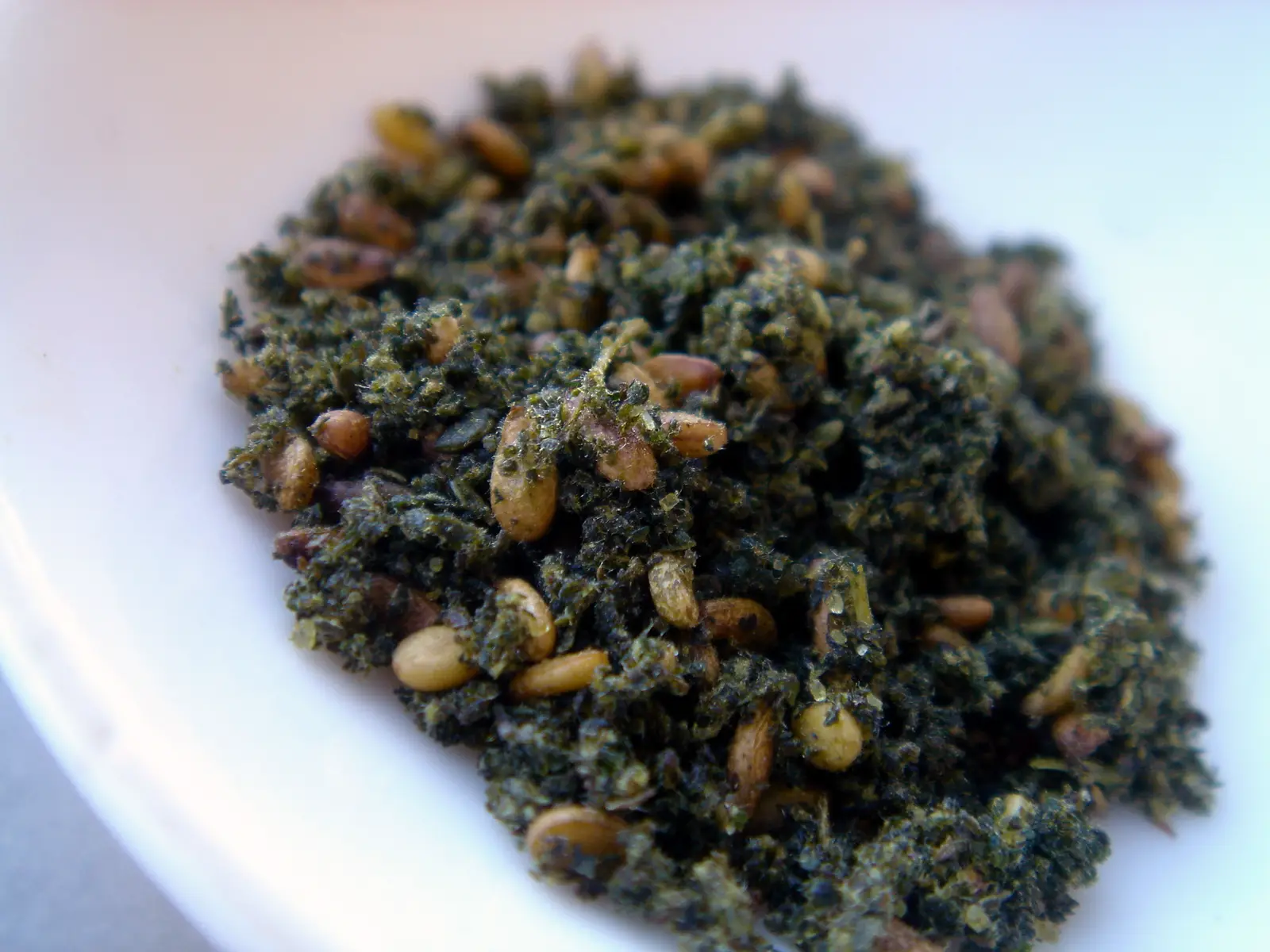
The word za'atar refers both to a family of thyme-like herbs that grow wild in the region and to the popular seasoning made from them. The mixture usually contains the dried, crushed herb, sumac for a lemony sourness, toasted sesame seeds and salt. Recipes vary, and some families add other herbs or spices. The colour can range from green to brownish red depending on the blend.
Jordanian olive oil is pressed from olives grown mainly in the north of the country, in areas around Irbid, Ajloun and Jerash, and also in other regions. Freshly pressed oil is often cloudy and green with a peppery, slightly bitter taste, which mellows over the following months. Many families buy their year's supply of oil directly from relatives or local presses after the harvest.
How and when it is eaten
Za'atar and olive oil are eaten mostly at breakfast, but also as a snack at any time of day. Two small bowls are placed on the table, one with oil and one with za'atar, and each person tears off a piece of bread, dips it into the oil and then the za'atar. It is often served alongside olives, white cheese, labneh, tomatoes, cucumbers and eggs, with sweet tea. Za'atar mixed with olive oil is also spread on dough to make manakeesh, the classic bakery breakfast.
The olive harvest and where to experience it in Jordan
The olive harvest usually takes place in the autumn, roughly from October to December. Families gather in their groves to pick the fruit by hand or shake it from the branches onto sheets, often sharing meals under the trees. The olives are then taken to presses, where the air is filled with the smell of fresh oil. The northern hills around Ajloun, Jerash and Irbid are beautiful at this time of year. Markets across Jordan sell za'atar, olive oil and olives, which make excellent souvenirs.
Related dishes
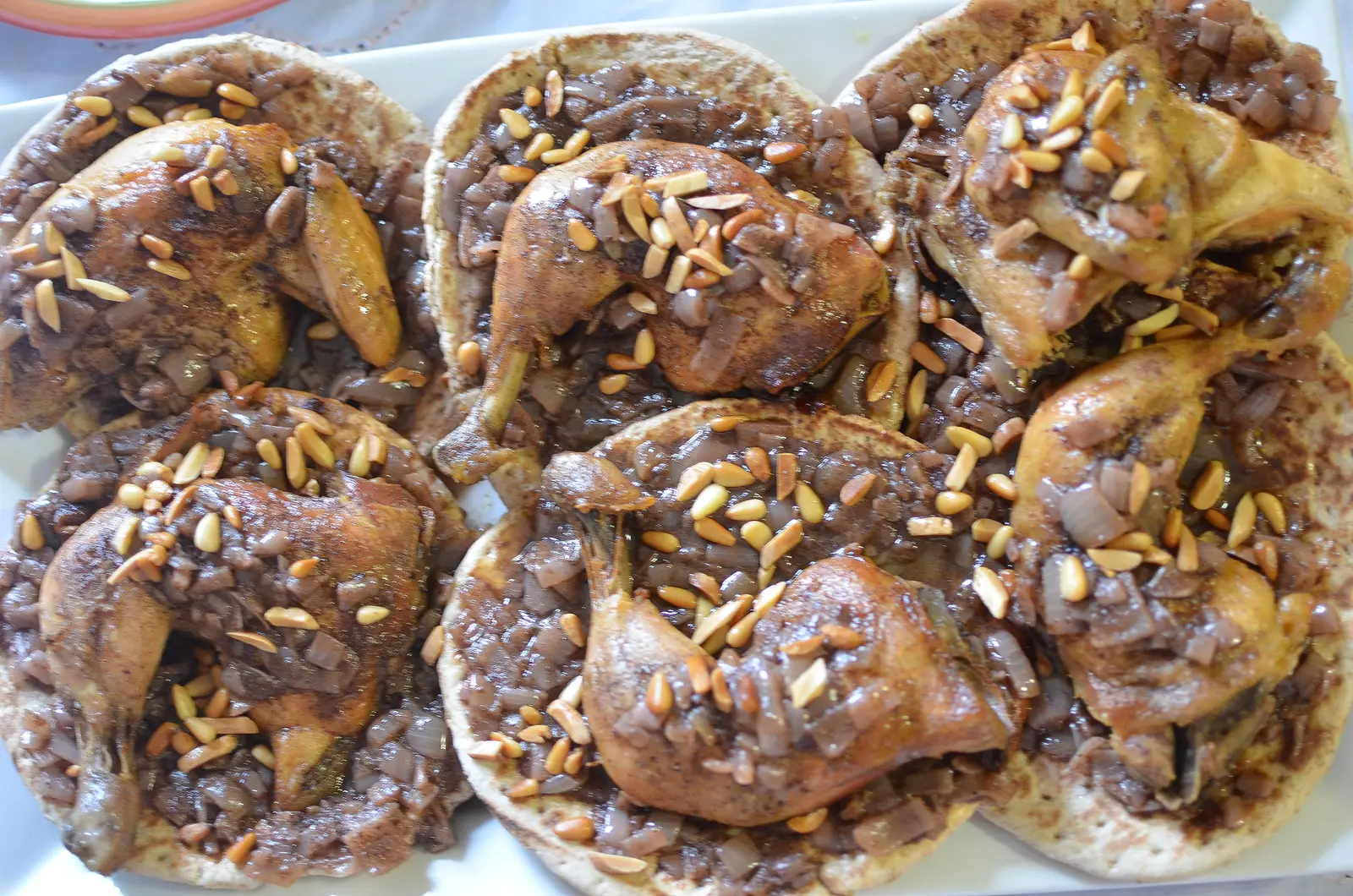
Za'atar and olive oil are the base of manakeesh, the flatbreads sold fresh by neighbourhood bakeries. Olive oil is the star of musakhan, especially when the new oil arrives, and it is poured generously over hummus, ful and galayet bandora. Fresh shrak or taboon bread with olive oil and za'atar is one of the simplest and most satisfying tastes of Jordan.
Frequently asked questions
What is za'atar made of?
Za'atar is a seasoning made mainly from a dried, crushed thyme-like herb that grows wild in the region, mixed with sumac, toasted sesame seeds and salt. The exact recipe varies between families and regions. The word za'atar also refers to the herb itself, which can be used fresh in salads and pastries.
How do you eat za'atar and olive oil?
Tear off a piece of fresh flatbread, dip it first into a bowl of olive oil, and then into a bowl of za'atar so that the mixture sticks to the oil. Eat it in one bite. Za'atar can also be mixed with olive oil into a paste and spread on bread, or baked on dough to make manakeesh.
When is the olive harvest in Jordan?
The olive harvest in Jordan generally takes place in the autumn, roughly from October to December, depending on the weather and the area. It is a busy and social time, when families gather in their groves to pick olives and take them to local presses. The northern regions around Ajloun, Jerash and Irbid are especially known for olives.
Is za'atar the same as thyme?
Not exactly. The za'atar herb is a plant related to oregano and thyme with its own distinct flavour, and similar herbs are sometimes also called za'atar. The za'atar spice mix adds sumac, sesame seeds and salt to the dried herb. Dried thyme can be used as a substitute, but the taste will be different.
More dishes to discover
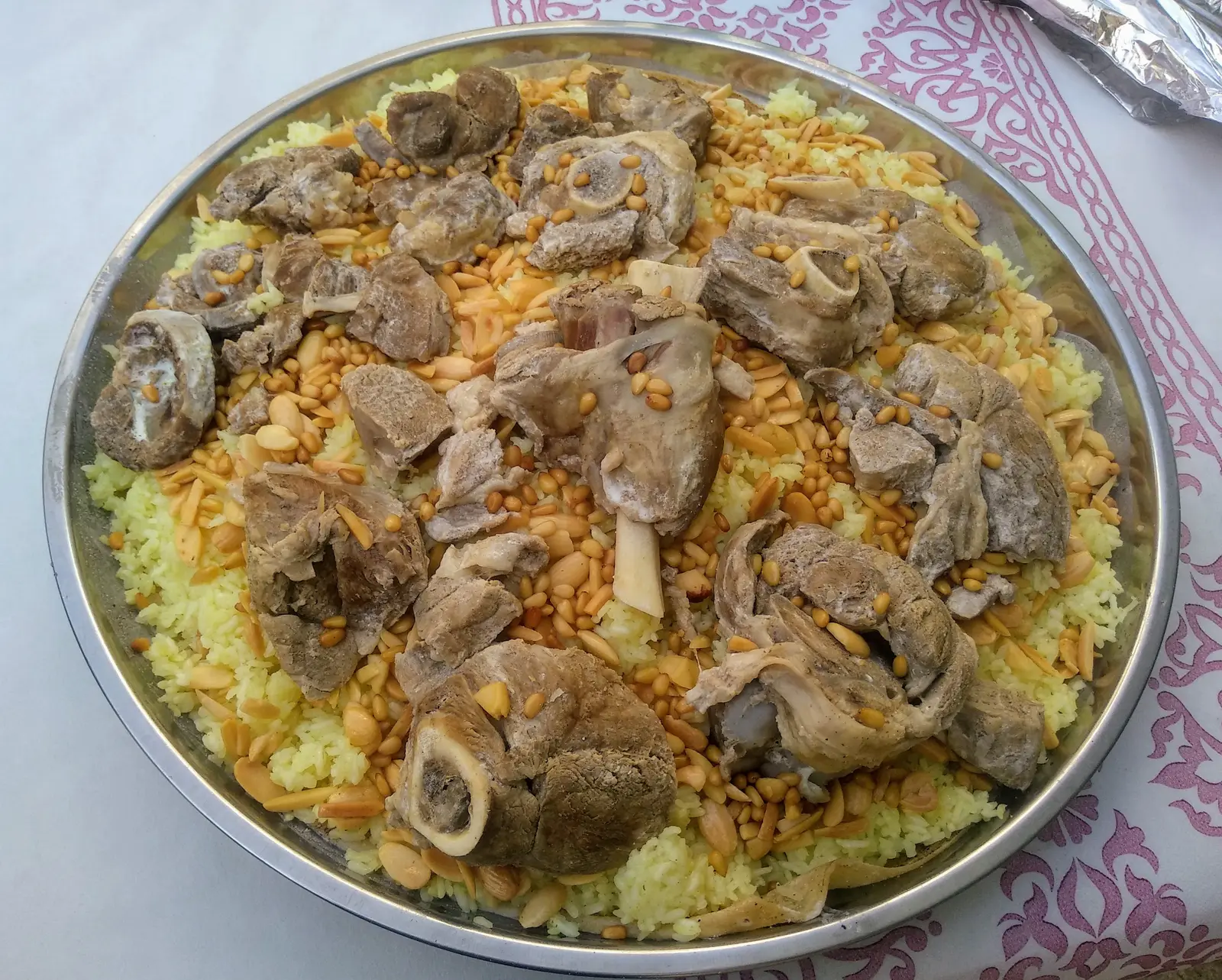
Mansaf
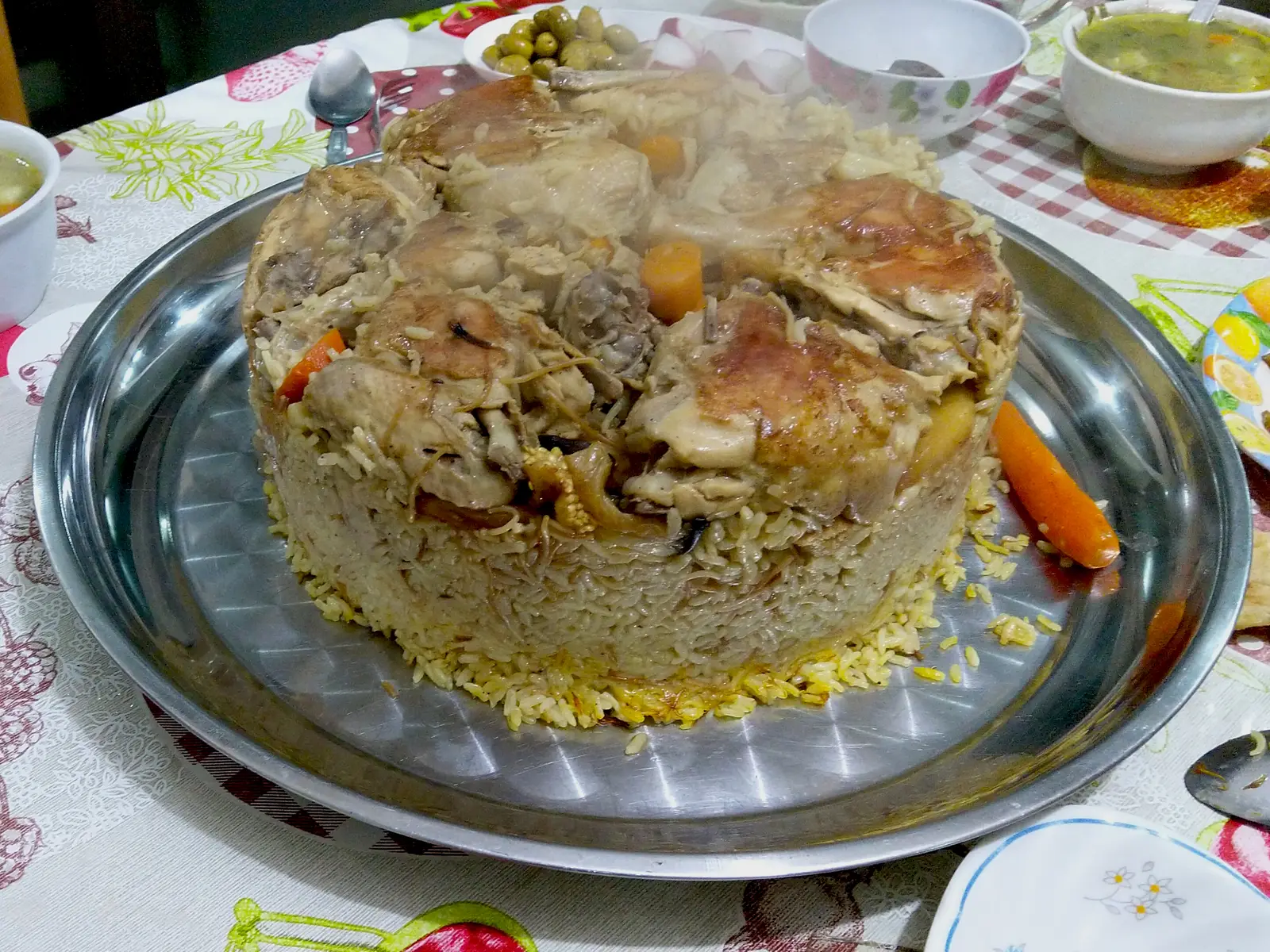
Maqluba
Musakhan

Zarb
Galayet bandora
Mujaddara
Shorbat adas (lentil soup)