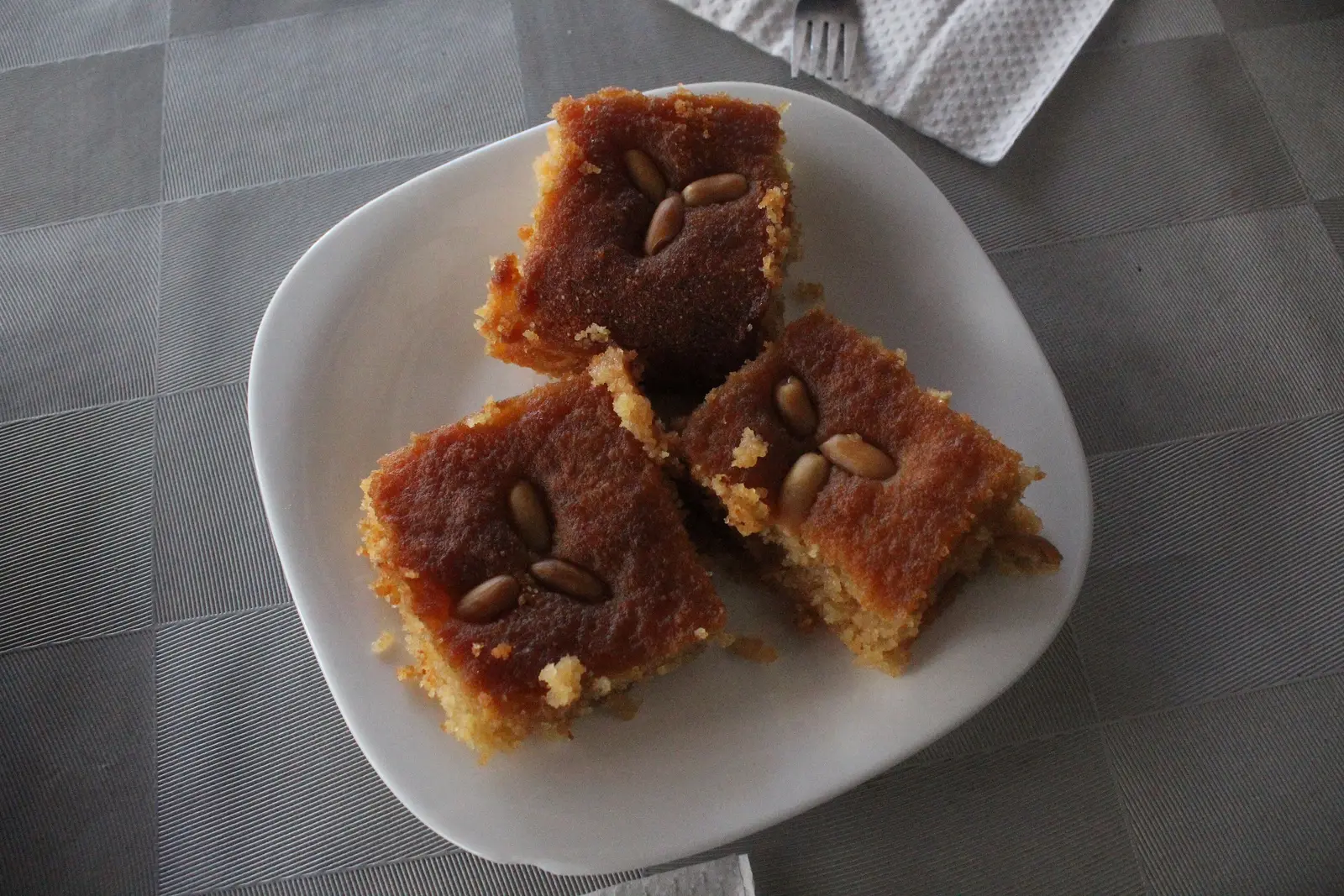
Harisseh and basbousa
Harisseh is the kind of sweet that makes a house smell like a celebration. A tray of golden semolina cake comes out of the oven, is drenched in cool syrup, and is cut into neat diamonds, each crowned with a single almond or peanut. It is soft, fragrant and generous, and it is always shared.
Origins and the names
Semolina cakes soaked in syrup are loved across the Arab world and the eastern Mediterranean, and they go by many names. In Jordan, as in much of the Levant, the most common name is harisseh, while the name basbousa, widely used in Egypt, is also well known. In Lebanon a similar cake is often called namoura. The details differ from place to place, but the idea is shared: a simple baked cake made rich and moist by sweet syrup. It is a favourite home bake and a staple of sweet shops.
Ingredients and how it is made
The main ingredient is semolina, a coarse flour made from durum wheat. It is mixed with sugar, yoghurt or milk, melted butter or oil and a raising agent, and sometimes desiccated coconut. Many cooks let the batter rest so the semolina can absorb the liquid. The tray is often greased with tahini, which adds a subtle nutty flavour and helps the base turn golden.
The batter is spread evenly in the tray, scored into diamonds or squares, and an almond, peanut or half walnut is pressed into the centre of each piece. After baking until golden, the hot cake is soaked with cool syrup made from sugar, water and lemon juice, sometimes flavoured with orange blossom or rose water. The cake is then left to rest so that it absorbs the syrup fully and becomes soft and moist.
How and when it is eaten
Harisseh is usually served at room temperature, cut into its diamond or square pieces. It is a very common sweet to serve with tea or coffee when guests visit, and families often bake a tray for weekends, holidays and Ramadan evenings. Because it keeps well for a few days, it is also a popular choice for gatherings, school events and gifts to neighbours. A small piece is satisfying, since it is quite sweet and rich.
Variations and where to try it in Jordan
Some versions are dense and moist, while others are lighter and more cake-like. Coconut is a popular addition, and some cooks fill the cake with a layer of cream or thick yoghurt in the middle. The topping may be almonds, peanuts, pistachios or walnuts. You can find harisseh in sweet shops and bakeries in every Jordanian city, usually sold by weight from large trays. It is also one of the sweets most often made at home, so many visitors first taste it as guests.
Related dishes
Harisseh shares the use of sweet syrup with kunafa and qatayef, two of the best-loved sweets in Jordan. If you enjoy it, look for other semolina sweets in sweet shops, as well as date-filled cookies prepared for the holidays. To balance its sweetness, try it with a glass of sage tea or a small cup of bitter Arabic coffee. Sharing it with neighbours is part of the tradition.
Frequently asked questions
What is harisseh?
Harisseh is a soft cake made from semolina, sugar, yoghurt or milk and butter, baked in a tray and soaked in sugar syrup after baking. It is cut into diamonds or squares, each topped with an almond or peanut. In Jordan it is a popular sweet served with tea or coffee and is also widely known as basbousa.
Is harisseh the same as basbousa?
Yes, in Jordan the two names generally refer to the same sweet, a semolina cake soaked in syrup. Harisseh is the name most often used in the Levant, while basbousa is widely used in Egypt and is also well understood in Jordan. Recipes vary slightly from family to family and country to country.
Is sweet harisseh related to harissa chilli paste?
No. Despite the similar names, they are completely different. Sweet harisseh is a semolina cake soaked in syrup. Harissa is a spicy chilli paste from North Africa. There is also a savoury dish of wheat and meat called harees or harisa in some Arab countries. On a Jordanian sweet shop menu, harisseh always means the cake.
Is harisseh vegetarian?
Yes, harisseh is vegetarian, as it is made from semolina, sugar, dairy, butter or oil and nuts. It is usually not vegan, because most recipes include yoghurt, milk or butter, but plant-based versions made with oil and plant milk are possible at home. People with nut allergies should note the nut topping.
More dishes to discover
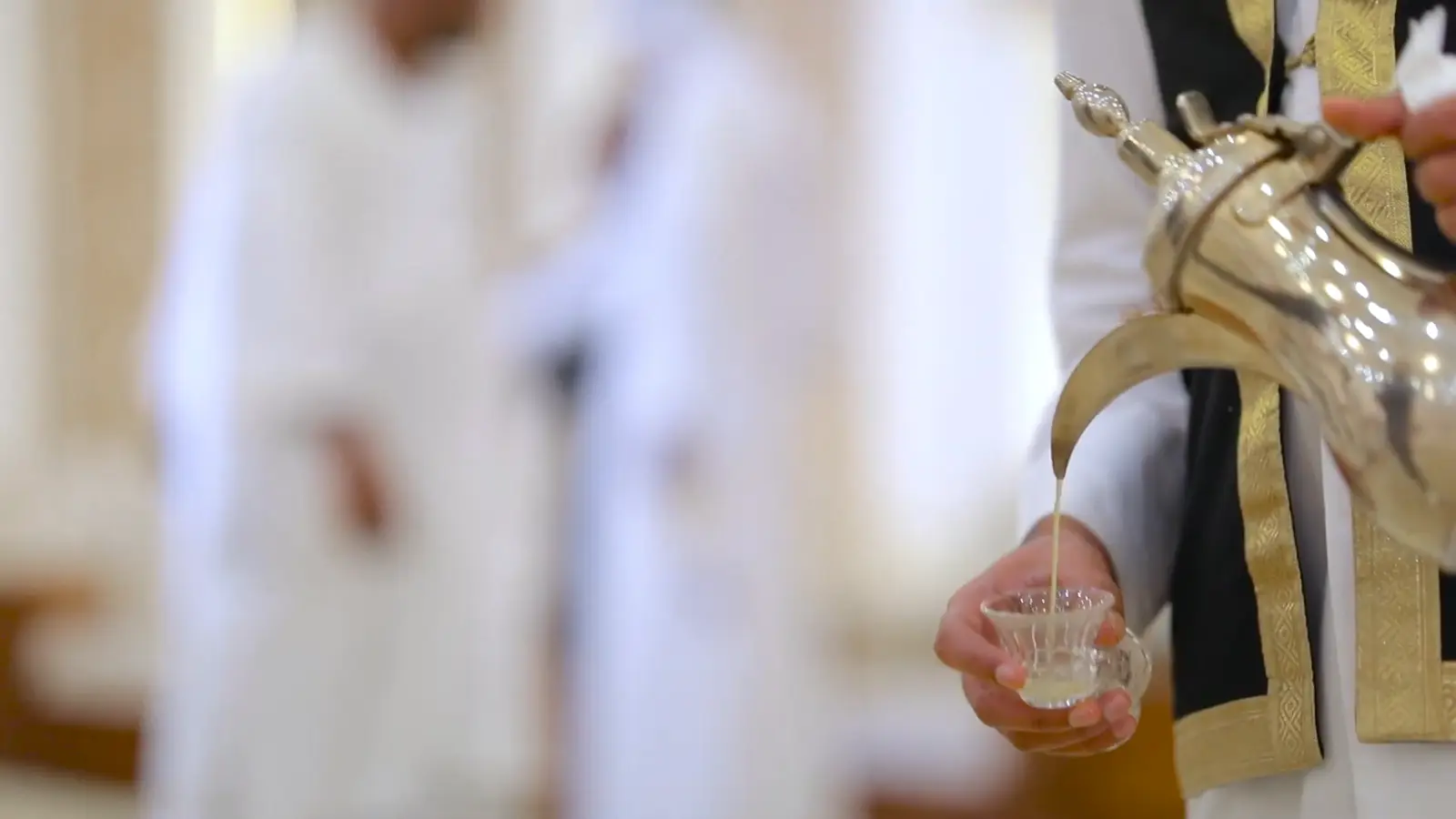
Arabic coffee (qahwa sada)
Sage tea
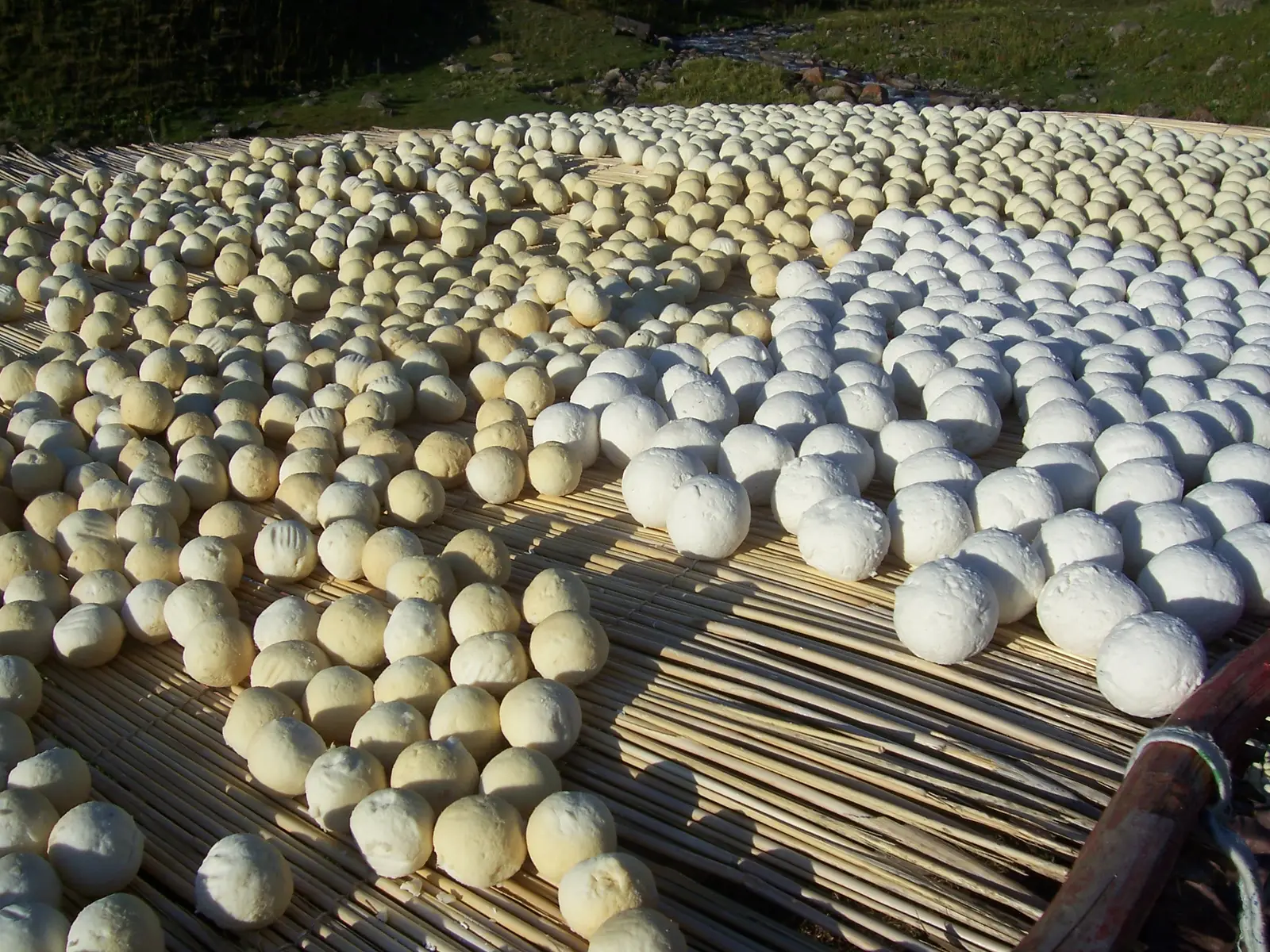
Jameed
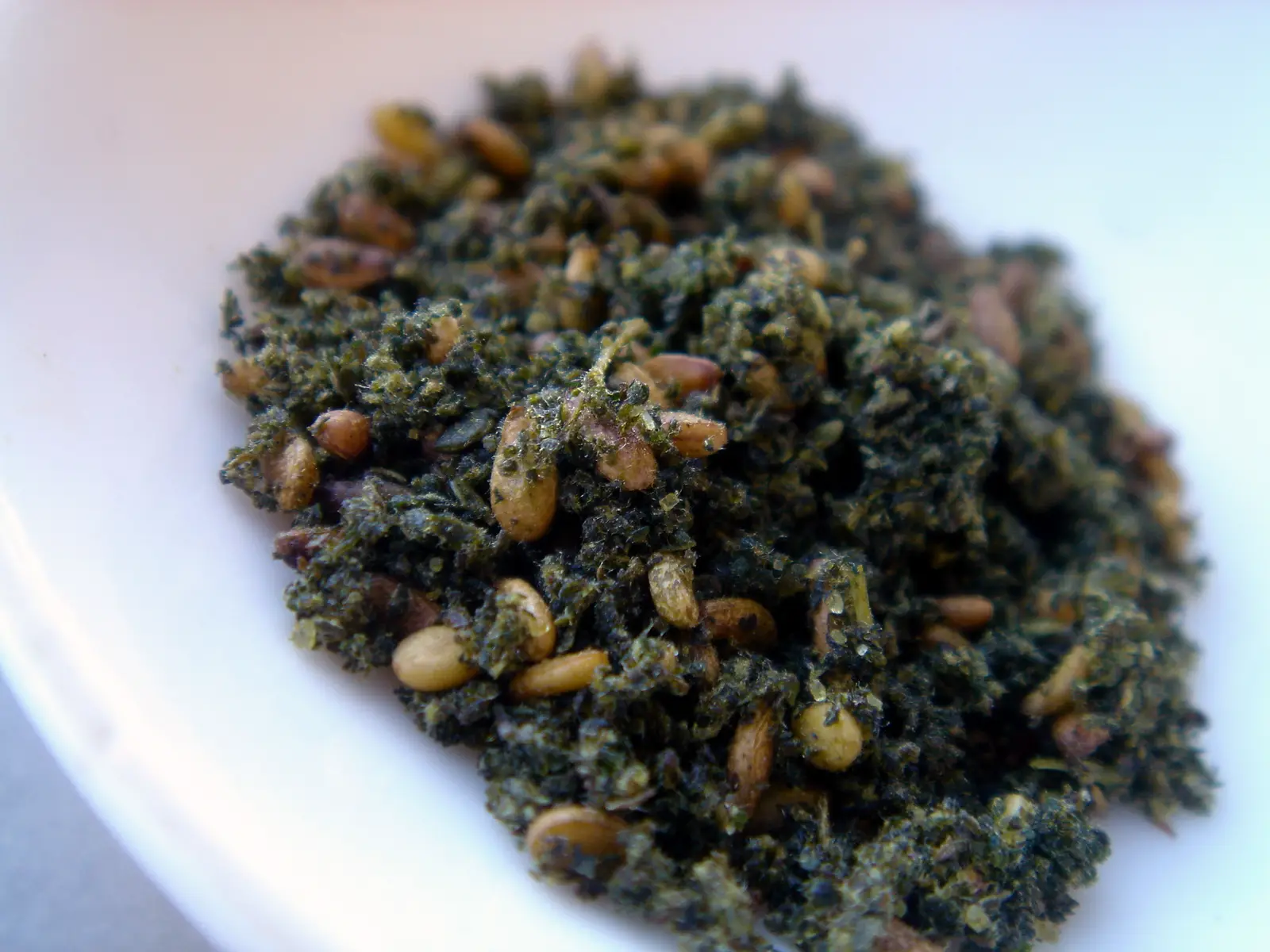
Za'atar and olive oil
Mansaf
Maqluba
Musakhan