Kunafa (knafeh)
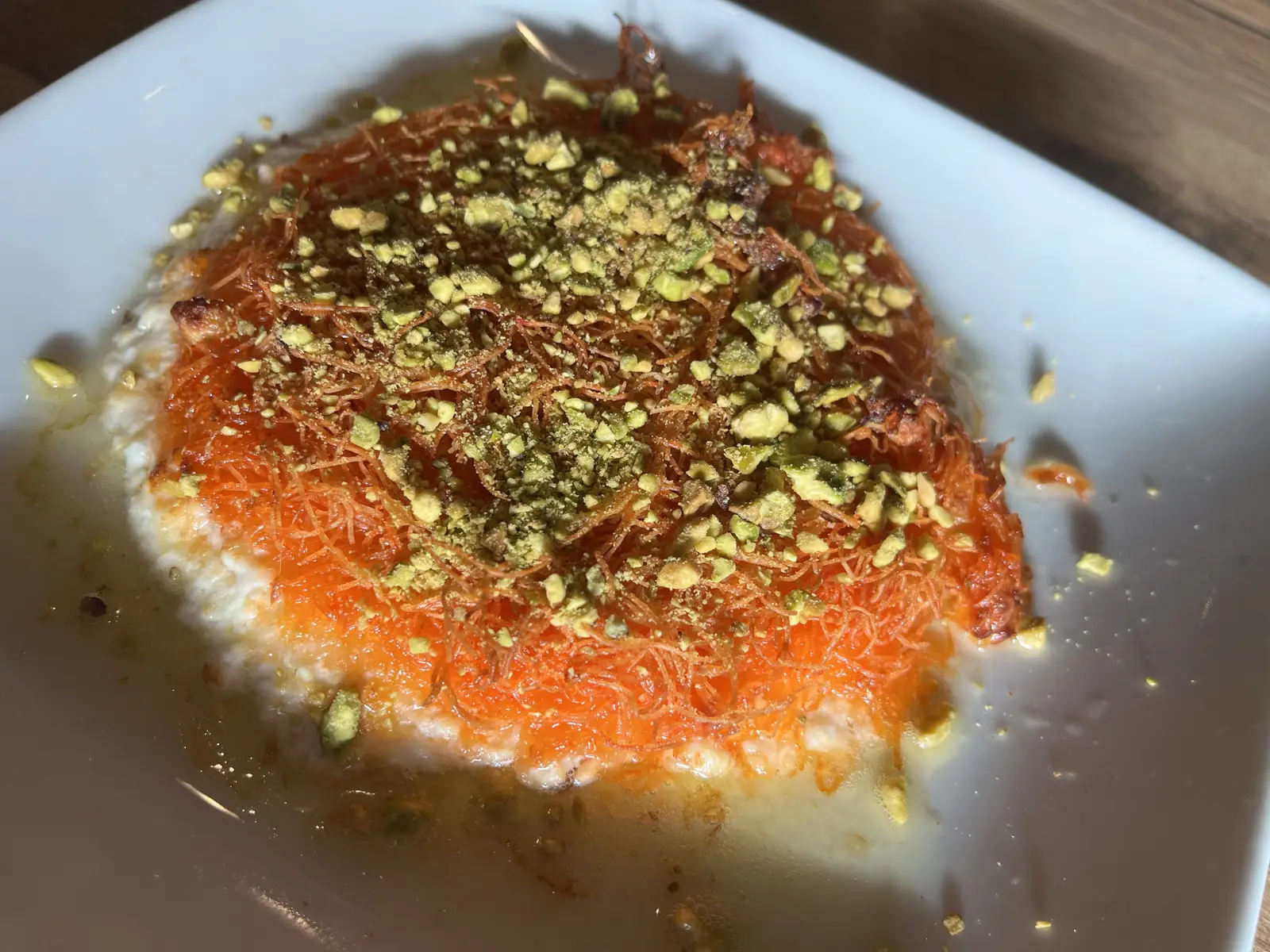
There are few sights in Jordan as tempting as a giant round tray of kunafa being cut into steaming squares. Beneath a crisp, golden, orange-tinted pastry lies a layer of soft white cheese that stretches as it is lifted, and the whole sweet glistens with syrup and bright green pistachios. It is a treat best enjoyed warm, in good company.
Origins and story
Kunafa, also spelled knafeh or kanafeh, is a sweet with a long history in the Arab world, and stories about its origins go back many centuries. The cheese-filled style most loved in Jordan is closely associated with the Levant, particularly with towns famous for their white brined cheeses. Today it is a shared treasure across the region. In Jordan, kunafa is one of the most popular desserts of all, eaten as an evening treat, offered to guests and bought by the tray to celebrate good news such as weddings, graduations and new jobs.
Ingredients and how it is made
Kunafa begins with a soft, mild white cheese, usually a brined cheese such as nabulsi or akkawi that has been soaked in water to remove most of its salt. The cheese is spread over a layer of pastry in a large round tray. The pastry is either kataifi, a dough made into very fine threads, or a semolina-like crumb made from the same dough, which gives a smoother surface.
The pastry is mixed with melted butter or clarified butter and often tinted orange or red. The tray is baked or turned slowly over a flame until the bottom is crisp and golden and the cheese has melted. It is then flipped so the golden side is on top. Just before serving, it is soaked with a sugar syrup that may be scented with orange blossom or rose water, and sprinkled with crushed pistachios.
How and when it is eaten
Kunafa must be eaten warm, while the cheese is soft and stretchy. Sweet shops serve it on small plates, cut straight from the large tray, and customers often eat standing at the counter or on the pavement outside. Some people enjoy it tucked inside a soft sesame bread roll, which turns it into a sweet sandwich. Kunafa is popular in the evening, after dinner and during Ramadan nights, and is usually followed by tea, Arabic coffee or a glass of water. It is rich, so a small portion often satisfies.
Variations and where to try it in Jordan
The two main styles are khishneh, meaning 'rough', made with long pastry threads that give a crunchy texture, and na'meh, meaning 'soft' or 'fine', made with finely ground pastry for a smoother top. Some versions use cream instead of cheese, or add nuts inside. You will find kunafa in sweet shops across Jordan, and a few shops in downtown Amman are famous for long queues at all hours. Look for busy shops with large trays coming fresh from the oven.
Related dishes
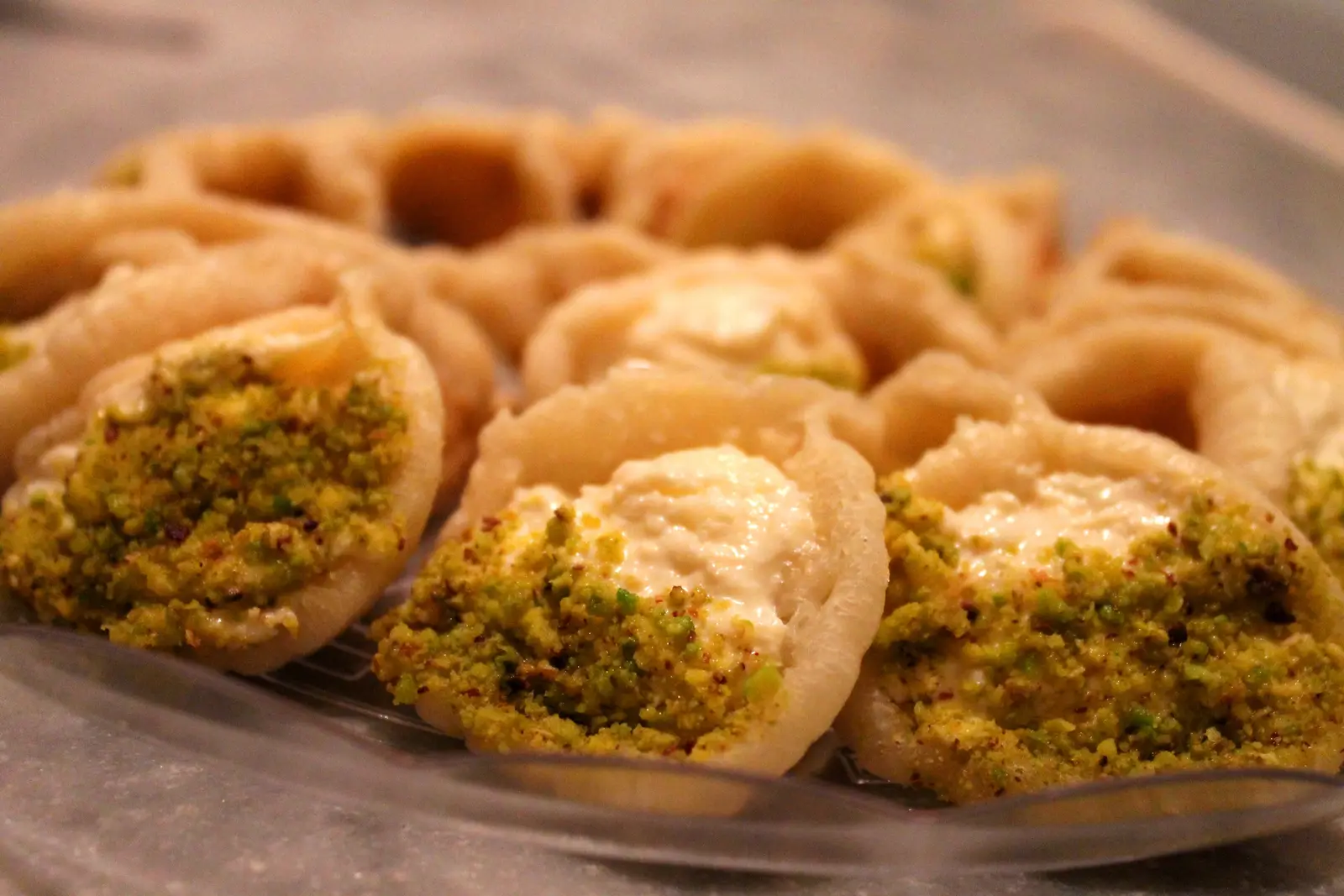
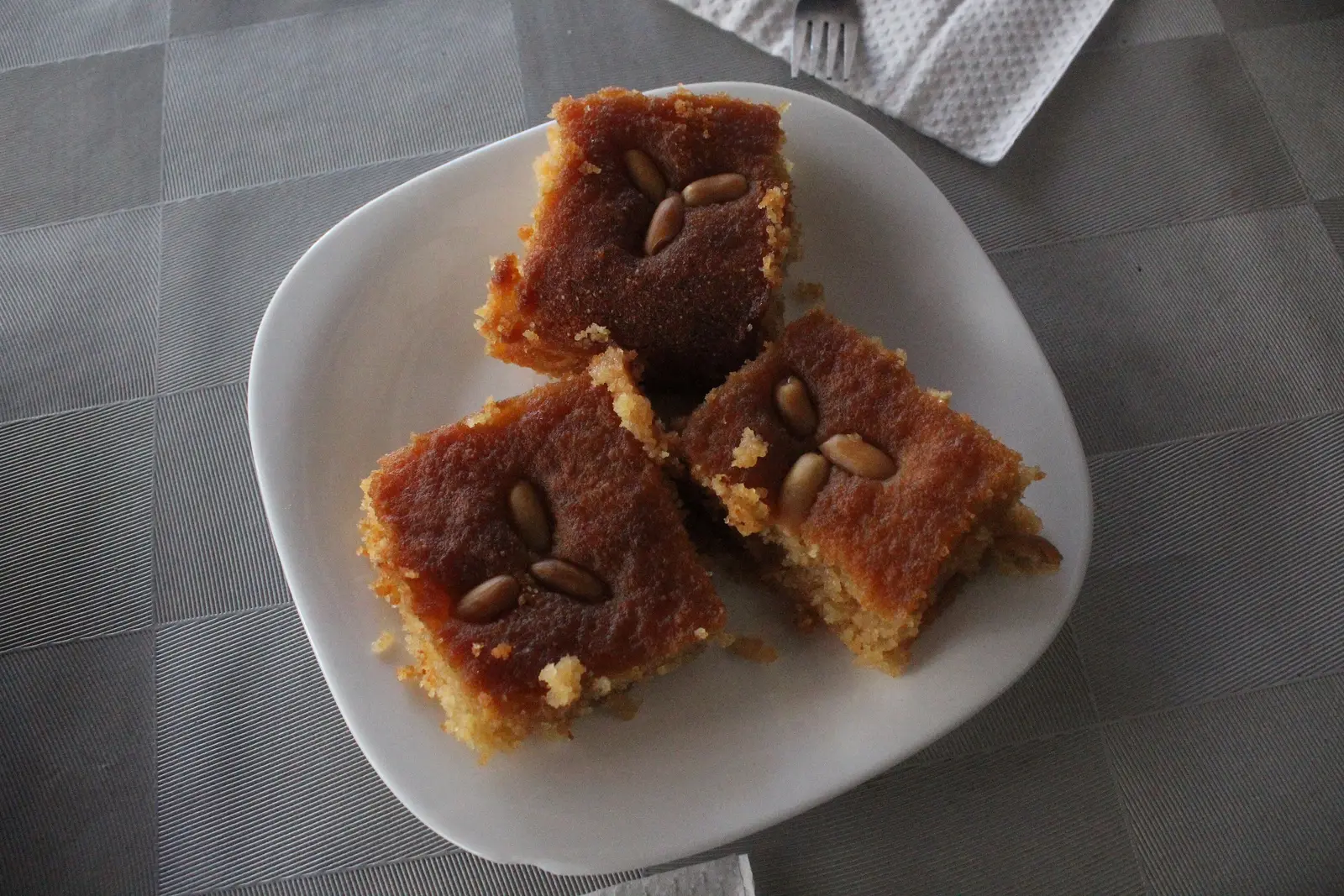
Kunafa belongs to the large family of Arab sweets made with pastry, nuts and syrup. During Ramadan, try qatayef, small pancakes filled with walnuts or cheese. Harisseh, a semolina cake soaked in syrup, is a simpler sweet often made at home. After any of these, a small cup of bitter Arabic coffee with cardamom is the traditional way to balance the sweetness.
Frequently asked questions
What is kunafa made of?
Kunafa is made of a layer of soft white cheese baked beneath a layer of pastry, either fine shredded threads called kataifi or a semolina-like crumb made from the same dough. The pastry is mixed with butter, baked until golden, soaked in sugar syrup and sprinkled with pistachios. It is served warm while the cheese is melted.
What cheese is used in kunafa?
Kunafa is usually made with a white brined cheese such as nabulsi or akkawi. Before baking, the cheese is soaked in water to remove most of its salt, leaving it mild and soft so that it melts and stretches. Some home cooks mix in mozzarella or use a sweetened cream filling instead.
Is kunafa the same as knafeh?
Yes. Kunafa, knafeh, kanafeh and kunafeh are all different spellings of the same Arabic name. Pronunciation varies by region, and English spellings vary even more. In Jordan, you will see several spellings on menus and shop signs, but they all refer to the same family of warm cheese and pastry sweets.
Is kunafa vegetarian?
Kunafa contains cheese, butter and sugar syrup and no meat, so it is generally considered vegetarian. Some vegetarians who avoid animal rennet in cheese may wish to ask about the cheese used. It is not vegan because of the cheese and butter. It is also very sweet and rich, so it is usually eaten in small portions.
Why is kunafa orange?
The bright orange or red colour of kunafa usually comes from food colouring added to the pastry, though some cooks use natural colourings. The colour is traditional and helps make the sweet instantly recognisable. Kunafa without colouring is also common and turns a natural golden brown when baked with butter.
More dishes to discover
Qatayef
Harisseh and basbousa

Arabic coffee (qahwa sada)
Sage tea
Jameed
Za'atar and olive oil
Mansaf