Qatayef
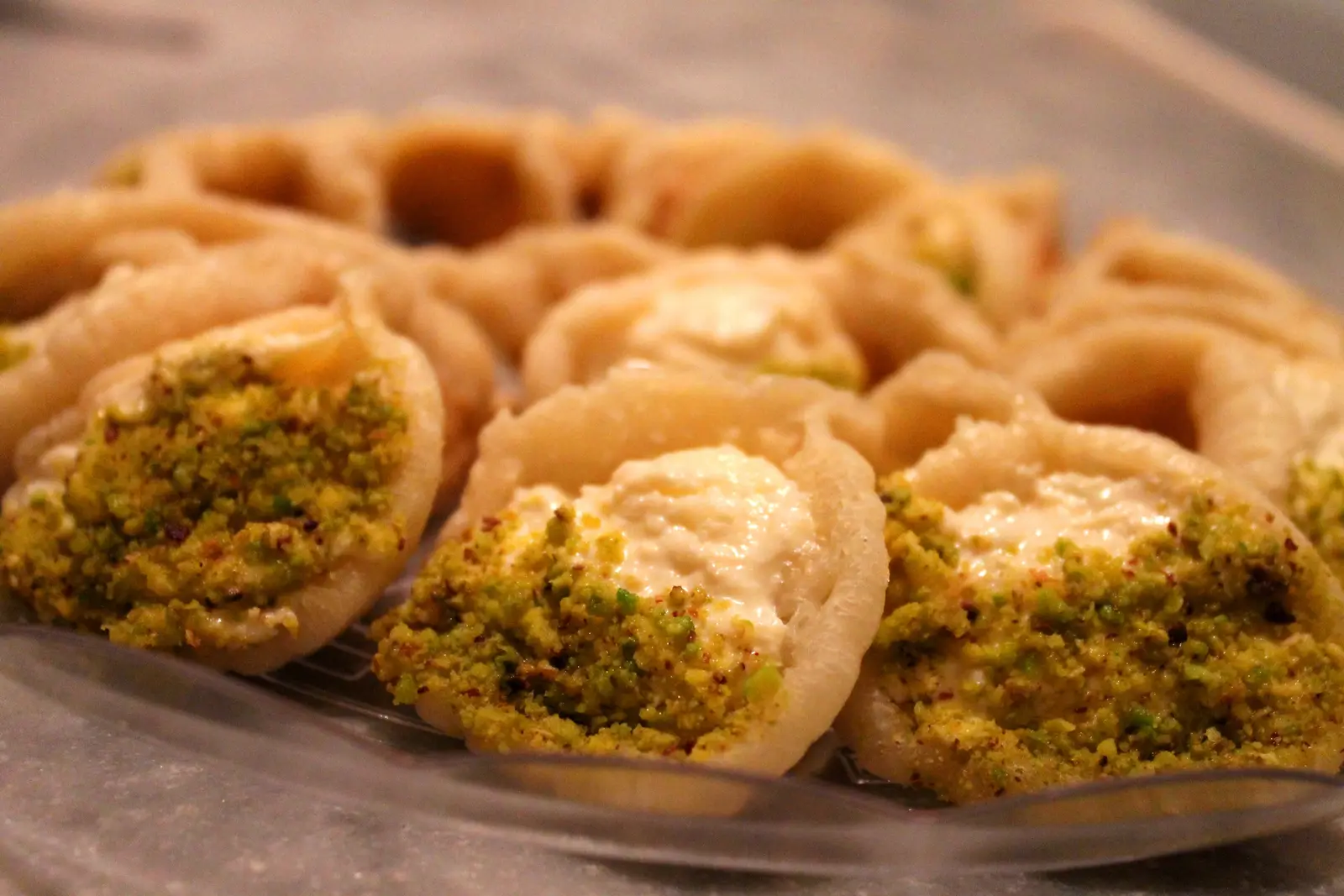
During Ramadan, the late afternoon streets of Jordan fill with small stalls where cooks pour batter onto hot griddles, one neat circle after another. These are qatayef, soft pancakes cooked on only one side, waiting to be filled with nuts, cheese or cream and folded into half-moons. For many families, Ramadan does not feel complete without them.
Origins and story
Qatayef are one of the oldest sweets of the Arab world, with references to them appearing in medieval writings. Today they are enjoyed across the Levant, Egypt and beyond, and in every country they are linked above all with Ramadan, the month of fasting. After a long day without food or drink, families gather for iftar, the evening meal, and qatayef often appear on the table afterwards or later in the night. Buying fresh qatayef from a street stall in the afternoon is a cherished Ramadan ritual in Jordan.
Ingredients and how they are made
The batter is made from flour, often mixed with fine semolina, water or milk, a little sugar and yeast or baking powder. It is poured in small rounds onto a hot griddle and cooked on one side only. As they cook, the tops become covered in tiny holes and set without browning, while the base turns pale golden. The uncooked side stays slightly sticky, which allows the edges to be pressed together.
Classic fillings include chopped walnuts mixed with sugar and cinnamon, or a mild sweet white cheese. The pancakes are folded around the filling into half-moons, sealed firmly, and then fried or baked until crisp. While still hot, they are dipped in sugar syrup, often scented with orange blossom or rose water. A smaller version, called asafiri, is left open and filled with thick cream, then decorated with crushed pistachios.
How and when they are eaten
Qatayef are mostly eaten during Ramadan, after the evening meal or late in the night when families visit one another. Fried or baked qatayef are best eaten warm, soon after they are dipped in syrup, when they are crisp outside and soft inside. The cream-filled asafiri are served cold and are lighter. Many families buy the plain pancakes from a stall in the afternoon and fill and cook them at home. They are usually served with tea or Arabic coffee.
Variations and where to try them in Jordan
Families have their favourite fillings. Walnut with cinnamon is perhaps the most traditional, while sweet cheese is very popular, and cream-filled asafiri are a modern favourite, especially with children. Some cooks add coconut, raisins or pistachios to the nut filling. During Ramadan, qatayef stalls appear on busy streets and outside bakeries in Amman and in towns across Jordan, and sweet shops sell them ready-filled. Outside Ramadan, they are much harder to find, which makes them feel even more special.
Related dishes
Qatayef share the Ramadan table with other comforting dishes. The evening meal often begins with dates and shorbat adas, the smooth lentil soup, and may include fatteh or maqluba. Among sweets, kunafa, with its warm melted cheese, is another Ramadan favourite, and harisseh, the syrup-soaked semolina cake, is popular all year. A small cup of Arabic coffee or a glass of sage tea is the usual companion to all of them.
Frequently asked questions
What are qatayef?
Qatayef are small pancakes cooked on one side only, then filled with walnuts and cinnamon, sweet cheese or cream. Most are folded into half-moons, fried or baked, and dipped in sugar syrup. They are a traditional Arab sweet closely linked with Ramadan and are especially popular in Jordan and across the Levant during the holy month.
Why are qatayef eaten in Ramadan?
Qatayef have been associated with Ramadan for many centuries, and the tradition has continued through generations. They are made fresh by street stalls and families during the month, and sharing them after the evening meal is part of the warm, social atmosphere of Ramadan nights. They are less commonly sold during the rest of the year.
What is the difference between qatayef and asafiri?
Asafiri are a small type of qatayef. Instead of being sealed, fried and soaked in syrup, they are pinched closed only halfway, filled with thick cream and decorated with crushed pistachios. They are served cold and are lighter than the classic fried or baked versions filled with nuts or cheese.
Are qatayef vegetarian?
Yes, qatayef are generally vegetarian. The pancakes are made from flour, semolina, water or milk and a raising agent, and the fillings are nuts, sweet cheese or cream. They are not vegan when they contain milk, cheese or cream, though walnut-filled qatayef made with a water batter may contain no animal products.
More dishes to discover
Harisseh and basbousa

Arabic coffee (qahwa sada)
Sage tea
Jameed
Za'atar and olive oil
Mansaf
Maqluba